

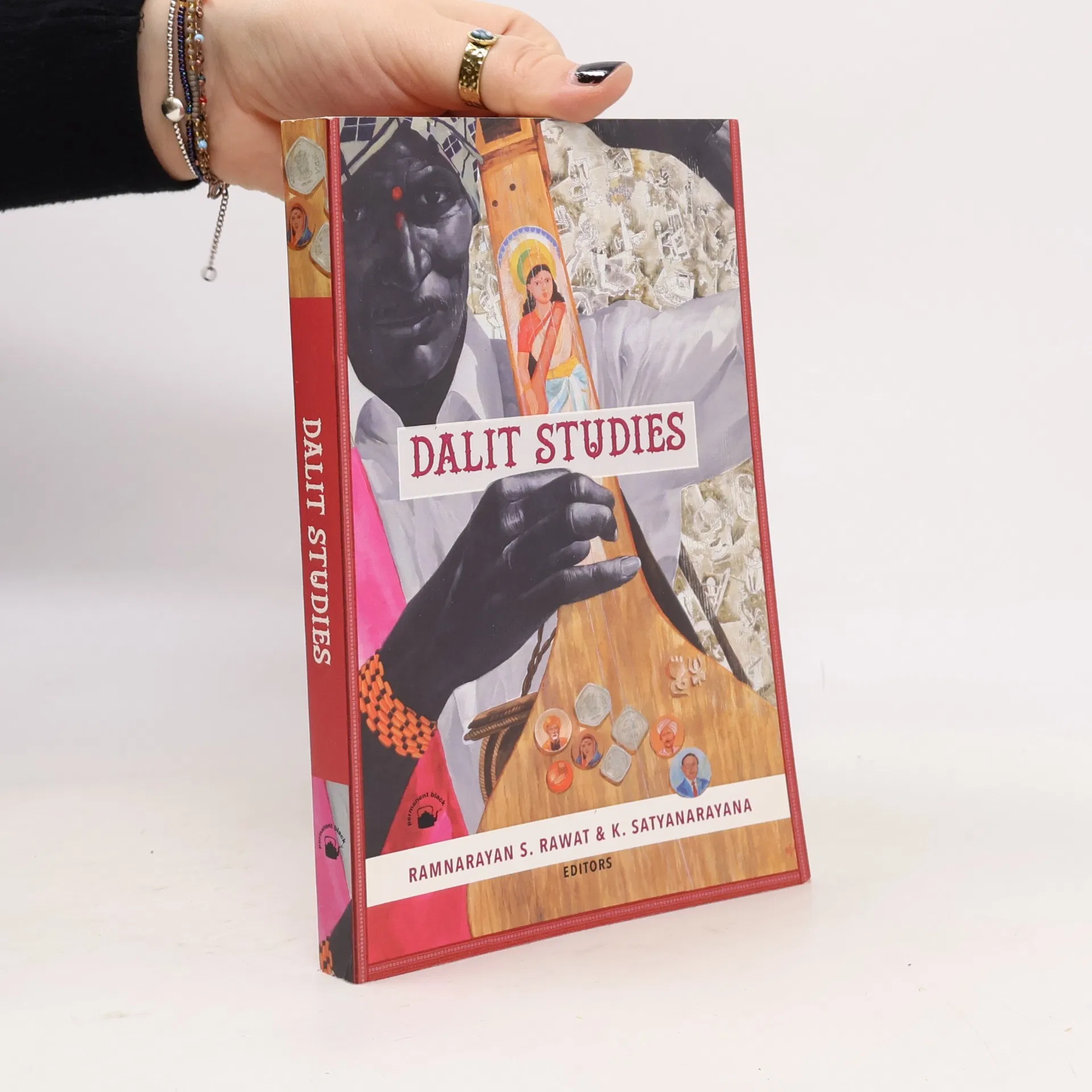


Dalit Studies
Autor*innen
Parameter
Mehr zum Buch
The contributors to this major intervention into Indian historiography trace the strategies through which Dalits have been marginalized as well as the ways Dalit intellectuals and leaders have shaped emancipatory politics in modern India. Moving beyond the anticolonialism/nationalism binary that dominates the study of India, the contributors assess the benefits of colonial modernity and place humiliation, dignity, and spatial exclusion at the center of Indian historiography. Several essays discuss the ways Dalits used the colonial courts and legislature to gain minority rights in the early twentieth century, while others highlight Dalit activism in social and religious spheres. The contributors also examine the struggle of contemporary middle-class Dalits to reconcile their caste and class, intercaste tensions among Sikhs, and the efforts by Dalit writers to challenge dominant constructions of secular and class-based citizenship while emphasizing the ongoing destructiveness of caste identity. In recovering the long history of Dalit struggles against caste violence, exclusion, and discrimination, Dalit Studies outlines a new agenda for the study of India, enabling a significant reconsideration of many of the Indian academy's core assumptions. Contributors: D. Shyam Babu, Laura Brueck, Sambaiah Gundimeda, Gopal Guru, Rajkumar Hans, Chinnaiah Jangam, Surinder Jodhka, P. Sanal Mohan, Ramnarayan Rawat, K. Satyanarayana
Buchkauf
Dalit Studies, K. Satyanarayana, Ramnarayan S. Rawat
- Sprache

- Erscheinungsdatum
- 2021
- Einband
- (Paperback),
- Buchzustand
- Gebraucht - Gut
- Preis
- 8,99 €inkl. MwSt.
Keiner hat bisher bewertet.
- Titel
- Dalit Studies
- Sprache
- Englisch
- Autor*innen
- K. Satyanarayana, Ramnarayan S. Rawat
- Verlag
- Orient Blackswan
- Erscheinungsdatum
- 2021
- Einband
- Paperback
- ISBN10
- 8178245116
- ISBN13
- 9788178245119
- Reihe
- Schlagwörter
- Beschreibung
- The contributors to this major intervention into Indian historiography trace the strategies through which Dalits have been marginalized as well as the ways Dalit intellectuals and leaders have shaped emancipatory politics in modern India. Moving beyond the anticolonialism/nationalism binary that dominates the study of India, the contributors assess the benefits of colonial modernity and place humiliation, dignity, and spatial exclusion at the center of Indian historiography. Several essays discuss the ways Dalits used the colonial courts and legislature to gain minority rights in the early twentieth century, while others highlight Dalit activism in social and religious spheres. The contributors also examine the struggle of contemporary middle-class Dalits to reconcile their caste and class, intercaste tensions among Sikhs, and the efforts by Dalit writers to challenge dominant constructions of secular and class-based citizenship while emphasizing the ongoing destructiveness of caste identity. In recovering the long history of Dalit struggles against caste violence, exclusion, and discrimination, Dalit Studies outlines a new agenda for the study of India, enabling a significant reconsideration of many of the Indian academy's core assumptions. Contributors: D. Shyam Babu, Laura Brueck, Sambaiah Gundimeda, Gopal Guru, Rajkumar Hans, Chinnaiah Jangam, Surinder Jodhka, P. Sanal Mohan, Ramnarayan Rawat, K. Satyanarayana