


Mehr zum Buch
-~- ~_vane \::y;) \ ] 0=0 ] Fig. 2. 39 Seven-segment devices for large displays and good visibility at up to 300 m can readily be obtained. Summary The number of transducer types is almost unlimited, and in order to bring our area of study down to a more manageable size we have considered transduc ers under four main headings. Input transducers for detecting mechanical change allow us to sense force, pressure, position, proximity, displacement, velocity, acceleration, vibration and shock in all their multiple manifestations. The basis of many mechanical sensors is the strain gauge which is usually used in a bridge configuration. Other devices such as the L VDT and synchro are also widely used. Temperature transducers form another large group, and we have looked at the operating principles of the major types, with some of the techniques used in compensating for non-ideal characteristics. Radiation and chemical sensing transducers form the remaining groups. Actuators rely almost entirely on electromagnetic action and, in modern equipment, occur most commonly as solenoids and relays, including the reed relay, and stepper motors. Visual displays also come in a bewildering range of types and sizes, but, because of their ease of interfacing with electronic circuitry, the majority are based on the LED and LCD. Review questions 1. What is meant by gauge factor? 2. Define Young's modulus. 3.
Buchkauf
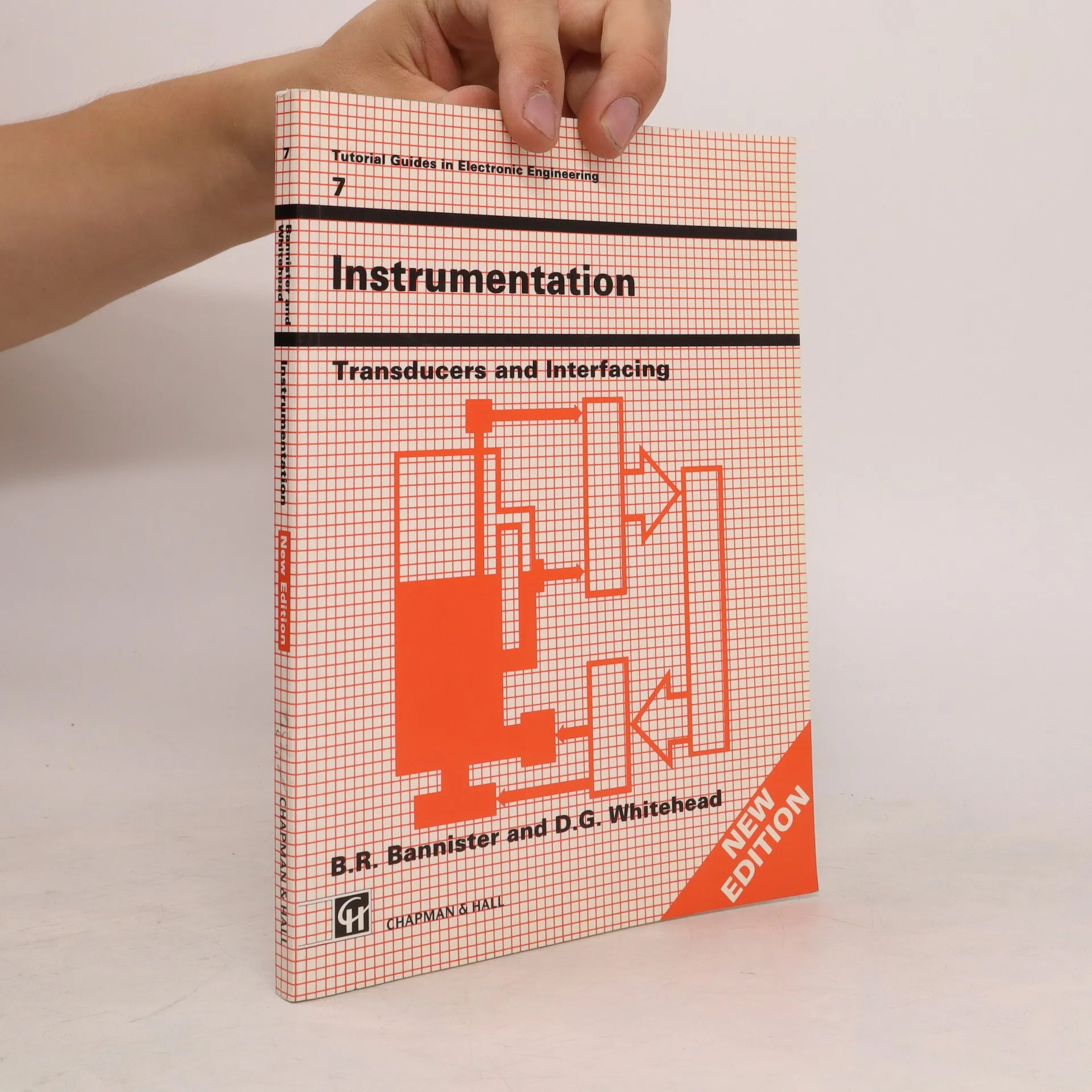
Instrumentation: Transducers and Interfacing, B. R. Bannister, Donald Gill Whitehead
- Sprache

- Erscheinungsdatum
- 1991
- Einband
- (Paperback)
Keiner hat bisher bewertet.
- Titel
- Instrumentation: Transducers and Interfacing
- Sprache
- Englisch
- Autor*innen
- B. R. Bannister, Donald Gill Whitehead
- Verlag
- Chapman & Hall
- Erscheinungsdatum
- 1991
- Einband
- Paperback
- Seitenzahl
- 168
- ISBN10
- 0412342405
- ISBN13
- 9780412342400
- Reihe
- Schlagwörter
- Beschreibung
- -~- ~_vane \::y;) \ ] 0=0 ] Fig. 2. 39 Seven-segment devices for large displays and good visibility at up to 300 m can readily be obtained. Summary The number of transducer types is almost unlimited, and in order to bring our area of study down to a more manageable size we have considered transduc ers under four main headings. Input transducers for detecting mechanical change allow us to sense force, pressure, position, proximity, displacement, velocity, acceleration, vibration and shock in all their multiple manifestations. The basis of many mechanical sensors is the strain gauge which is usually used in a bridge configuration. Other devices such as the L VDT and synchro are also widely used. Temperature transducers form another large group, and we have looked at the operating principles of the major types, with some of the techniques used in compensating for non-ideal characteristics. Radiation and chemical sensing transducers form the remaining groups. Actuators rely almost entirely on electromagnetic action and, in modern equipment, occur most commonly as solenoids and relays, including the reed relay, and stepper motors. Visual displays also come in a bewildering range of types and sizes, but, because of their ease of interfacing with electronic circuitry, the majority are based on the LED and LCD. Review questions 1. What is meant by gauge factor? 2. Define Young's modulus. 3.