





Mehr zum Buch
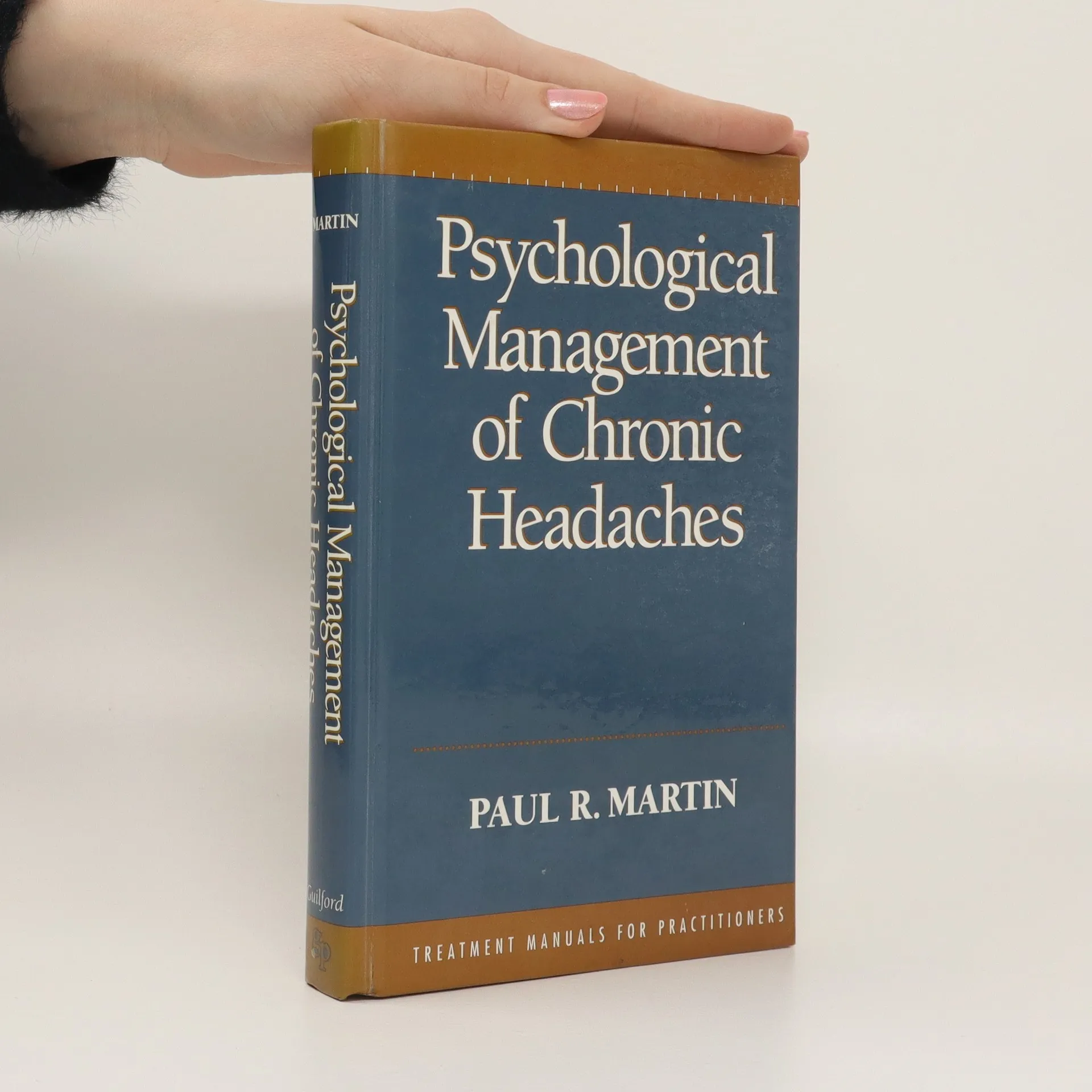
This volume describes how to manage benign recurring headaches, a category that includes migraines, tension and tension-type headaches, and combined or mixed headaches. The management strategy delineated is based on functional analysis, emphasizing the controlling variables of headaches or the factors that determine the variance in headache activity. Encompassing psychosocial and developmental factors, treatment is driven by the results of the functional assessment, so an individualized rather than standardized approach is proposed. This text will be invaluable for clinicians, and the book's strong research orientation will also interest researchers. The book is essential for psychologists, psychiatrists, neurologists, general/family practice doctors, and other medical specialists, occupational therapists, physiotherapists, and counselors.
Buchkauf
Psychological management of chronic headaches, Paul Martin
- Sprache

- Erscheinungsdatum
- 1993
- Einband
- (Hardcover)
Hier könnte deine Bewertung stehen.
- Titel
- Psychological management of chronic headaches
- Sprache
- Englisch
- Autor*innen
- Paul Martin
- Verlag
- Guilford Press
- Erscheinungsdatum
- 1993
- Einband
- Hardcover
- Seitenzahl
- 266
- ISBN10
- 0898622115
- ISBN13
- 9780898622119
- Reihe
- Kategorien
- Schlagwörter
- Medizin & Gesundheit
- Bewertung
- 5 von 5 Sternen
- Beschreibung
- This volume describes how to manage benign recurring headaches, a category that includes migraines, tension and tension-type headaches, and combined or mixed headaches. The management strategy delineated is based on functional analysis, emphasizing the controlling variables of headaches or the factors that determine the variance in headache activity. Encompassing psychosocial and developmental factors, treatment is driven by the results of the functional assessment, so an individualized rather than standardized approach is proposed. This text will be invaluable for clinicians, and the book's strong research orientation will also interest researchers. The book is essential for psychologists, psychiatrists, neurologists, general/family practice doctors, and other medical specialists, occupational therapists, physiotherapists, and counselors.