

Ausverkauft, aber heiß begehrt!

Liegt es in deinem Regal?Verdiene zwischen 1,97 € und 2,85 € beim Verkauf dieses Buches.
Bücher verkaufenThe myth of mental illness: foundation of a theory of personal conduct
Autor*innen
Buchbewertung
Mehr zum Buch
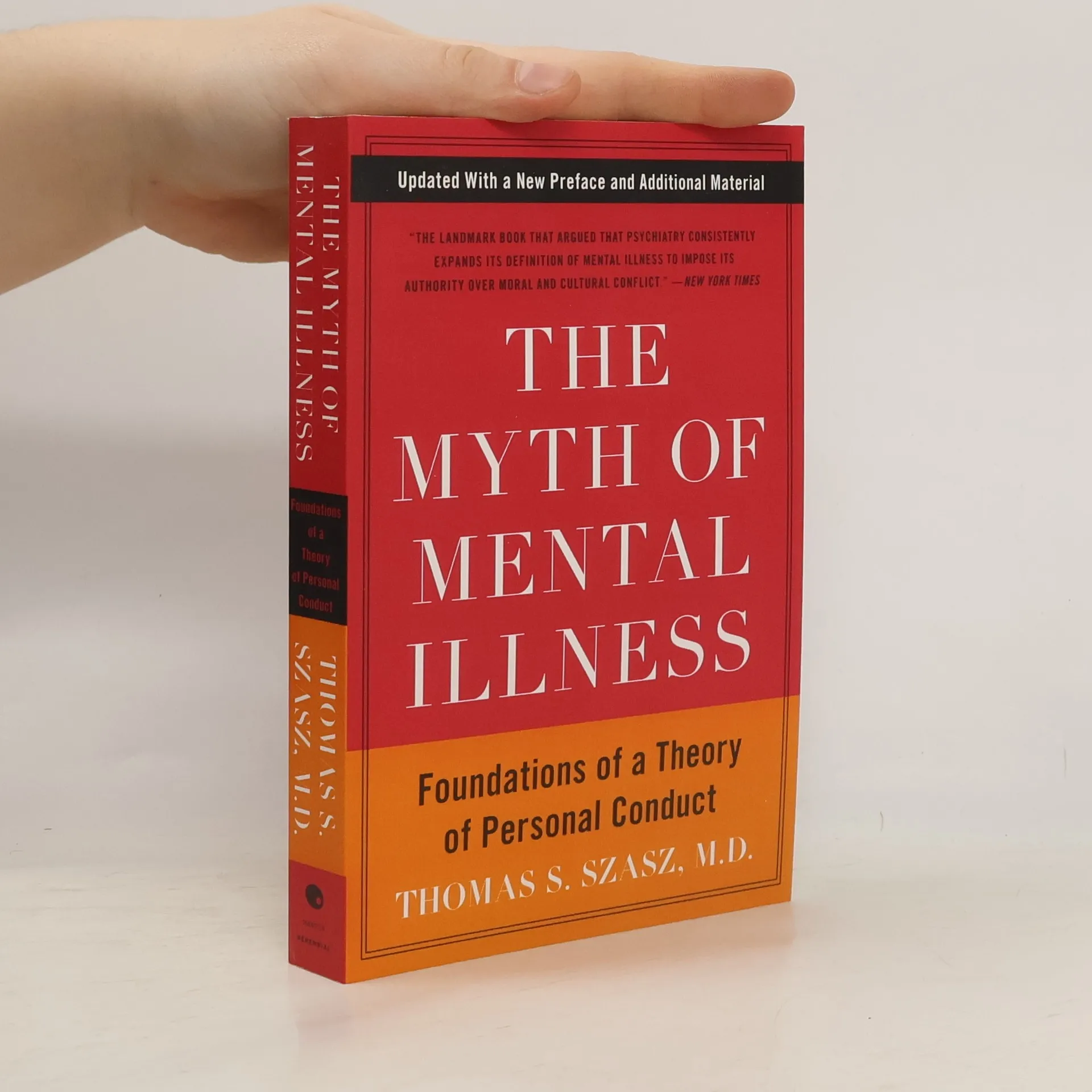
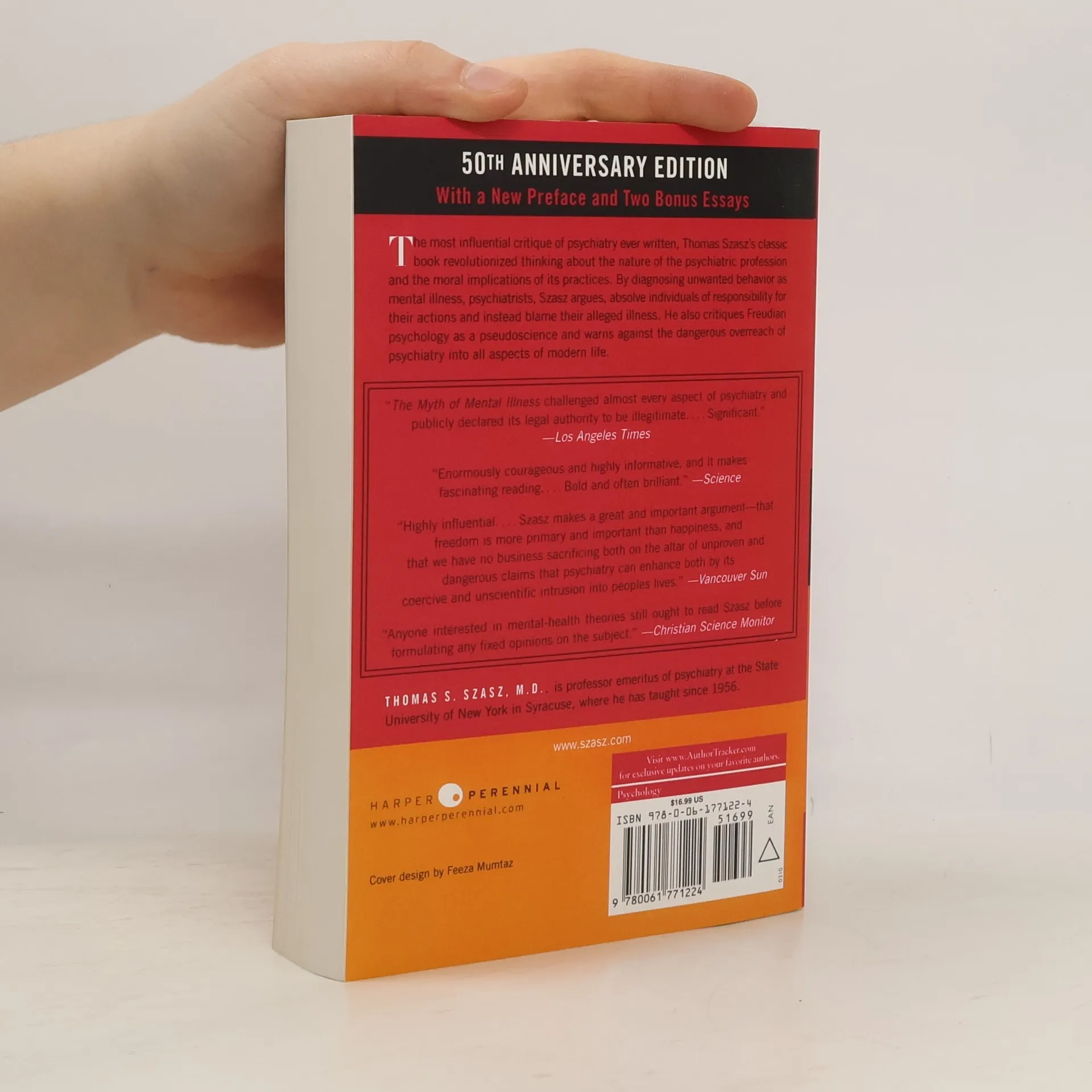
50th Anniversary Edition With a New Preface and Two Bonus Essays The most influential critique of psychiatry ever written, Thomas Szasz's classic book revolutionized thinking about the nature of the psychiatric profession and the moral implications of its practices. By diagnosing unwanted behavior as mental illness, psychiatrists, Szasz argues, absolve individuals of responsibility for their actions and instead blame their alleged illness. He also critiques Freudian psychology as a pseudoscience and warns against the dangerous overreach of psychiatry into all aspects of modern life.
Buchkauf
The myth of mental illness: foundation of a theory of personal conduct, Thomas Szasz
- Sprache

- Erscheinungsdatum
- 2010
- Einband
- (Paperback)
Wir benachrichtigen dich per E-Mail.
3,8
Sehr gut
99+ Bewertung
Hier könnte deine Bewertung stehen.
- Titel
- The myth of mental illness: foundation of a theory of personal conduct
- Sprache
- Englisch
- Autor*innen
- Thomas Szasz
- Verlag
- Harper Perennial
- Erscheinungsdatum
- 2010
- Einband
- Paperback
- Seitenzahl
- 370
- ISBN10
- 0061771228
- ISBN13
- 9780061771224
- Reihe
- Schlagwörter
- Medizin & Gesundheit, Wissenschaft, Medizin, Psychische Gesundheit, Psychiatrie
- Originaltitel
- The myth of mental illness
- Bewertung
- 3,75 von 5 Sternen
- Beschreibung
- 50th Anniversary Edition With a New Preface and Two Bonus Essays The most influential critique of psychiatry ever written, Thomas Szasz's classic book revolutionized thinking about the nature of the psychiatric profession and the moral implications of its practices. By diagnosing unwanted behavior as mental illness, psychiatrists, Szasz argues, absolve individuals of responsibility for their actions and instead blame their alleged illness. He also critiques Freudian psychology as a pseudoscience and warns against the dangerous overreach of psychiatry into all aspects of modern life.