



Parameter
Mehr zum Buch
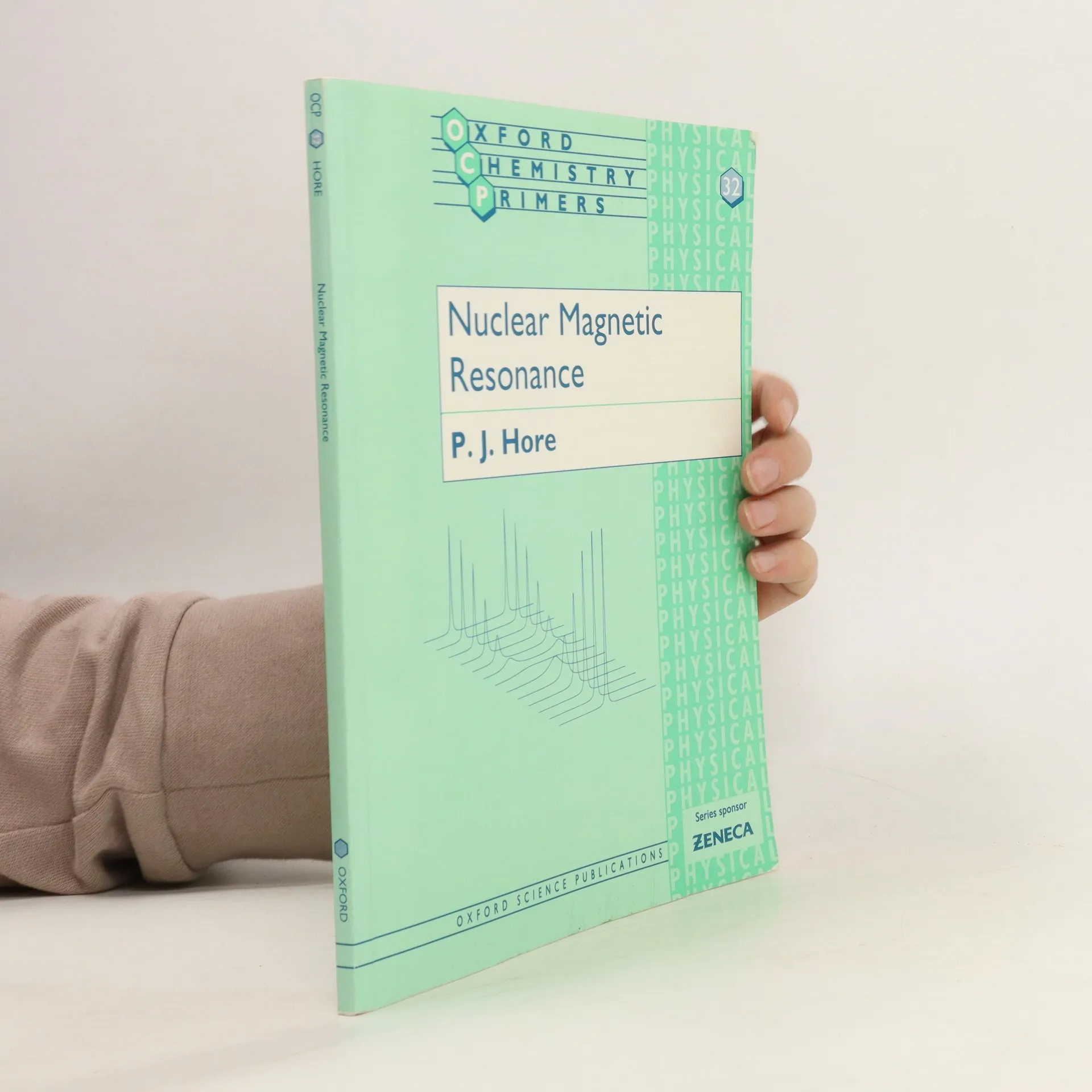
Nuclear magnetic resonance spectroscopy is an enormously powerful and versatile physical method for investigating the structure and dynamics of molecules. This text provides a clear, concise introduction to the physical principles of NMR, and the interactions that determine the appearance ofNMR spectra. It describes and explains how nuclear spins interact with a magnetic field (the chemical shift) and with each other (spin-spin coupling); how NMR spectra are affected by chemical equilibria (exchange) and molecular motion (relaxation); and concludes with an outline of the workings ofsome simple one- and two-dimensional Fourier transform NMR experiments. The ways in which NMR may be used to study the structures, motions and reactions of molecules are illustrated and discussed. Only essential mathematics and theory are presented. The emphasis throughout is on understanding thebasic principles.
Buchkauf
Nuclear Magnetic Resonance, P J Hore
- Sprache

- Erscheinungsdatum
- 1995
- Einband
- (Paperback)
Hier könnte deine Bewertung stehen.
- Titel
- Nuclear Magnetic Resonance
- Sprache
- Englisch
- Autor*innen
- P J Hore
- Verlag
- Oxford University Press
- Erscheinungsdatum
- 1995
- Einband
- Paperback
- ISBN10
- 0198556829
- ISBN13
- 9780198556824
- Reihe
- Kategorien
- Schlagwörter
- Sonstige Lehrbücher
- Bewertung
- 4,25 von 5 Sternen
- Beschreibung
- Nuclear magnetic resonance spectroscopy is an enormously powerful and versatile physical method for investigating the structure and dynamics of molecules. This text provides a clear, concise introduction to the physical principles of NMR, and the interactions that determine the appearance ofNMR spectra. It describes and explains how nuclear spins interact with a magnetic field (the chemical shift) and with each other (spin-spin coupling); how NMR spectra are affected by chemical equilibria (exchange) and molecular motion (relaxation); and concludes with an outline of the workings ofsome simple one- and two-dimensional Fourier transform NMR experiments. The ways in which NMR may be used to study the structures, motions and reactions of molecules are illustrated and discussed. Only essential mathematics and theory are presented. The emphasis throughout is on understanding thebasic principles.