

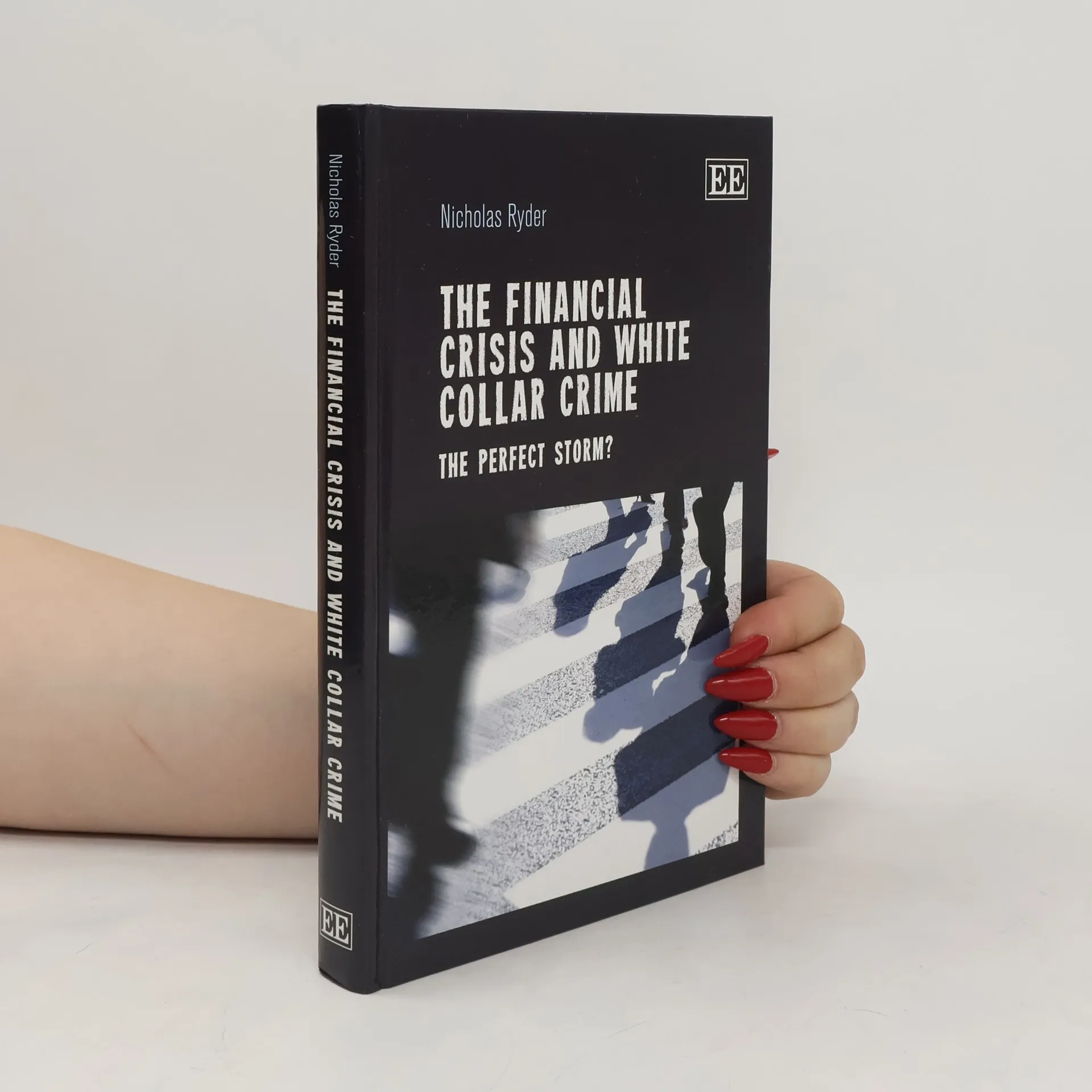
The Financial Crisis and White Collar Crime: The Perfect Storm?
Autor*innen
Parameter
Mehr zum Buch
It also reveals a number of similarities and differences in the approach towards white-collar crime emanating from the financial crisis. Offering an important analysis of the factors which contributed to the global financial crisis and the role played by economic crime, the author provides an insightful critique of the legislative, regulatory and enforcement responses on both sides of the Atlantic. Specific examples include mortgage fraud, predatory lending, Ponzi fraud schemes, market misconduct and the manipulation of LIBOR. Nicholas Ryder's conclusions are powerful, and those responsible for policing the financial markets should take careful note of the recommendations he puts forward. This timely book will be of great use to both teachers and students of financial crime relevant modules.
Buchkauf
The Financial Crisis and White Collar Crime: The Perfect Storm?, Nicholas Ryder
- Sprache

- Erscheinungsdatum
- 2014
- Einband
- (Hardcover)
Keiner hat bisher bewertet.
- Titel
- The Financial Crisis and White Collar Crime: The Perfect Storm?
- Sprache
- Englisch
- Autor*innen
- Nicholas Ryder
- Verlag
- Edward Elgar Publishing
- Erscheinungsdatum
- 2014
- Einband
- Hardcover
- ISBN10
- 1781000999
- ISBN13
- 9781781000991
- Reihe
- Kategorien
- Schlagwörter
- Weltliteratur, Handel
- Beschreibung
- It also reveals a number of similarities and differences in the approach towards white-collar crime emanating from the financial crisis. Offering an important analysis of the factors which contributed to the global financial crisis and the role played by economic crime, the author provides an insightful critique of the legislative, regulatory and enforcement responses on both sides of the Atlantic. Specific examples include mortgage fraud, predatory lending, Ponzi fraud schemes, market misconduct and the manipulation of LIBOR. Nicholas Ryder's conclusions are powerful, and those responsible for policing the financial markets should take careful note of the recommendations he puts forward. This timely book will be of great use to both teachers and students of financial crime relevant modules.