


Political Philosophy versus History?
Contextualism and Real Politics in Contemporary Political Thought
Autor*innen
Buchbewertung
Mehr zum Buch
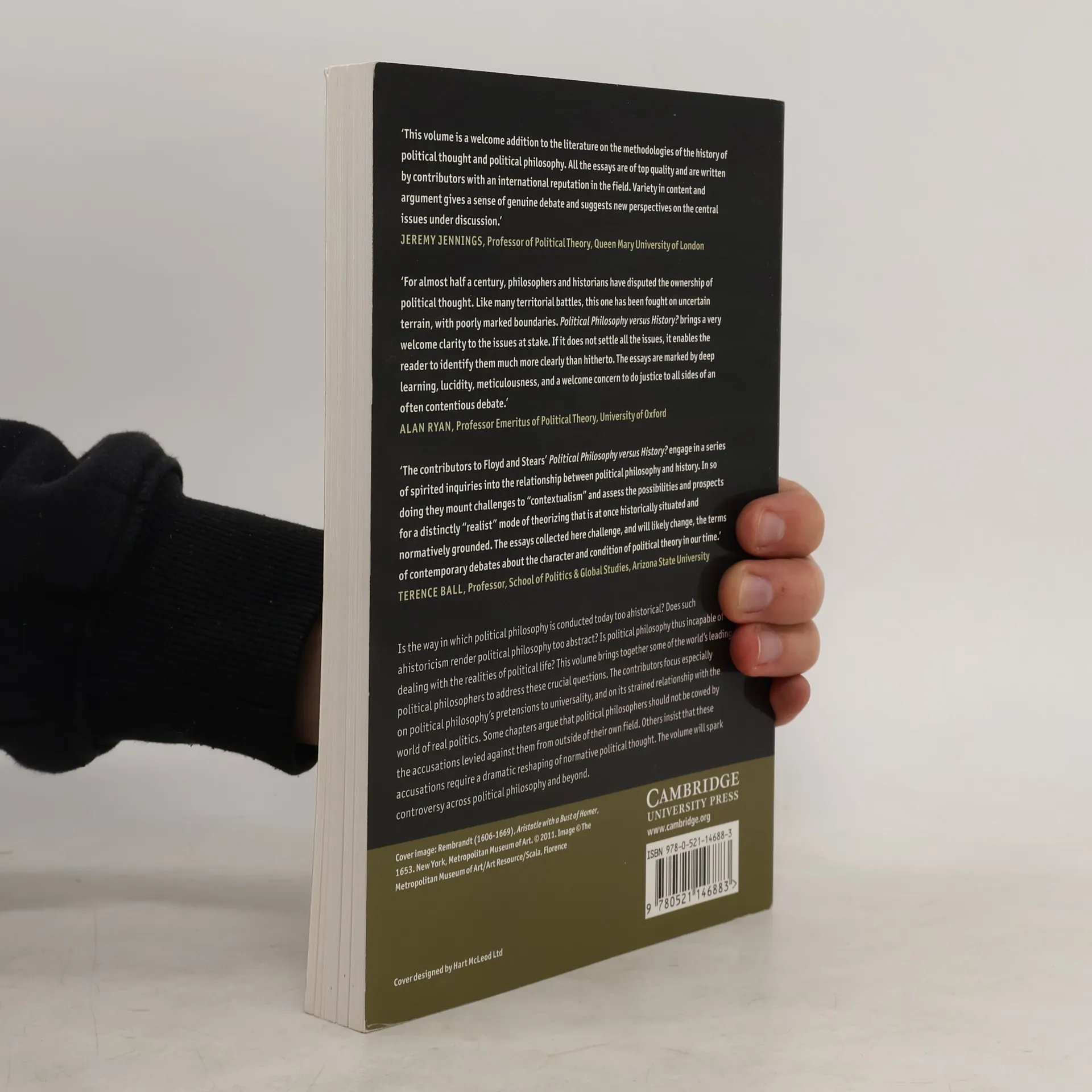
Is the way in which political philosophy is conducted today too ahistorical? Does such ahistoricism render political philosophy too abstract? Is political philosophy thus incapable of dealing with the realities of political life? This volume brings together some of the world's leading political philosophers to address these crucial questions. The contributors focus especially on political philosophy's pretensions to universality and on its strained relationship with the world of real politics. Some chapters argue that political philosophers should not be cowed by the accusations levied against them from outside of their own field. Others insist that these accusations require a dramatic reshaping of normative political thought. The volume will spark controversy across political philosophy and beyond.
Buchkauf
Political Philosophy versus History?, Jonathan Floyd, Marc Stears
- Sprache

- Erscheinungsdatum
- 2011
- Einband
- (Paperback)
Hier könnte deine Bewertung stehen.
- Titel
- Political Philosophy versus History?
- Untertitel
- Contextualism and Real Politics in Contemporary Political Thought
- Sprache
- Englisch
- Autor*innen
- Jonathan Floyd, Marc Stears
- Erscheinungsdatum
- 2011
- Einband
- Paperback
- Seitenzahl
- 240
- ISBN10
- 0521146887
- ISBN13
- 9780521146883
- Reihe
- Schlagwörter
- Historisches Thema, Philosophisches Thema
- Bewertung
- 3,35 von 5 Sternen
- Beschreibung
- Is the way in which political philosophy is conducted today too ahistorical? Does such ahistoricism render political philosophy too abstract? Is political philosophy thus incapable of dealing with the realities of political life? This volume brings together some of the world's leading political philosophers to address these crucial questions. The contributors focus especially on political philosophy's pretensions to universality and on its strained relationship with the world of real politics. Some chapters argue that political philosophers should not be cowed by the accusations levied against them from outside of their own field. Others insist that these accusations require a dramatic reshaping of normative political thought. The volume will spark controversy across political philosophy and beyond.