

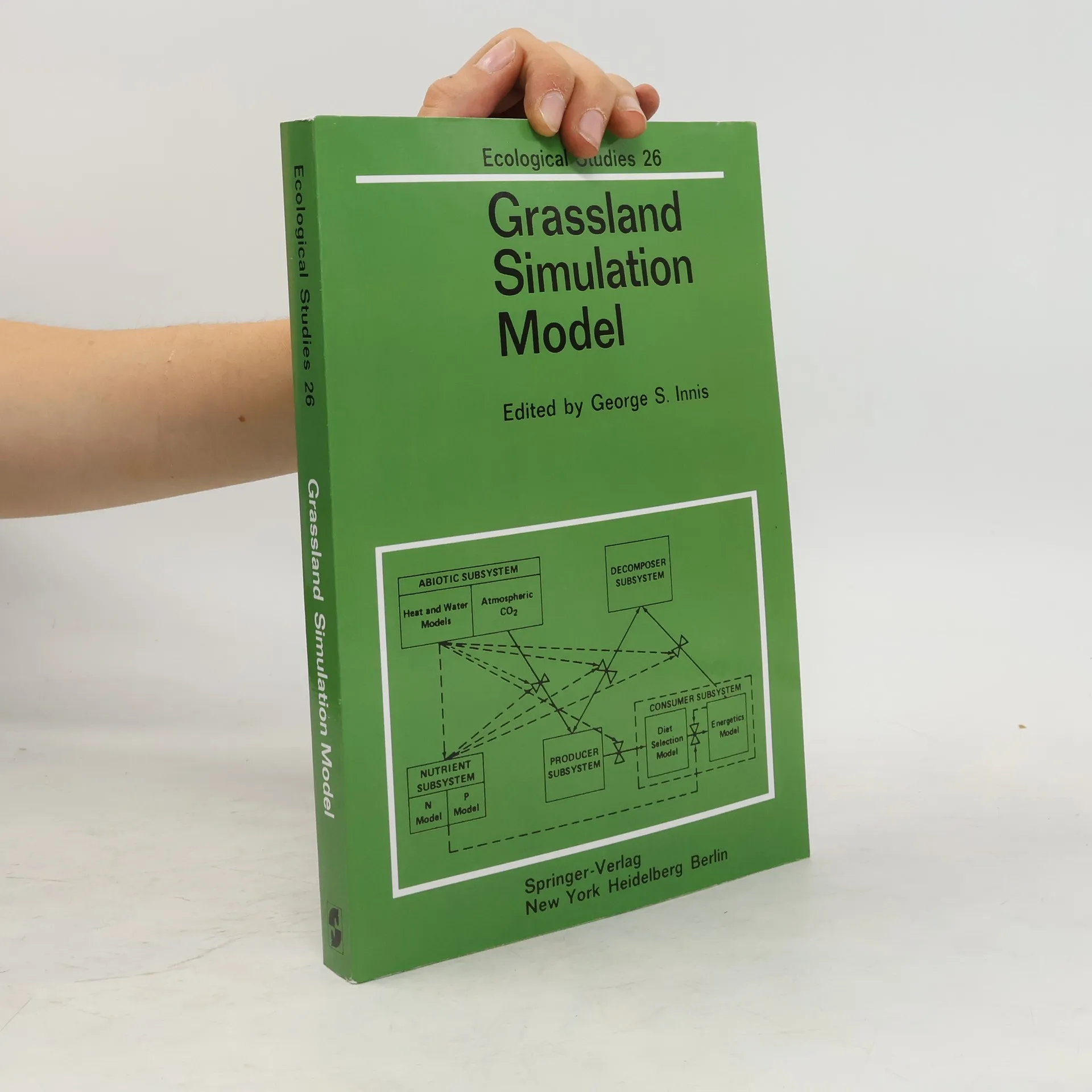

Ecological Studies - 26: Grassland Simulation Model
Autor*innen
Mehr zum Buch
This volume offers a comprehensive overview of a pioneering ecological modeling effort, specifically the ELM model, a significant output of the United States Grassland Biome study as part of the International Biological Program (IBP). The introduction serves to (i) briefly review the state of ecological modeling at the onset of the ELM effort in 1971, (ii) discuss the model's role in relation to other models and phases of the Grassland Biome study, and (iii) summarize the evolution of ELM and its components since 1973. My initial engagement with ecological simulation modeling began in 1960 while studying herbage dynamics and nutrient production in Montana's foothill grasslands. I conducted year-round measurements of aboveground live vegetation, standing dead matter, and litter. However, funding limitations and rocky soils hindered my ability to measure root biomass dynamics. Herbage biomass originates from live shoots, which can be translocated to live roots, while standing dead vegetation eventually contributes to litter. The decay of litter and dead roots is a critical aspect of this ecological cycle, highlighting the interconnectedness of these components in grassland ecosystems.
Buchkauf
Ecological Studies - 26: Grassland Simulation Model, George S. Innis
- Sprache

- Erscheinungsdatum
- 2012
- Einband
- (Paperback)
Keiner hat bisher bewertet.
- Titel
- Ecological Studies - 26: Grassland Simulation Model
- Sprache
- Englisch
- Autor*innen
- George S. Innis
- Verlag
- Springer
- Erscheinungsdatum
- 2012
- Einband
- Paperback
- Seitenzahl
- 298
- ISBN10
- 1461299314
- ISBN13
- 9781461299318
- Reihe
- Schlagwörter
- Wissenschaft, Ökologische Thematik, Umweltwissenschaften
- Beschreibung
- This volume offers a comprehensive overview of a pioneering ecological modeling effort, specifically the ELM model, a significant output of the United States Grassland Biome study as part of the International Biological Program (IBP). The introduction serves to (i) briefly review the state of ecological modeling at the onset of the ELM effort in 1971, (ii) discuss the model's role in relation to other models and phases of the Grassland Biome study, and (iii) summarize the evolution of ELM and its components since 1973. My initial engagement with ecological simulation modeling began in 1960 while studying herbage dynamics and nutrient production in Montana's foothill grasslands. I conducted year-round measurements of aboveground live vegetation, standing dead matter, and litter. However, funding limitations and rocky soils hindered my ability to measure root biomass dynamics. Herbage biomass originates from live shoots, which can be translocated to live roots, while standing dead vegetation eventually contributes to litter. The decay of litter and dead roots is a critical aspect of this ecological cycle, highlighting the interconnectedness of these components in grassland ecosystems.