

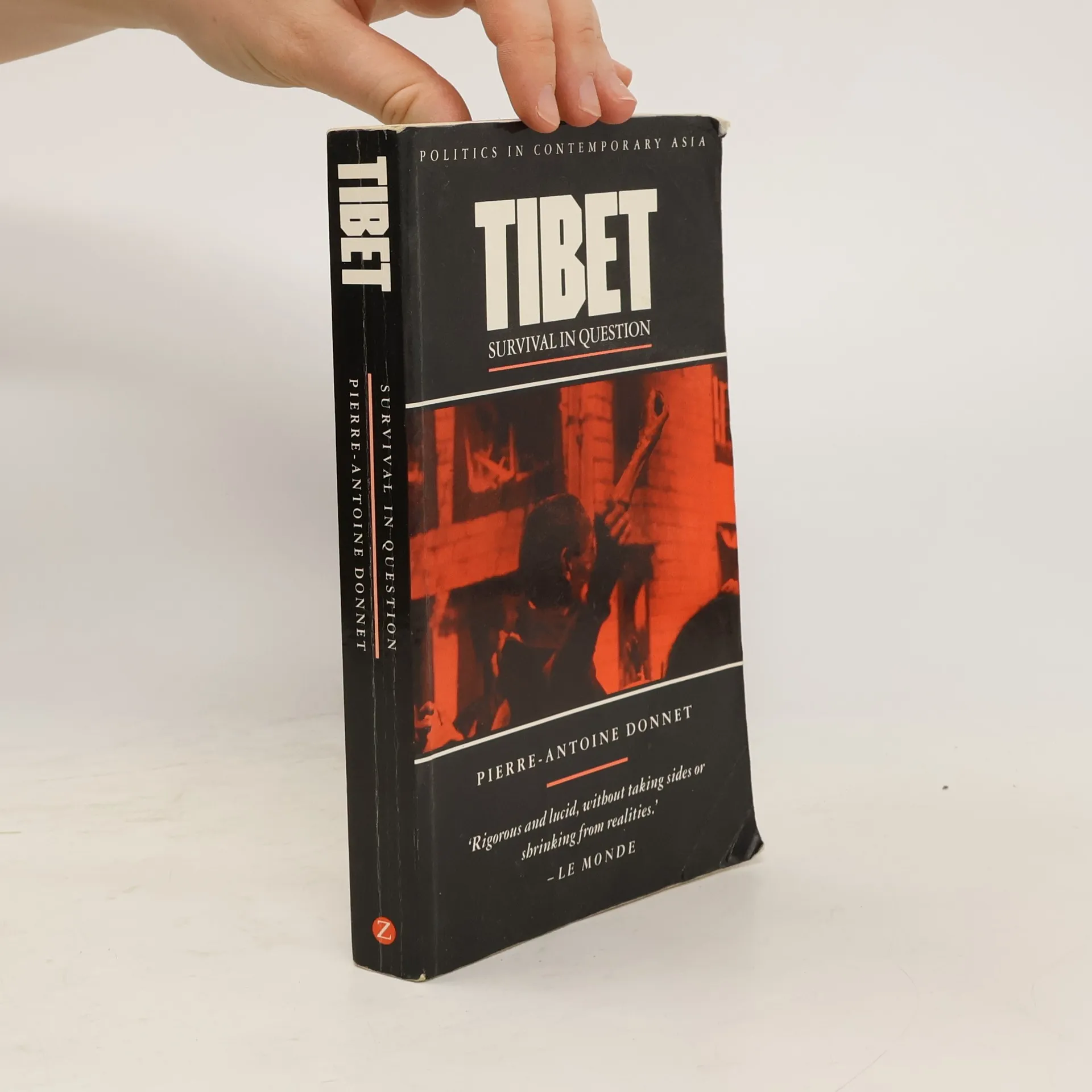
Politics in Contemporary Asia: Tibet
Survival in Question
Autor*innen
Buchbewertung
Mehr zum Buch
This is an account of why the Tibetan people see the Chinese as occupiers and colonizers, rather than liberators from theocratic rule or heralds of economic progress. Set against the background of the Chinese invasion and the impact of Maoist excesses during the Cultural Revolution, it explains the changing strategy of the Chinese towards Tibet in the 1980s - a strategy brought to an abrupt and brutal halt with the popular explosion of 1987 and declaration of martial law. The underdevelopment of the Tibetan economy, the continuing assault on Tibetan society and environment, and violations of human rights are all fully documented. The author describes the confidential negotiations between the Chinese and Tibetan leaderships, and he provides an up-to-date delineation of the political prospects for the 1990s.
Buchkauf
Politics in Contemporary Asia: Tibet, Pierre-Antoine Donnet
- Sprache

- Erscheinungsdatum
- 1994
- Einband
- (Paperback)
Hier könnte deine Bewertung stehen.
- Titel
- Politics in Contemporary Asia: Tibet
- Untertitel
- Survival in Question
- Sprache
- Englisch
- Autor*innen
- Pierre-Antoine Donnet
- Verlag
- Zed Books
- Erscheinungsdatum
- 1994
- Einband
- Paperback
- Seitenzahl
- 282
- ISBN10
- 1856491307
- ISBN13
- 9781856491303
- Reihe
- Schlagwörter
- Historisches Thema, Politik, Sonstige Geschichte, China, Menschenrechte, Tibet
- Bewertung
- 3,5 von 5 Sternen
- Beschreibung
- This is an account of why the Tibetan people see the Chinese as occupiers and colonizers, rather than liberators from theocratic rule or heralds of economic progress. Set against the background of the Chinese invasion and the impact of Maoist excesses during the Cultural Revolution, it explains the changing strategy of the Chinese towards Tibet in the 1980s - a strategy brought to an abrupt and brutal halt with the popular explosion of 1987 and declaration of martial law. The underdevelopment of the Tibetan economy, the continuing assault on Tibetan society and environment, and violations of human rights are all fully documented. The author describes the confidential negotiations between the Chinese and Tibetan leaderships, and he provides an up-to-date delineation of the political prospects for the 1990s.