



Parameter
- 281 Seiten
- 10 Lesestunden
Mehr zum Buch
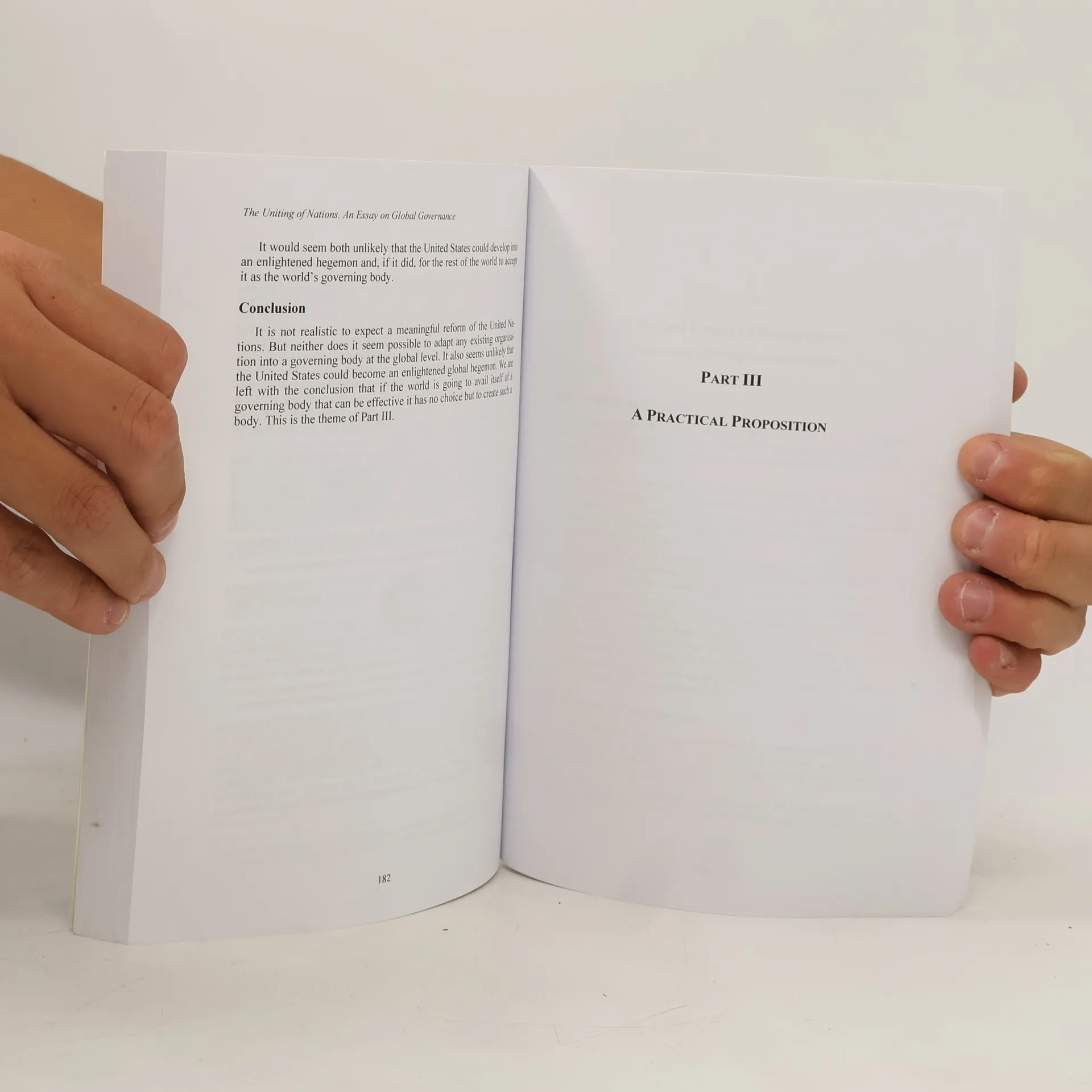
This book presents a compelling idea: for the sake of humanity, countries must share sovereignty to effectively tackle global threats such as climate change, poverty, inequality, terrorism, war, nuclear proliferation, job outsourcing, financial instability, corporate power, migration, resource depletion, human rights violations, and pandemics. The first part diagnoses the failures of the current global governance system, highlighting the ineffectiveness of the United Nations and the challenges posed by failing states. The author argues that these issues arise from a Hobbesian world characterized by a "war of all states against all states." In the second part, the author explores potential solutions, questioning whether existing organizations like NATO, the European Union, or the G8 could evolve into a global governing body, or if the United States could assume the role of an enlightened global hegemon. However, the author deems these scenarios unrealistic. Instead, the third part proposes the creation of a "global union of democracies," detailing its functions, principles, and design. This new organization could provide a framework for addressing the myriad threats facing humanity today.
Buchkauf
The Uniting of Nations, John McClintock, Xavier Guigue
- Sprache

- Erscheinungsdatum
- 2007
- Einband
- (Paperback)
Keiner hat bisher bewertet.
- Titel
- The Uniting of Nations
- Untertitel
- An Essay on Global Governance
- Sprache
- Englisch
- Autor*innen
- John McClintock, Xavier Guigue
- Verlag
- P.I.E. Peter Lang
- Erscheinungsdatum
- 2007
- Einband
- Paperback
- Seitenzahl
- 281
- ISBN10
- 9052010498
- ISBN13
- 9789052010496
- Reihe
- Kategorien
- Schlagwörter
- Handel, Internationale Beziehungen, Globalisierung, Menschenrechte
- Beschreibung
- This book presents a compelling idea: for the sake of humanity, countries must share sovereignty to effectively tackle global threats such as climate change, poverty, inequality, terrorism, war, nuclear proliferation, job outsourcing, financial instability, corporate power, migration, resource depletion, human rights violations, and pandemics. The first part diagnoses the failures of the current global governance system, highlighting the ineffectiveness of the United Nations and the challenges posed by failing states. The author argues that these issues arise from a Hobbesian world characterized by a "war of all states against all states." In the second part, the author explores potential solutions, questioning whether existing organizations like NATO, the European Union, or the G8 could evolve into a global governing body, or if the United States could assume the role of an enlightened global hegemon. However, the author deems these scenarios unrealistic. Instead, the third part proposes the creation of a "global union of democracies," detailing its functions, principles, and design. This new organization could provide a framework for addressing the myriad threats facing humanity today.