

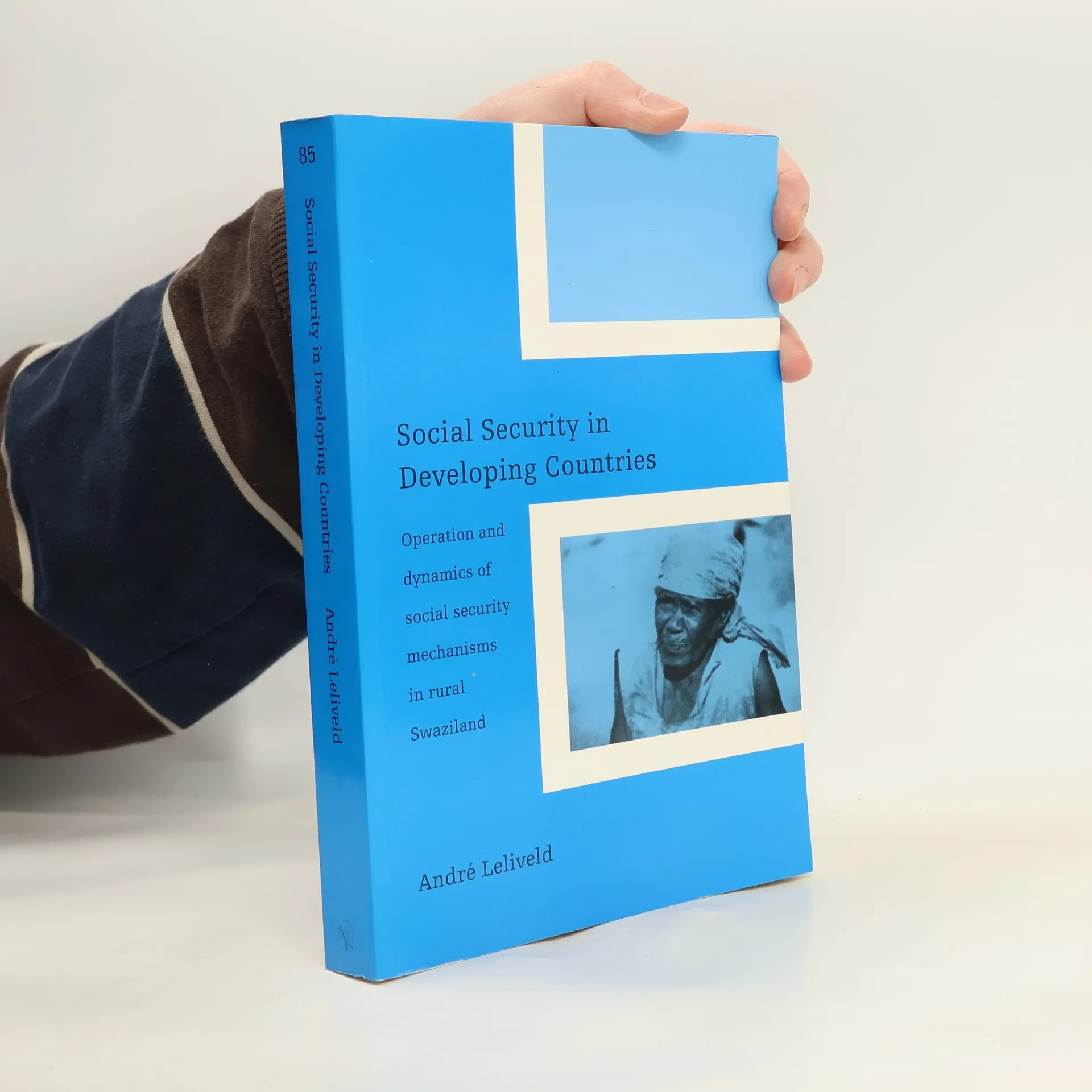
Social Security in Developing Countries
Operation and Dynamics of Social Security Mechanisms in Rural Switzerland
Autor*innen
Mehr zum Buch
Studies on social security in developing countries are usually restricted to an analysis of social security arrangements provided by the state. Most of these studies conclude that at best only very limited social security provisions are to be found, as governments generally lack the resources to implement more ambitious programmes in this area. At the same time, however, a great variety of non-state social security mechanisms operate, such as the extended family, social networks, and redistributive centres. This study first of all suggests a theoretical approach to analyze these mechanisms. Attention is paid to their function and place in society and to their operation as social security mechanisms. The theoretical approach is then applied to an analysis of the operation and dynamics of non-state social security mechanisms in the rural areas of Swaziland.
Buchkauf
Social Security in Developing Countries, André Leliveld
- Sprache

- Erscheinungsdatum
- 2003
- Einband
- (Paperback)
Keiner hat bisher bewertet.
- Titel
- Social Security in Developing Countries
- Untertitel
- Operation and Dynamics of Social Security Mechanisms in Rural Switzerland
- Sprache
- Englisch
- Autor*innen
- André Leliveld
- Verlag
- Purdue University Press
- Erscheinungsdatum
- 2003
- Einband
- Paperback
- Seitenzahl
- 442
- ISBN10
- 9051703058
- ISBN13
- 9789051703054
- Reihe
- Schlagwörter
- Medizin & Gesundheit, Sonstige Geschichte, Soziale Probleme
- Beschreibung
- Studies on social security in developing countries are usually restricted to an analysis of social security arrangements provided by the state. Most of these studies conclude that at best only very limited social security provisions are to be found, as governments generally lack the resources to implement more ambitious programmes in this area. At the same time, however, a great variety of non-state social security mechanisms operate, such as the extended family, social networks, and redistributive centres. This study first of all suggests a theoretical approach to analyze these mechanisms. Attention is paid to their function and place in society and to their operation as social security mechanisms. The theoretical approach is then applied to an analysis of the operation and dynamics of non-state social security mechanisms in the rural areas of Swaziland.