

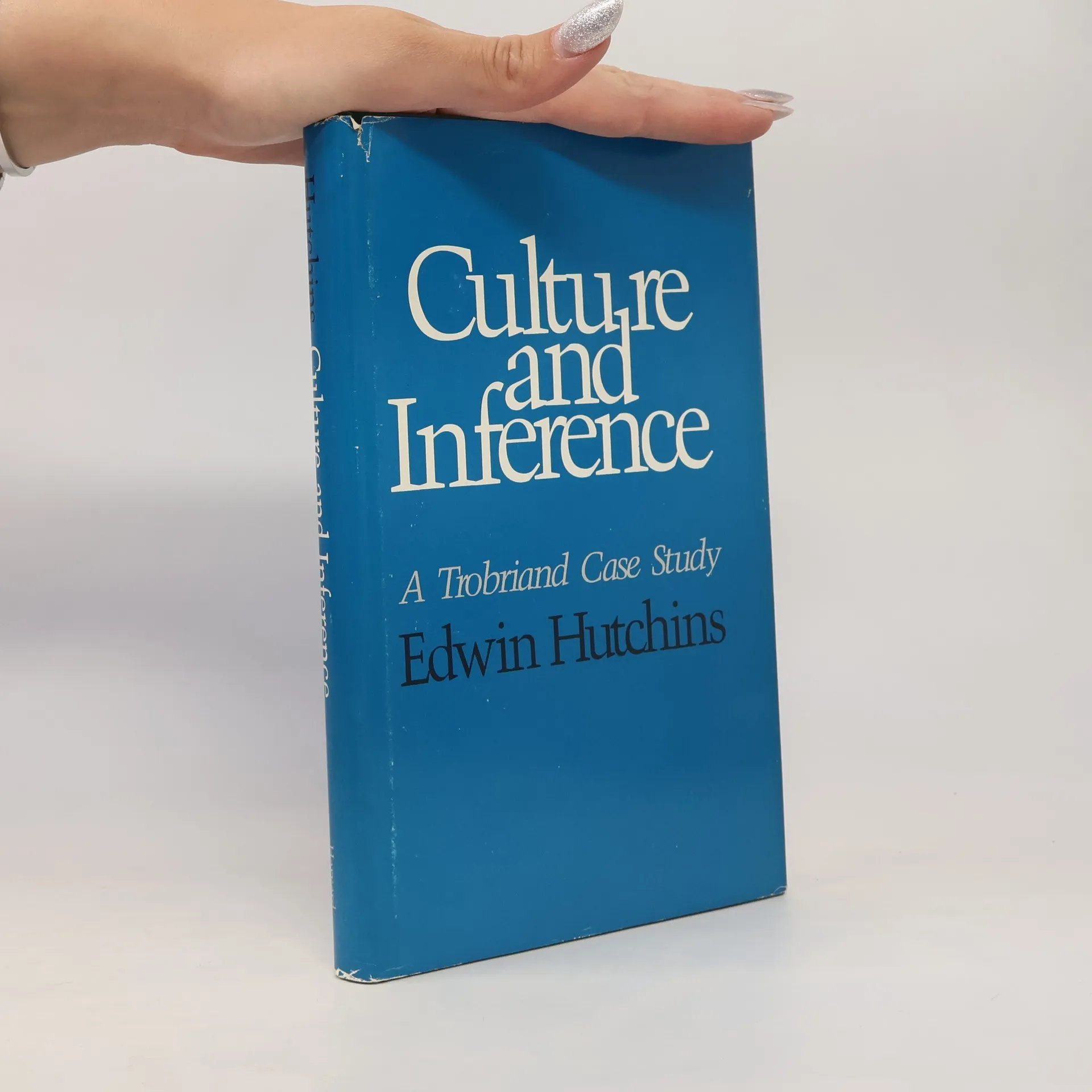
Culture and Inference
A Trobriand Case Study
Autor*innen
Mehr zum Buch
This work advances psychological anthropology by utilizing cognitive science tools to explore "primitive" thought. Recent consensus in anthropology suggests that culture can be seen as a system of tacit rules guiding the interpretation of events and actions. However, a comprehensive cultural grammar to clarify these rules has yet to be established. The author addresses this gap through an analysis of the Trobriand Islanders' land tenure system. Employing propositional network notation, he articulates native knowledge about land tenure as twelve propositions. Inferences are drawn from these propositions using transfer formulas that apply static knowledge to new disputes. After extensive observations of Trobriand land courts and interviews with litigants, he tests his grammar by simulating decisions in new cases. Notably, these simulations require the same logical operations found in Western thought. By examining "primitive" inference in a natural context, the author concludes that Trobriand reasoning is as sophisticated as our own, challenging preconceived notions of primitivity in thought processes.
Buchkauf
Culture and Inference, Edwin Hutchins
- Sprache

- Erscheinungsdatum
- 1980
- Einband
- (Hardcover)
Keiner hat bisher bewertet.
- Titel
- Culture and Inference
- Untertitel
- A Trobriand Case Study
- Sprache
- Englisch
- Autor*innen
- Edwin Hutchins
- Verlag
- Harvard University Press
- Erscheinungsdatum
- 1980
- Einband
- Hardcover
- Seitenzahl
- 143
- ISBN10
- 0674179706
- ISBN13
- 9780674179707
- Reihe
- Schlagwörter
- Psychologische Thematik, USA, Kultur, Logik, Ethnologie, Ozeanien
- Beschreibung
- This work advances psychological anthropology by utilizing cognitive science tools to explore "primitive" thought. Recent consensus in anthropology suggests that culture can be seen as a system of tacit rules guiding the interpretation of events and actions. However, a comprehensive cultural grammar to clarify these rules has yet to be established. The author addresses this gap through an analysis of the Trobriand Islanders' land tenure system. Employing propositional network notation, he articulates native knowledge about land tenure as twelve propositions. Inferences are drawn from these propositions using transfer formulas that apply static knowledge to new disputes. After extensive observations of Trobriand land courts and interviews with litigants, he tests his grammar by simulating decisions in new cases. Notably, these simulations require the same logical operations found in Western thought. By examining "primitive" inference in a natural context, the author concludes that Trobriand reasoning is as sophisticated as our own, challenging preconceived notions of primitivity in thought processes.