



Parameter
- 257 Seiten
- 9 Lesestunden
Mehr zum Buch
Religion is controversial and challenging. Whilst religious forces are powerful in numerous societies, they have little or no significance for wide swaths of public or private life in other places. The task of theoretical work in the sociology of religion is, therefore, to make sense of this apparently paradoxical situation in which religion is simultaneously significant and insignificant. The chapters of Part One consider the classical roots of ideas about religion that dominated sociological ways of thinking about it for most of the twentieth century. Each chapter offers sound reasons for continuing to find theoretical inspiration and challenge in the sociological classics whilst also seeking ways of enhancing and extending their relevance to religion today. Part Two contains chapters that open up fresh perspectives on aspects of modern, post-modern and ultra-modern religion without necessarily ignoring the classical legacy. The chapters of Part Three chart new directions for the sociological analysis of religion by fundamentally re-thinking its theoretical basis, by extending its disciplinary boundaries and by examining previously overlooked topics.
Buchkauf
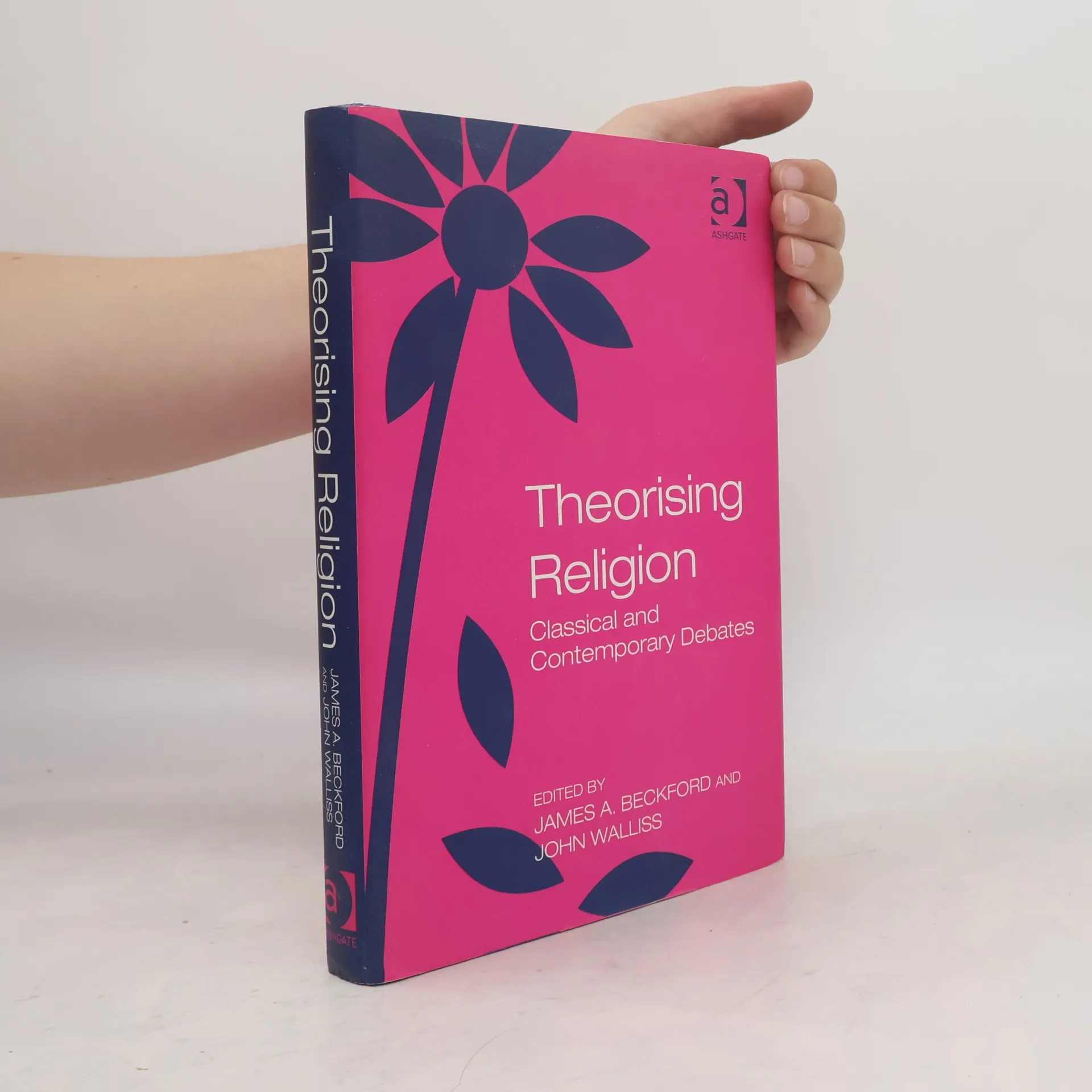
Theorising Religion, James A. Beckford, John Walliss
- Sprache

- Erscheinungsdatum
- 2006
- Einband
- (Hardcover),
- Buchzustand
- Gebraucht - Gut
- Preis
- 23,49 €inkl. MwSt.
Keiner hat bisher bewertet.
- Titel
- Theorising Religion
- Untertitel
- Classical and Contemporary Debates
- Sprache
- Englisch
- Autor*innen
- James A. Beckford, John Walliss
- Verlag
- Routledge
- Erscheinungsdatum
- 2006
- Einband
- Hardcover
- Seitenzahl
- 257
- ISBN10
- 075464068X
- ISBN13
- 9780754640684
- Reihe
- Schlagwörter
- Beschreibung
- Religion is controversial and challenging. Whilst religious forces are powerful in numerous societies, they have little or no significance for wide swaths of public or private life in other places. The task of theoretical work in the sociology of religion is, therefore, to make sense of this apparently paradoxical situation in which religion is simultaneously significant and insignificant. The chapters of Part One consider the classical roots of ideas about religion that dominated sociological ways of thinking about it for most of the twentieth century. Each chapter offers sound reasons for continuing to find theoretical inspiration and challenge in the sociological classics whilst also seeking ways of enhancing and extending their relevance to religion today. Part Two contains chapters that open up fresh perspectives on aspects of modern, post-modern and ultra-modern religion without necessarily ignoring the classical legacy. The chapters of Part Three chart new directions for the sociological analysis of religion by fundamentally re-thinking its theoretical basis, by extending its disciplinary boundaries and by examining previously overlooked topics.