

Mehr zum Buch
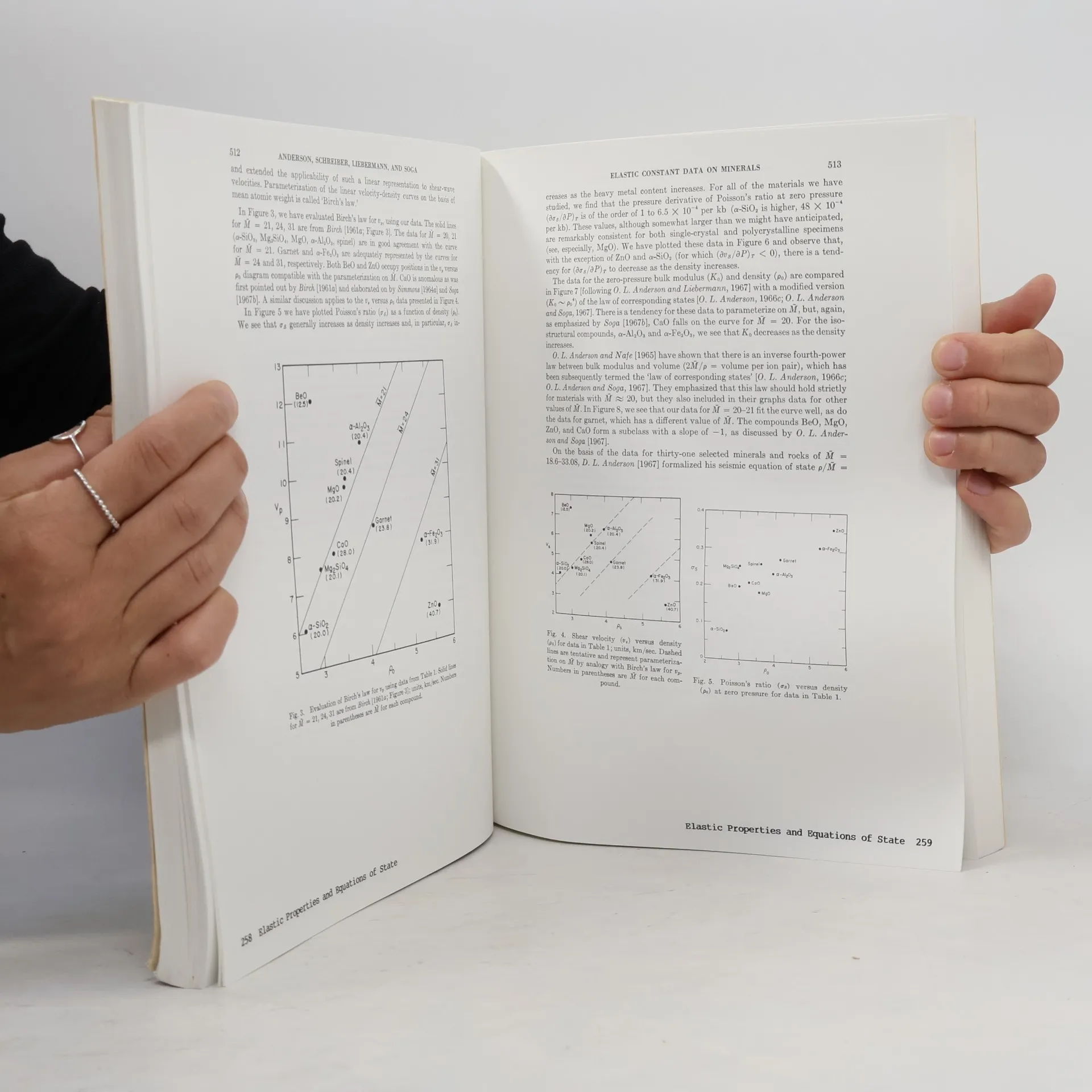
Published by the American Geophysical Union as part of the Special Publications Series .To those who were attracted to geophysics because of the opportunity to do science out?]of?]doors, the idea of laboratory geophysics may seem a strange, if not contradictory, notion. Yet most of what we can say about those parts of the Earth that are not directly accessible comes from comparisons of field ?] derived results with laboratory measurements of physical properties. Perhaps the most successful example of this approach has been in the field of elasticity and equations of state. In application, measured and calculated velocities and densities are used with data derived from seismic velocity profiles to infer composition, mineralogy, and temperature from the lower crust through the mantle and core to the center of the Earth. Such comparisons are routinely applied, for instance, in distinguishing gabbro from granite in the crust. In other cases the methodology is less straightforward and this exercise leads to very controversial conclusions, particularly when in situ conditions are difficult to simulate in the laboratory.
Buchkauf
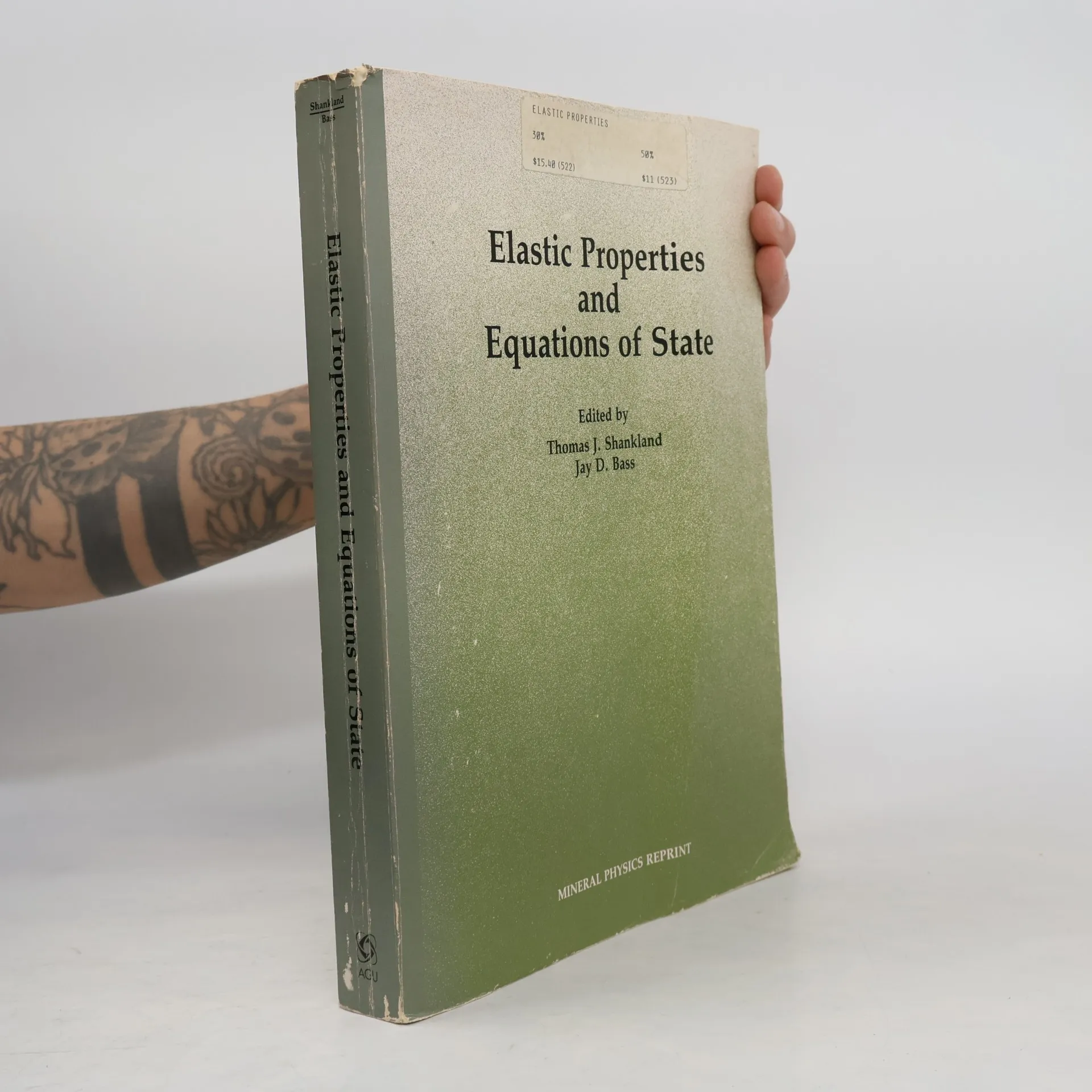
Elastic Properties and Equations of State, Thomas J. Shankland, Jay D. Bass
- Sprache

- Erscheinungsdatum
- 1988
- Einband
- (Paperback),
- Buchzustand
- Gebraucht - Gut
- Preis
- 40,49 €inkl. MwSt.
Keiner hat bisher bewertet.
- Titel
- Elastic Properties and Equations of State
- Sprache
- Englisch
- Autor*innen
- Thomas J. Shankland, Jay D. Bass
- Erscheinungsdatum
- 1988
- Einband
- Paperback
- Seitenzahl
- 568
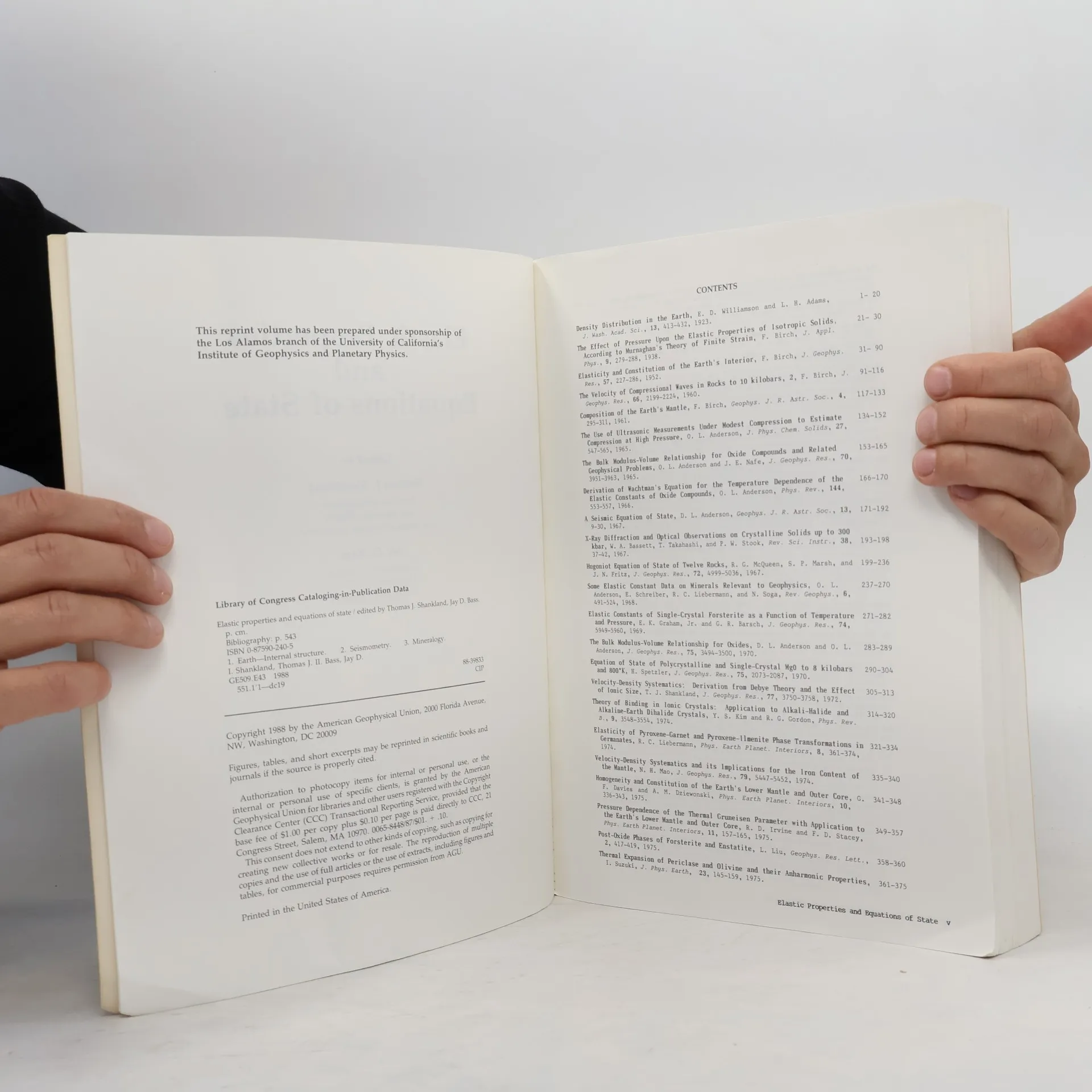
- ISBN10
- 0875902405
- ISBN13
- 9780875902401
- Reihe
- Schlagwörter
- Naturwissenschaften, Wissenschaft, USA, Mineralien, Erze
- Beschreibung
- Published by the American Geophysical Union as part of the Special Publications Series .To those who were attracted to geophysics because of the opportunity to do science out?]of?]doors, the idea of laboratory geophysics may seem a strange, if not contradictory, notion. Yet most of what we can say about those parts of the Earth that are not directly accessible comes from comparisons of field ?] derived results with laboratory measurements of physical properties. Perhaps the most successful example of this approach has been in the field of elasticity and equations of state. In application, measured and calculated velocities and densities are used with data derived from seismic velocity profiles to infer composition, mineralogy, and temperature from the lower crust through the mantle and core to the center of the Earth. Such comparisons are routinely applied, for instance, in distinguishing gabbro from granite in the crust. In other cases the methodology is less straightforward and this exercise leads to very controversial conclusions, particularly when in situ conditions are difficult to simulate in the laboratory.