

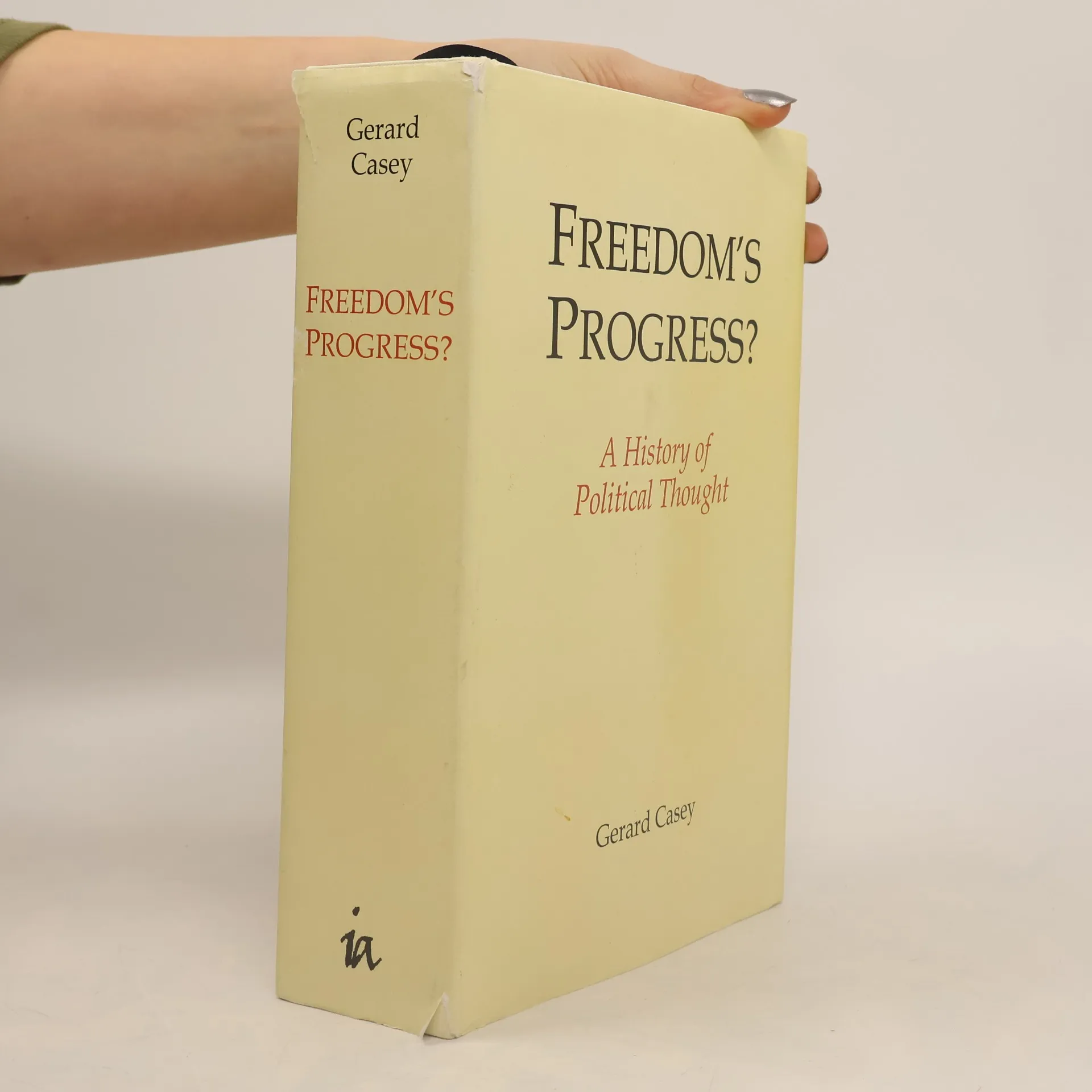


Freedom's Progress?
A History of Political Thought
Autor*innen
Parameter
- 964 Seiten
- 34 Lesestunden
Mehr zum Buch
In Freedom's Progress?, Gerard Casey explores the evolution of freedom as a complex and uneven journey from tribalism to individualism, emphasizing the precarious nature of this transition. He argues that the shift from collective primacy to individual freedom is neither automatic nor complete, with the possibility of reverting to tribalism always present. The fragility of freedom stems from the fact that not everyone recognizes the value of individual liberty; many prioritize security over freedom. As Max Eastman notes, the allure of collective identity and paternal authority often rivals the desire for personal liberty. Historical examples, such as Fascism, Bolshevism, and National Socialism, illustrate this regression to tribalism, while contemporary welfare states may still reflect tribalist tendencies. Casey incorporates a range of thinkers, from well-known figures like Plato and Locke to lesser-known voices such as Althusius and Proudhon, providing a broader perspective on political thought. The book also delves into the social and cultural contexts of politics, addressing topics like slavery, Christianity, the role of universities, and significant historical movements, culminating in an extensive examination of human prehistory and the tribalism of the twentieth century.
Buchkauf
Freedom's Progress?, Gerard Casey
- Sprache

- Erscheinungsdatum
- 2017
- Einband
- (Hardcover),
- Buchzustand
- Gebraucht - Gut
- Preis
- 58,99 €inkl. MwSt.
Keiner hat bisher bewertet.
- Titel
- Freedom's Progress?
- Untertitel
- A History of Political Thought
- Sprache
- Englisch
- Autor*innen
- Gerard Casey
- Verlag
- Imprint Academic
- Erscheinungsdatum
- 2017
- Einband
- Hardcover
- Seitenzahl
- 964
- ISBN10
- 1845409426
- ISBN13
- 9781845409425
- Reihe
- Kategorien
- Schlagwörter
- Politik, Politische Theorien, Politische Philosophie, Politische Geschichte
- Beschreibung
- In Freedom's Progress?, Gerard Casey explores the evolution of freedom as a complex and uneven journey from tribalism to individualism, emphasizing the precarious nature of this transition. He argues that the shift from collective primacy to individual freedom is neither automatic nor complete, with the possibility of reverting to tribalism always present. The fragility of freedom stems from the fact that not everyone recognizes the value of individual liberty; many prioritize security over freedom. As Max Eastman notes, the allure of collective identity and paternal authority often rivals the desire for personal liberty. Historical examples, such as Fascism, Bolshevism, and National Socialism, illustrate this regression to tribalism, while contemporary welfare states may still reflect tribalist tendencies. Casey incorporates a range of thinkers, from well-known figures like Plato and Locke to lesser-known voices such as Althusius and Proudhon, providing a broader perspective on political thought. The book also delves into the social and cultural contexts of politics, addressing topics like slavery, Christianity, the role of universities, and significant historical movements, culminating in an extensive examination of human prehistory and the tribalism of the twentieth century.