




Parameter
- 458 Seiten
- 17 Lesestunden
Mehr zum Buch
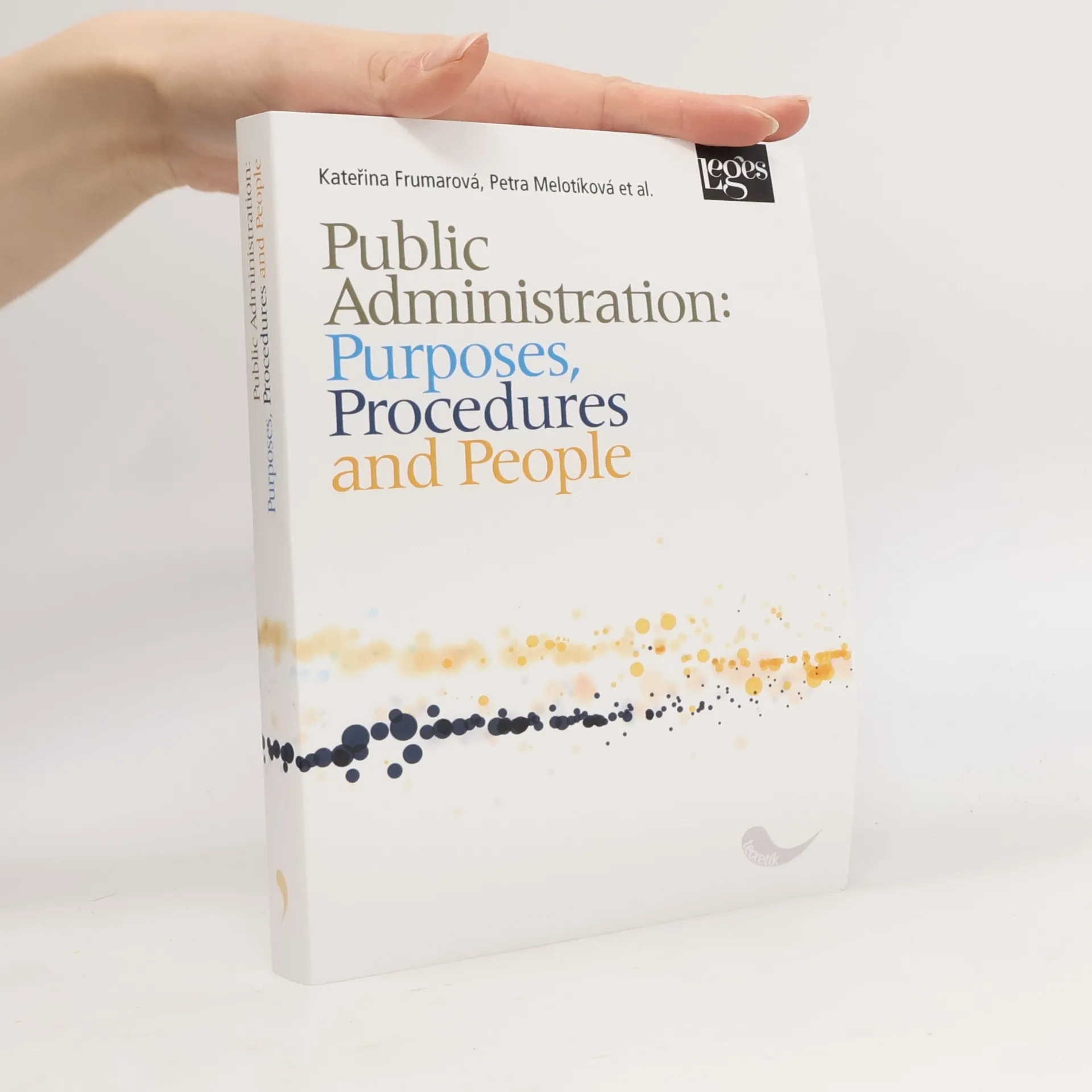
This publication, by a Czechia-Ukrainian team, examines contemporary public administration as a cornerstone of a democratic state governed by the rule of law. It explores three interconnected levels essential for effective public administration: its purpose and value base, the processes and procedures involved, and the crucial human factor, especially in the context of digitization and automation. The authors analyze public administration as a service aimed at safeguarding public subjective rights while promoting the public interest and enhancing citizens' trust in public authority. Key principles discussed include legality, liability, transparency, and respect for fundamental rights, alongside institutional and procedural mechanisms for individual protection against public administration actions. The work is valuable for both academia and professional practice, offering insights into current challenges in public administration, such as the European dimension of administrative processes, digitization, personnel policy, ethics, and the protection of vulnerable groups. It emphasizes that effective administration is not accidental but results from a deliberate blend of values, quality processes, and skilled personnel.
Buchkauf
Public Administration: Purposes, Procedures And People, Kateřina Frumarová, Petra Melotíková
- Sprache


- Erscheinungsdatum
- 2025
- Einband
- (Paperback),
- Buchzustand
- Gebraucht - Sehr gut
- Preis
- 21,39 €inkl. MwSt.
Keiner hat bisher bewertet.
- Titel
- Public Administration: Purposes, Procedures And People
- Sprache
- Tschechisch, Englisch
- Autor*innen
- Kateřina Frumarová, Petra Melotíková
- Verlag
- Leges
- Erscheinungsdatum
- 2025
- Einband
- Paperback
- Seitenzahl
- 458
- ISBN10
- 8075028538
- ISBN13
- 9788075028532
- Reihe
- Schlagwörter
- Beschreibung
- This publication, by a Czechia-Ukrainian team, examines contemporary public administration as a cornerstone of a democratic state governed by the rule of law. It explores three interconnected levels essential for effective public administration: its purpose and value base, the processes and procedures involved, and the crucial human factor, especially in the context of digitization and automation. The authors analyze public administration as a service aimed at safeguarding public subjective rights while promoting the public interest and enhancing citizens' trust in public authority. Key principles discussed include legality, liability, transparency, and respect for fundamental rights, alongside institutional and procedural mechanisms for individual protection against public administration actions. The work is valuable for both academia and professional practice, offering insights into current challenges in public administration, such as the European dimension of administrative processes, digitization, personnel policy, ethics, and the protection of vulnerable groups. It emphasizes that effective administration is not accidental but results from a deliberate blend of values, quality processes, and skilled personnel.