

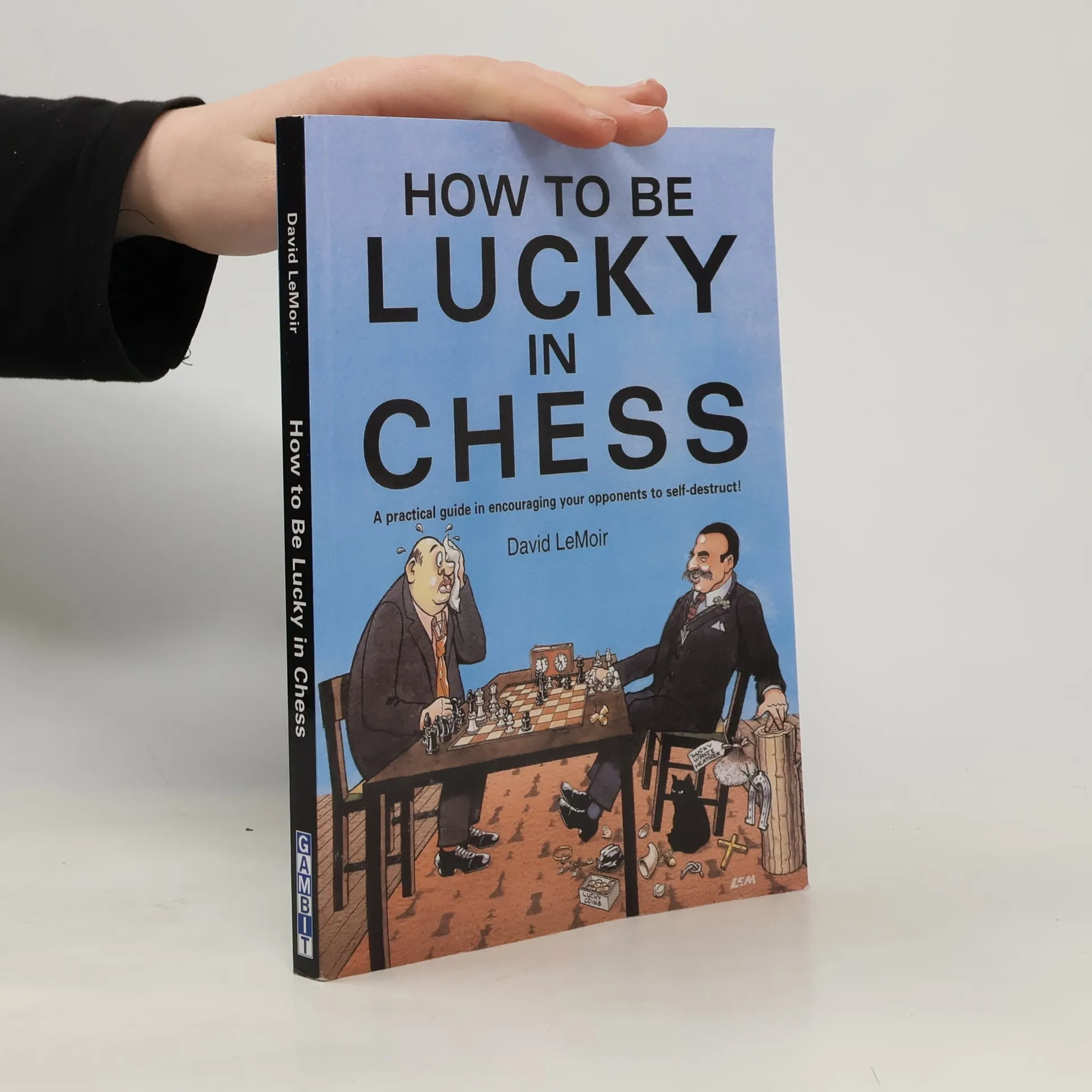
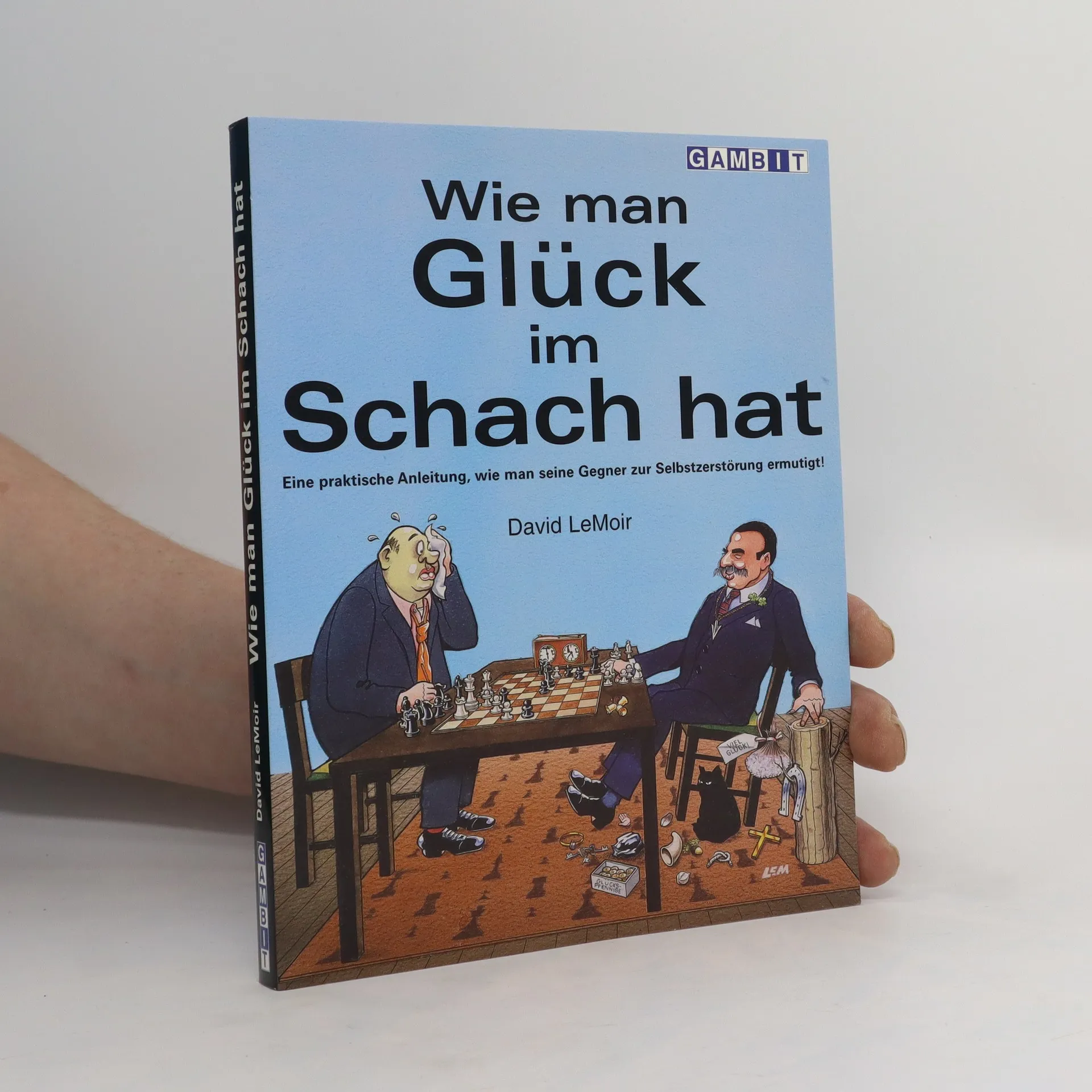
Einige Spieler scheinen eine unerschpfliche Quelle von Schachglck zu haben. Wie alle Spieler geraten sie von Zeit zu Zeit in Schwierigkeiten, aber irgendwie finden sie einen Weg, sich zu retten. Unter den Weltmeistern sind Lasker, Tal und Kasparow berchtigt dafr, am Rande des Abgrunds zu stehen, aber irgendwie sicher zu stellen, dass es ihre Gegner sind, die schielich hineinfallen. Dieses Buch ist darauf abgerichtet, dem durchschnittlichen Spieler, der vielleicht nicht so viel Zeit fr das Schachstudium hat, zu helfen, das meiste aus seinen Fhigkeiten zu machen. Anders als bereits vorhandene Literatur ber Schachpsychologie, ist dieses Buch keine schwergewichtige, theoretische Abhandlung, sondern eine praktische Anleitung, wie man seine Gegner dazu verleitet Fehler zu machen - und dadurch das kreiert, was oft 'Glck' genannt wird.
David LeMoir Bücher

How to Become a Deadly Chess Tactician
- 192 Seiten
- 7 Lesestunden
A guide for chess-players to help them spot unlikely-looking tactical tricks and launch cunning attacks. Readers are shown how to hunt the enemy king and how to seize the initiative with surprising sacrifices. LeMoir shows that the key factors in becoming a deadly tactician are motivation (having the willingness to sacrifice and to consider tactical ideas during play), imagination (being aware of tactical concepts that lead to ideas which other players might miss) and calculation (being able to analyse and calculate effectively).This user-friendly and humorously written book contains many outstanding examples of seized opportunities, together with guidance on how to spot surprising tactics and handle positions of material imbalance. Throughout, there are exercises for the reader to tackle.
How to Be Lucky in Chess
- 176 Seiten
- 7 Lesestunden
Some players seem to have an inexhaustible supply of chessboard luck. No matter what trouble they find themselves in, they somehow manage to escape. Among world champions, Lasker, Tal, and Kasparov are famed for peering into the abyss but somehow making sure it is their opponents who fall. This book aims to help ordinary players, who may have little time for studying chess, to make the most of their abilities. Unlike most previous literature on chess psychology, this is a practical guide on how to lure opponents into error - and thus create what is often called 'luck'.
Grundlegende Opferwendungen im Schach
- 256 Seiten
- 9 Lesestunden
Opfer sind aus dem Schach nicht wegzudenken. Wer niemals ein Opfer erwgt, wird unzhlige Gelegenheiten verpassen und viel versprechende Stellungen ein ums andere Mal nicht zum Sieg fhren knnen. Wer die Opfermglichkeiten seines Gegners nicht wrdigt, wird die Gefahrenzeichen nicht erkennen und nur allzu oft eine Knigsjagd ber sich ergehen lassen mssen. In diesem einzigartigen Buch untersucht der beliebte Autor David LeMoir tiefschrfend die wichtigsten Standardopferideen. Er zhlt aber nicht nur die verschiedenen Mglichkeiten auf und fhrt Beispiele dafr an, sondern diskutiert auch die mglichen Fortsetzungen nach dem Opfer, die Mglichkeiten des Verteidigers und die positionellen Faktoren, die Anhaltspunkte fr die Korrektheit oder Inkorrektheit des Opfers liefern knnen. Viele wichtige Stellungstypen kann man nur dann gut behandeln, wenn man die mglichen thematischen Opfer versteht. Die in diesem Buch abgehandelten Opferideen sind fr einige sehr populre Erffnungssysteme von entscheidender Bedeutung. In der Tat gibt es nur wenige Partien, in denen nicht das eine oder andere dieser Opfer relevant ist.