When it comes to architecture, Switzerland wields an international influence that belies its small geographic size. Such prominent figures as Herzog & de Meuron and Peter Zumthor lead a chorus of innovative new voices emanating from this mountainous nation where craftsmanship, simple beauty, and environmental sensitivity have always been prized values. "Swiss Made" presents the work of the celebrated studios and architects at the forefront of Swiss design, much of which has never been seen before in the United States. In his introduction, historian Steven Spier provides an overview of Swiss architecture and considers the cultural attitudes that have fostered such refined buildings. Critic Martin Tschantz assesses the Swiss tradition of integrating progressive design, indigenous building techniques, and advanced engineering systems. The cleareyed images of architectural photographer Christian Richters are supplemented by drawings and plans of the many projects included in this handsome volume. Swiss Made features the work of: Burkhalter & Sumi, Diener & Diener, Gigon & Guyer, Herzog & de Meuron, Peter Markli, Peter Zumthor, and many others. "Swiss Made" is the companion volume to "SuperDutch."
Christian Richters Bücher


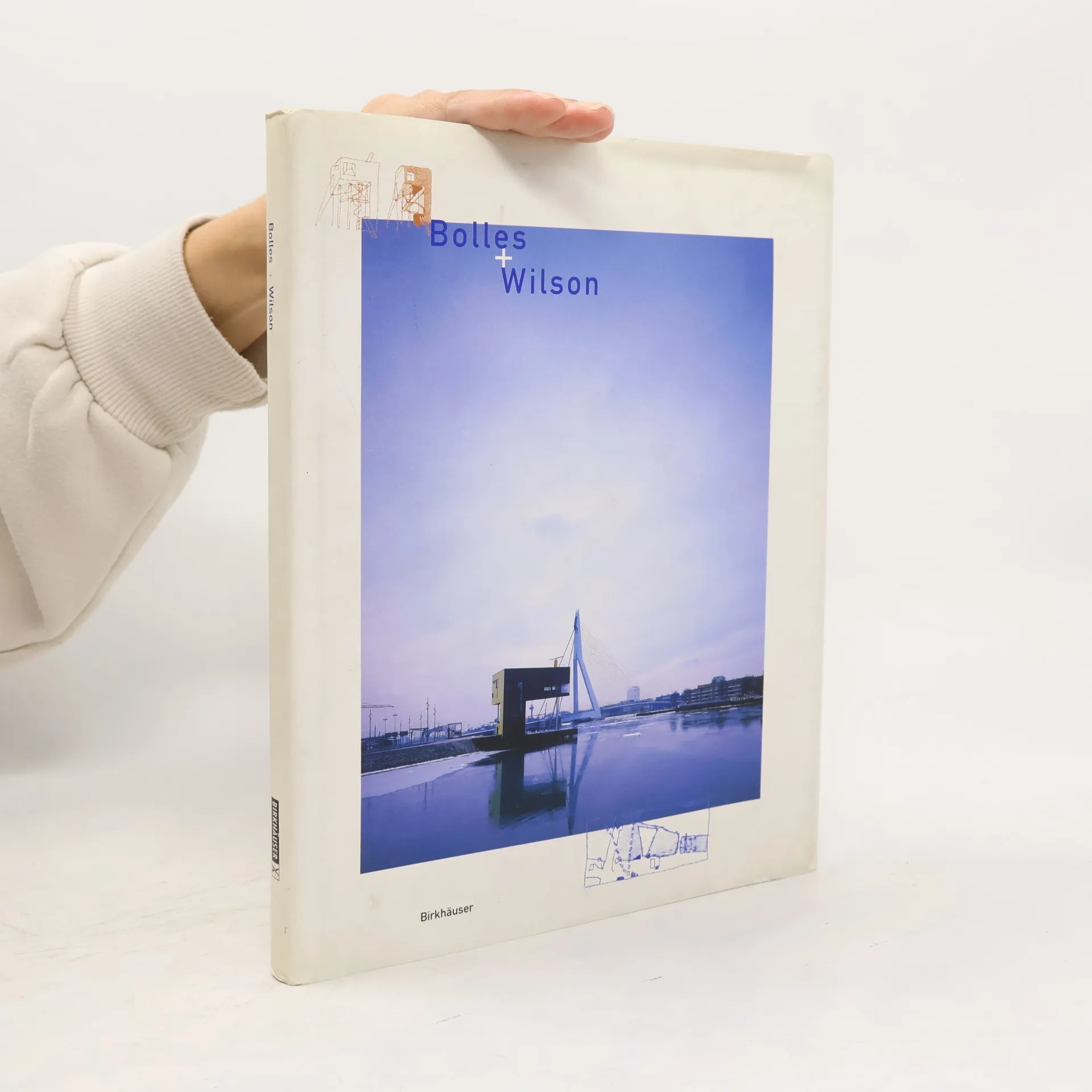
The architecture of Bolles + Wilson exists at the intersection of German and English architectural cultures. Their attention to the quality of design filters down to even the smallest detail and there is a refreshing command of architectural fantasy that echoes the architects' early years in the London AA School of Architecture. The buildings of Bolles + Wilson leave clear markers in the diffused urban agglomerations. Peter Wilson states, "we attempt to take up one of the principle responsibilities of to focus, to anchor, to give measure." The present monograph shows recent buildings and projects from the period 1993 to 1997 in Münster, Castrop-Rauxel, Hengeloo and Rotterdam, where their New Luxor Theatre is a high point in the urban development program for this harbor-city. For this project Bolles + Wilson won the competition in 1996 ahead of the second-place design by Rem Koolhaas.
Text in English and German. Julia Bolles-Wilson and Peter L Wilson have built a large number of striking, thoroughly detailed cultural and commercial buildings in recent years, all sharing the characteristic that they stubbornly resist superficial stylistic categorisation. Their buildings are articulated and positioned in an unmistakable way in their respective urban spaces, thanks to pointed breaks with rational space configurations, sculptural shapes for architectural silhouettes and the use of polychrome surfaces.