
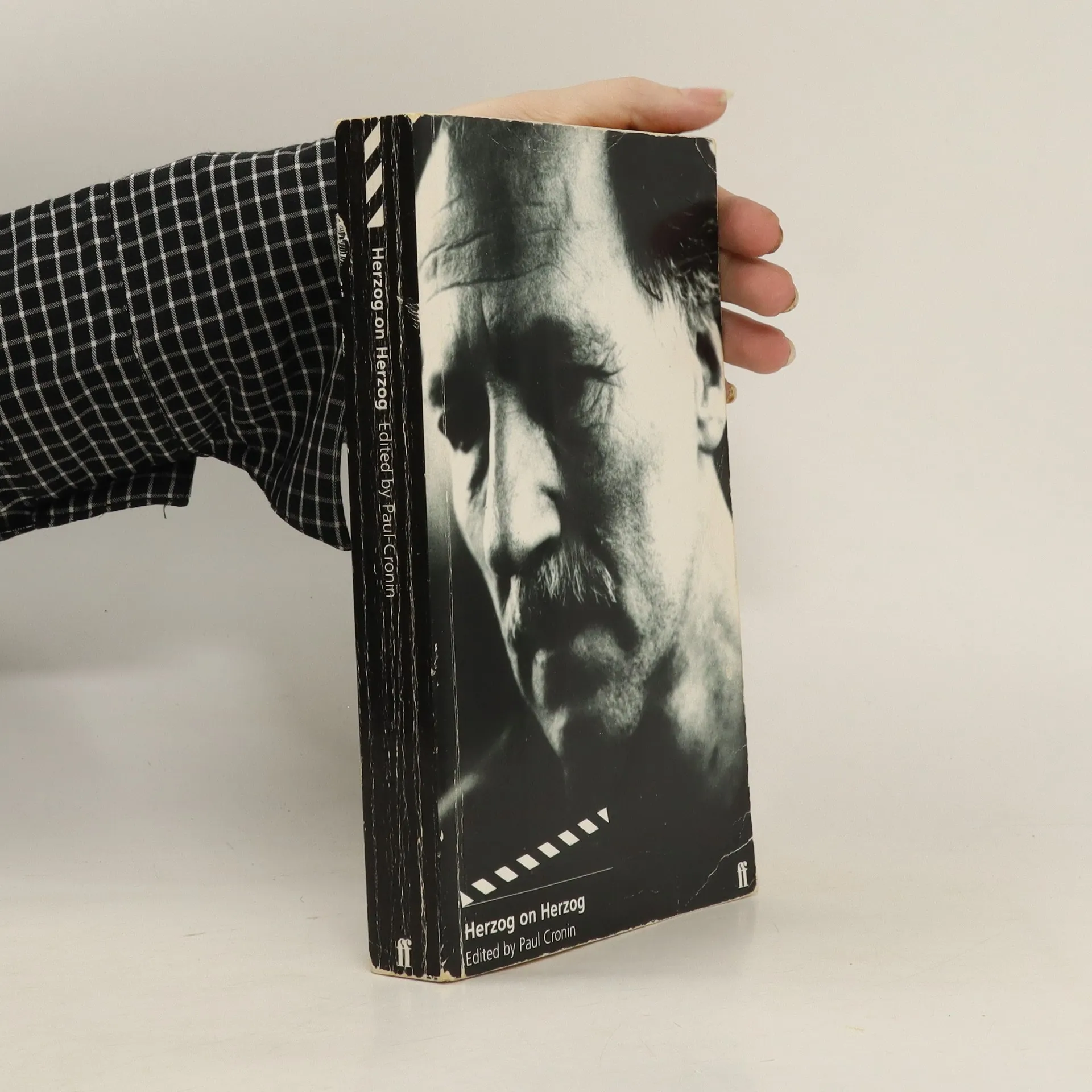
An invaluable set of career-length interviews with the German genius hailed by François Truffaut as "the most important film director alive" Most of what we've heard about Werner Herzog is untrue. The sheer number of false rumors and downright lies disseminated about the man and his films is truly astonishing. Yet Herzog's body of work is one of the most important in postwar European cinema. His international breakthrough came in 1973 with Aguirre, The Wrath of God, in which Klaus Kinski played a crazed Conquistador. For The Enigma of Kaspar Hauser, Herzog cast in the lead a man who had spent most of his life institutionalized, and two years later he hypnotized his entire cast to make Heart of Glass. He rushed to an explosive volcanic Caribbean island to film La Soufrière, paid homage to F. W. Murnau in a terrifying remake of Nosferatu, and in 1982 dragged a boat over a mountain in the Amazon jungle for Fitzcarraldo. More recently, Herzog has made extraordinary "documentary" films such as Little Dieter Needs to Fly. His place in cinema history is assured, and Paul Cronin's volume of dialogues provides a forum for Herzog's fascinating views on the things, ideas, and people that have preoccupied him for so many years.
Paul Cronin Bücher
![A Time to Stir [DIALOGUE TRANSCRIPT]](https://rezised-images.knhbt.cz/1920x1920/0.jpg)


The Holy Spirit VS. Man's Animal Kingdom
- 402 Seiten
- 15 Lesestunden
The book explores the intersection of biblical events and scientific discoveries, particularly focusing on archaeological and DNA evidence. It delves into Moses's motivations for leading the Israelites into Canaan, revealing hidden messages in his writings. The author posits that the creation of gods and religions served as an early form of governance, with priests positioned as intermediaries between the divine and the populace, thereby wielding significant power over society.
A Time to Stir [DIALOGUE TRANSCRIPT]
- 668 Seiten
- 24 Lesestunden
The dialogue transcript captures the compelling conversations from the documentary film that explores a pivotal moment in history. It delves into themes of social change, activism, and the personal stories of those involved in the stirring events. By presenting raw and unfiltered dialogues, the transcript offers insight into the motivations and emotions of the participants, highlighting the significance of their experiences during a transformative period. This work serves as both a historical record and a powerful testament to the impact of collective action.