Rudyard Kipling
- 178 Seiten
- 7 Lesestunden
Studies over leven en werk van de Engelse schrijver Rudyard Kipling (1865-1936).





Studies over leven en werk van de Engelse schrijver Rudyard Kipling (1865-1936).
A collection of English and American essays on a variety of topics by such writers as Nathaniel Hawthorne, George Eliot, Sir Winston Churchill, Oscar Wilde, and Virginia Woolf.
Parodies come in all shapes and sizes. There are broad parodies and subtle parodies, ingenious imitations and knockabout spoofs, scornful lampoons and affectionate pastiches. All these varieties, and many others, appear in this delightful anthology, which has been hailed as "delightful" ( Wall Street Journal ), "enjoyable" ( The New Yorker ), and "sparkling" ( The Financial Times ). The classics of the genre are all here, but so are scores of lesser known but scarcely less brilliant works. At every stage there are surprises. Proust visits Chelsea, Yeats re-writes "Old King Cole," Harry Potter encounters Mick Jagger, a modernized Sermon on the Mount rubs shoulders with an obituary of Sherlock Holmes. The collection provides a hilarious running commentary on literary history, but it also looks beyond literature to include such things as ad parodies, political parodies, and even a scientific hoax. The collection includes work by such accomplished parodists as Max Beerbohm, RobertBenchley, H. L. Mencken, and Evelyn Waugh. And the "victims" include Chaucer, Shakespeare, Milton, Wordsworth, Poe, Longfellow, Emily Dickinson, Cole Porter, Martin Amis, and many others.
The dictionary defines "aphorism" as "a short pithy statement or maxim," but beneath this definition lies a wealth of wit and insight to which neither the word nor any brief description can do justice. This delightful anthology demonstrates just how rewarding the aphorism can be and how brilliantly the aphorist can illuminate a hidden truth or reveal the ironies of life. Whatever the situation, whatever the mood, the reader will find in this international array of aphorisms just the right words to give his or her feeling pungent expression. The classic aphorists--La Bruyere, Nietzsche, both Samuel Butlers, La Rochefoucault, Emerson--are here in abundance, as are the philosophers from the Greeks of Paul Valery, the social commentators from Edmund Burke to Walter Benjamin. Statesmen and scientists, Olympians and gadflies, mystics and boulevardiers--this collection brings together the most diverse figures, drawing freely on ancients and moderns, on the widsom of East and West, juxtaposing viewpoints as different as those of Jean Cocteau and George Orwell, Ambrose Bierce and Marcus Aurelius, Lord Chesterfield and Elias Canetti. Profound, provocative, and vastly entertaining, The Oxford Book of Aphorisms will lure the reader back to its pages time and again. The book is fully indexed, and wherever possible, sources, dates, and complete names are supplied."
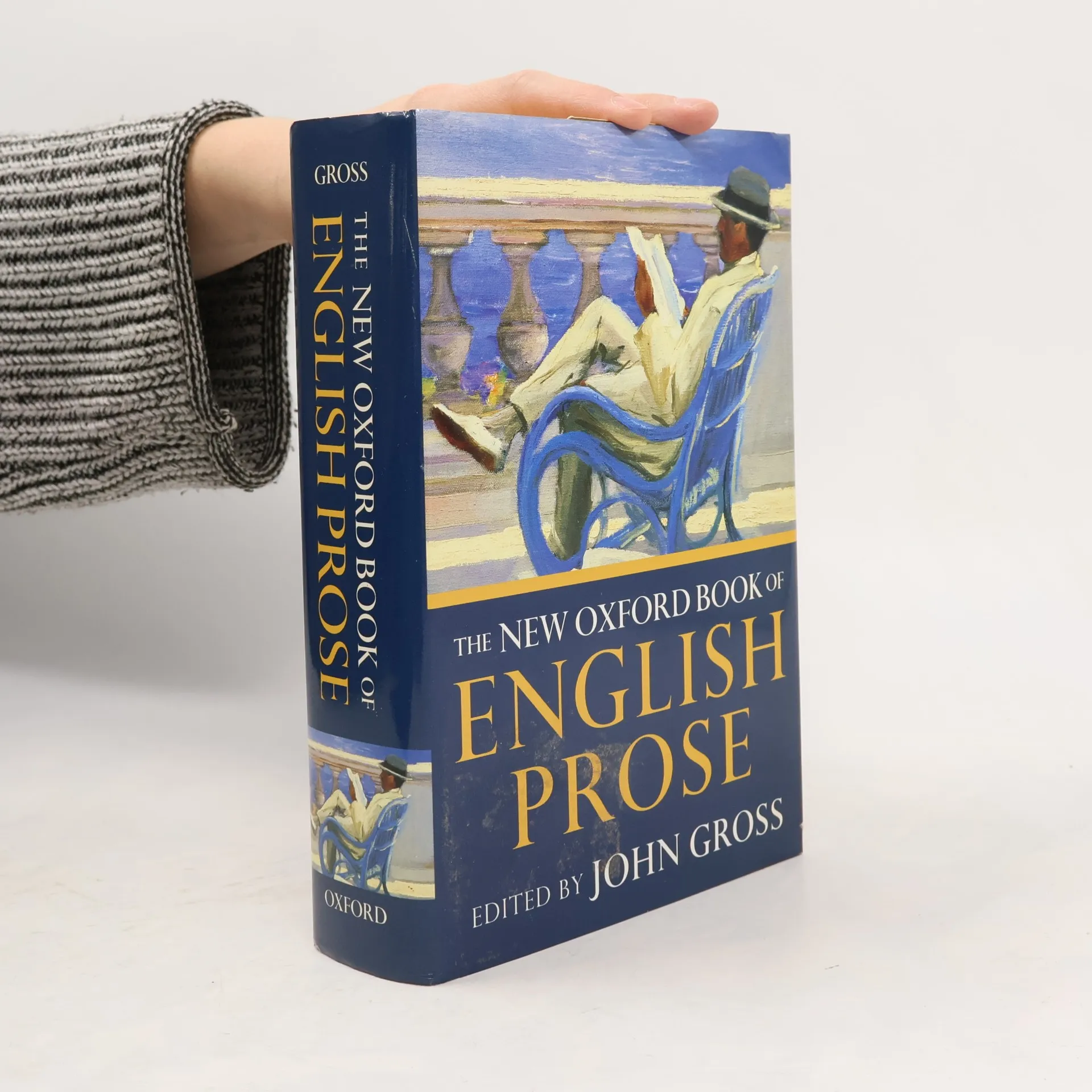
Prose is the ordinary form of spoken or written language, exemplified by well-argued legal judgments, lucid scientific papers, and clear technical instructions. However, inspired prose is a rare gem. In this anthology, John Gross curates exceptional examples of English prose that elevate plain language to artistic heights. The collection traces the evolution of prose from Sir Thomas Malory to Kazuo Ishiguro, highlighting its growing confidence and range, particularly in the late seventeenth century. The eighteenth century marked a significant shift as the ornate styles of literary giants like Milton and Donne transitioned to more modern prose forms. The anthology encompasses a broad spectrum of literary experiences, as the editor emphasizes that "literary" is not a narrow term. It showcases master craftsmanship from diverse voices, including Salman Rushdie, Margaret Atwood, Vladimir Nabokov, and Mulk Raj Anand. From Burke's eloquent political treatises to Herman Melville's bold narratives, the selections illustrate the expressive power of prose, celebrating the vibrant diversity of literature.
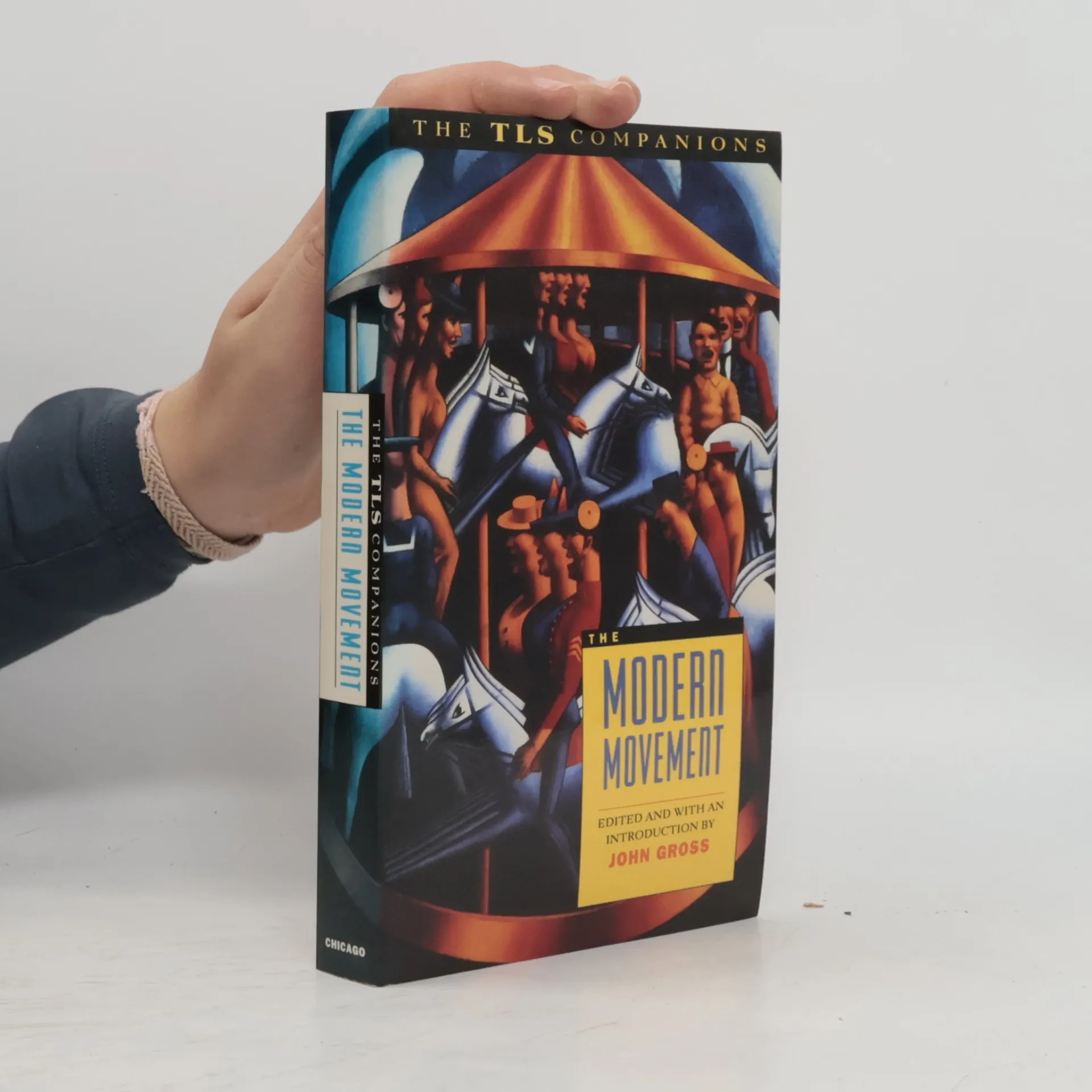
For the past ninety years the Times Literary Supplement has scrutinized, dissected, applauded, and occasionally disparaged the work of the twentieth century's leading writers. It has taken a major role in the making—and breaking—of literary reputations. In The Modern Movement , John Gross has assembled an entertaining selection of 155 articles and reviews about and by the great figures of literary modernism. The focus is on twelve key modernist writers: W. B. Yeats, Ezra Pound, D. H. Lawrence, James Joyce, T. S. Eliot, Wyndham Lewis, Virginia Wolf, W. H. Auden, Marcel Proust, Thomas Mann, Rainer Maria Rilke, and Franz Kafka. Another section gathers ten reviews and articles by Eliot and Woolf on then current writers and writing. In addition, there are more general articles on literary trends and issues by such prominent writers and critics as Anthony Burgess, Wallace Stevens, Anthony Powell, and Erich Heller. This fascinating array reveals early opinions on what have come to be the classics of modernist literature. Readers will be treated to astute and often surprising opinions of their favorite writers on the most important literature of this century.