Dieser Autor befasst sich mit faszinierenden und komplexen Konzepten des Universums und deckt die tiefen Mysterien von Schwarzen Löchern und Zeitkrümmern auf. Seine Arbeit taucht tief in die theoretische Physik ein und macht komplexe wissenschaftliche Ideen durch fesselnde Erzählungen einem breiteren Publikum zugänglich. Er nutzt seine Expertise in der theoretischen Physik, um die Grenzen unseres Verständnisses der Realität zu erforschen und führt die Leser auf eine Entdeckungsreise, die ebenso lehrreich wie zum Nachdenken anregend ist. Sein Stil zeichnet sich durch Klarheit und die Fähigkeit aus, scheinbar unzugängliche Themen in verständliche und überzeugende Erzählungen zu übersetzen.
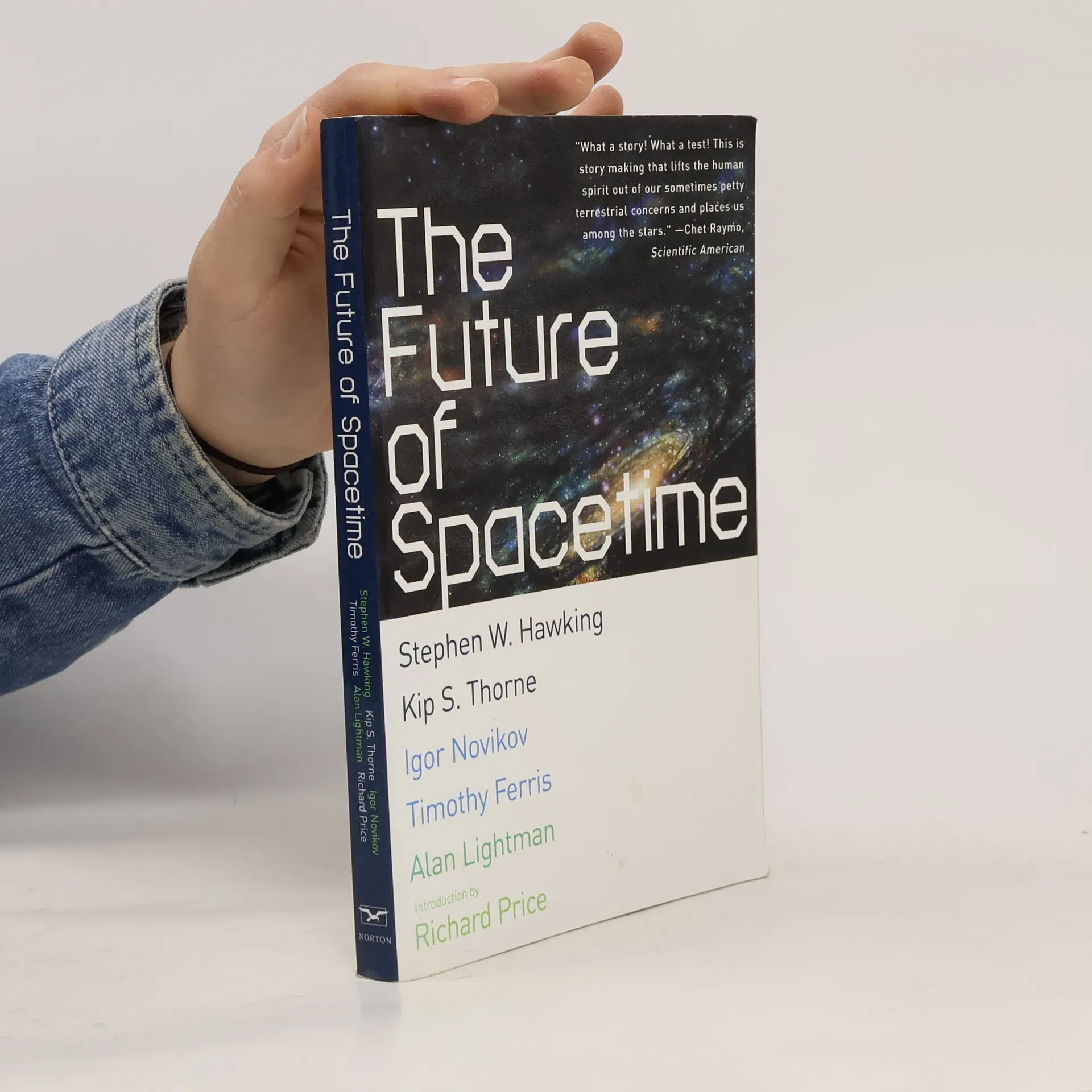
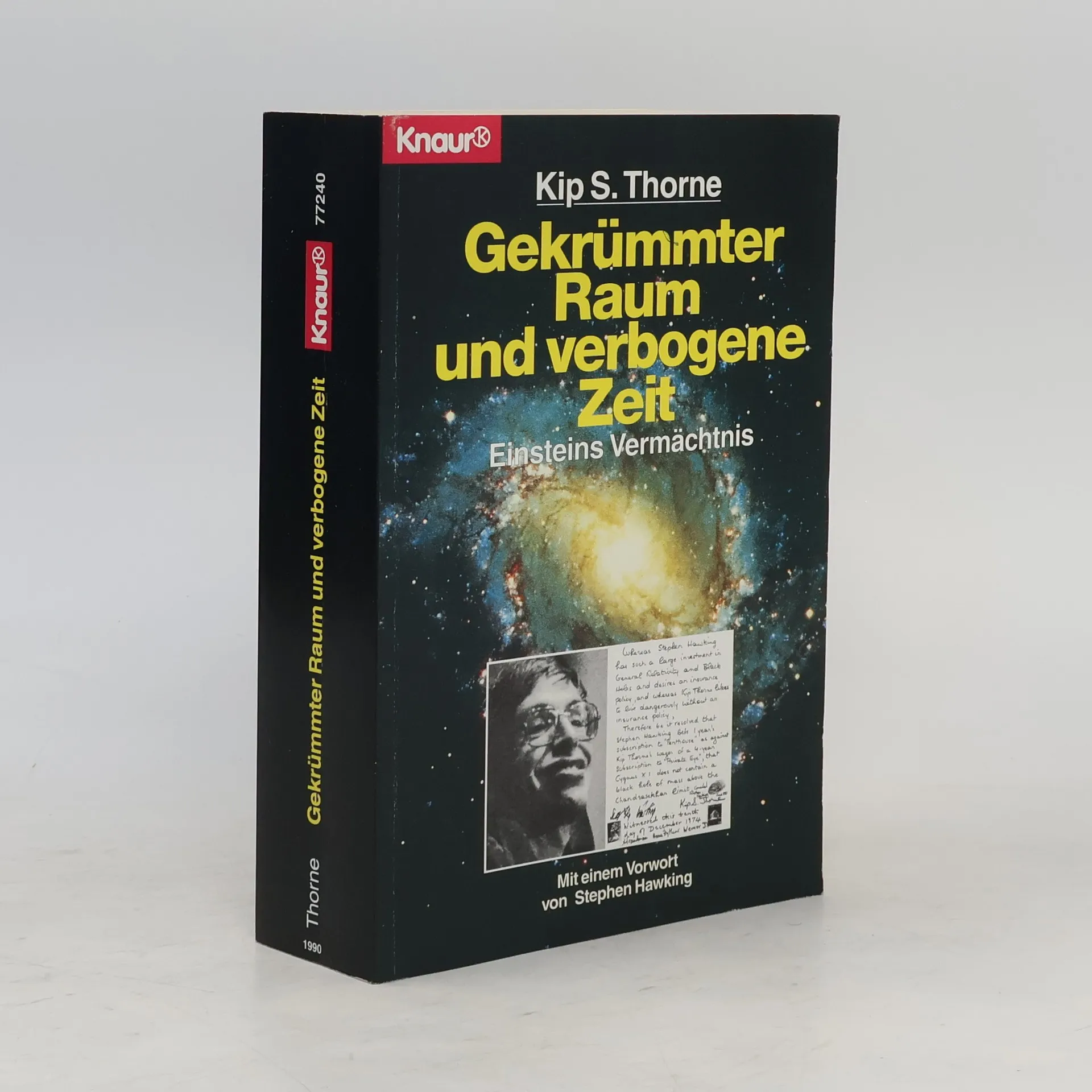
Ein kurzweiliger Abriß der Physik des 20. Jahrhunderts, der mit der Beschreibung einer fiktiven Reise ins Zentrum eines Schwarzen Lochs beginnt und mit Überlegungen zur Konstruktion einer Zeitmaschine endet. Zahlreiche Fotos, Graphiken und Diagramme helfen dabei, die Geschichte von Raum und Zeit zu veranschaulichen.
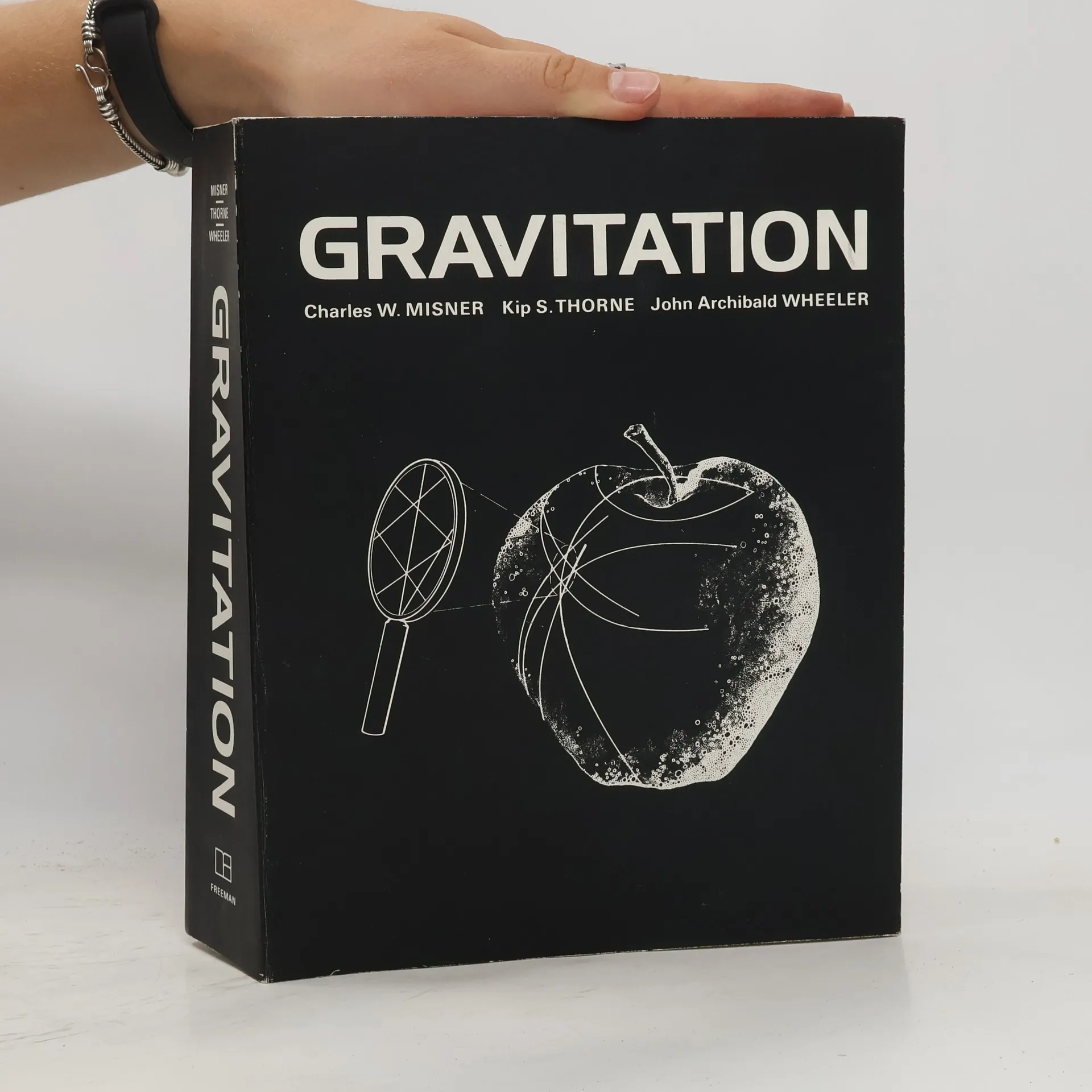
This landmark text offers a rigorous full-year graduate level course on gravitation physics, teaching students • Grasp the laws of physics in flat spacetime• Predict orders of magnitude• Calculate using the principal tools of modern geometry• Predict all levels of precision• Understand Einstein's geometric framework for physics• Explore applications, including pulsars and neutron stars, cosmology, the Schwarzschild geometry and gravitational collapse, and gravitational waves• Probe experimental tests of Einstein's theory• Tackle advanced topics such as superspace and quantum geometrodynamicsThe book offers a unique, alternating two-track pathway through the • In many chapters, material focusing on basic physical ideas is designated asTrack 1 . These sections together make an appropriate one-term advanced/graduate level course (mathematical vector analysis and simple partial-differential equations). The book is printed to make it easy for readers to identify these sections.• The remaining Track 2 material provides a wealth of advanced topics instructors can draw from to flesh out a two-term course, with Track 1 sections serving as prerequisites.
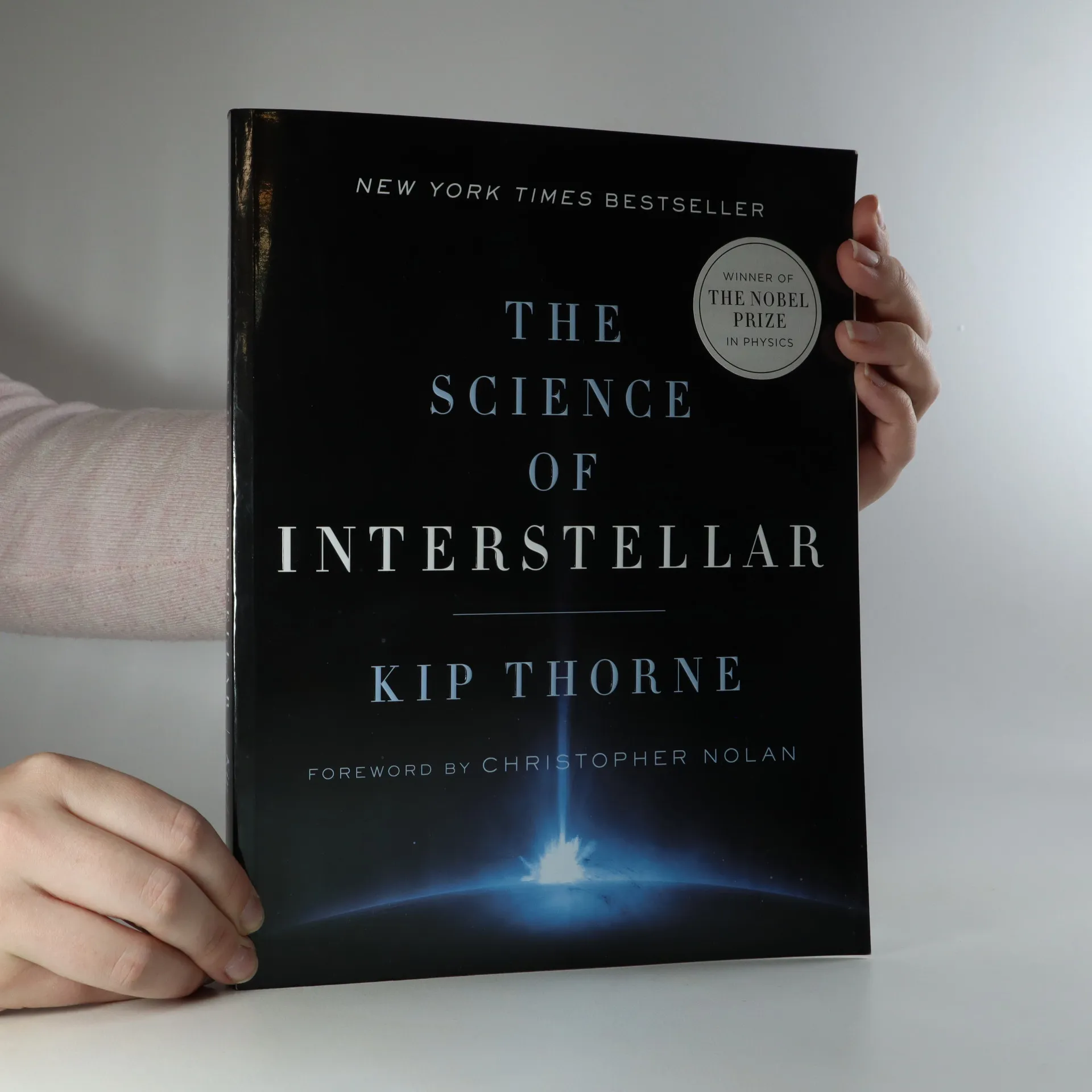
A journey through the otherworldly science behind Christopher Nolan’s highly anticipated film, Interstellar, from executive producer and theoretical physicist Kip Thorne. Interstellar, from acclaimed filmmaker Christopher Nolan, takes us on a fantastic voyage far beyond our solar system. Yet in The Science of Interstellar, Kip Thorne, the physicist who assisted Nolan on the scientific aspects ofInterstellar, shows us that the movie’s jaw-dropping events and stunning, never-before-attempted visuals are grounded in real science. Thorne shares his experiences working as the science adviser on the film and then moves on to the science itself. In chapters on wormholes, black holes, interstellar travel, and much more, Thorne’s scientific insights—many of them triggered during the actual scripting and shooting of Interstellar—describe the physical laws that govern our universe and the truly astounding phenomena that those laws make possible.
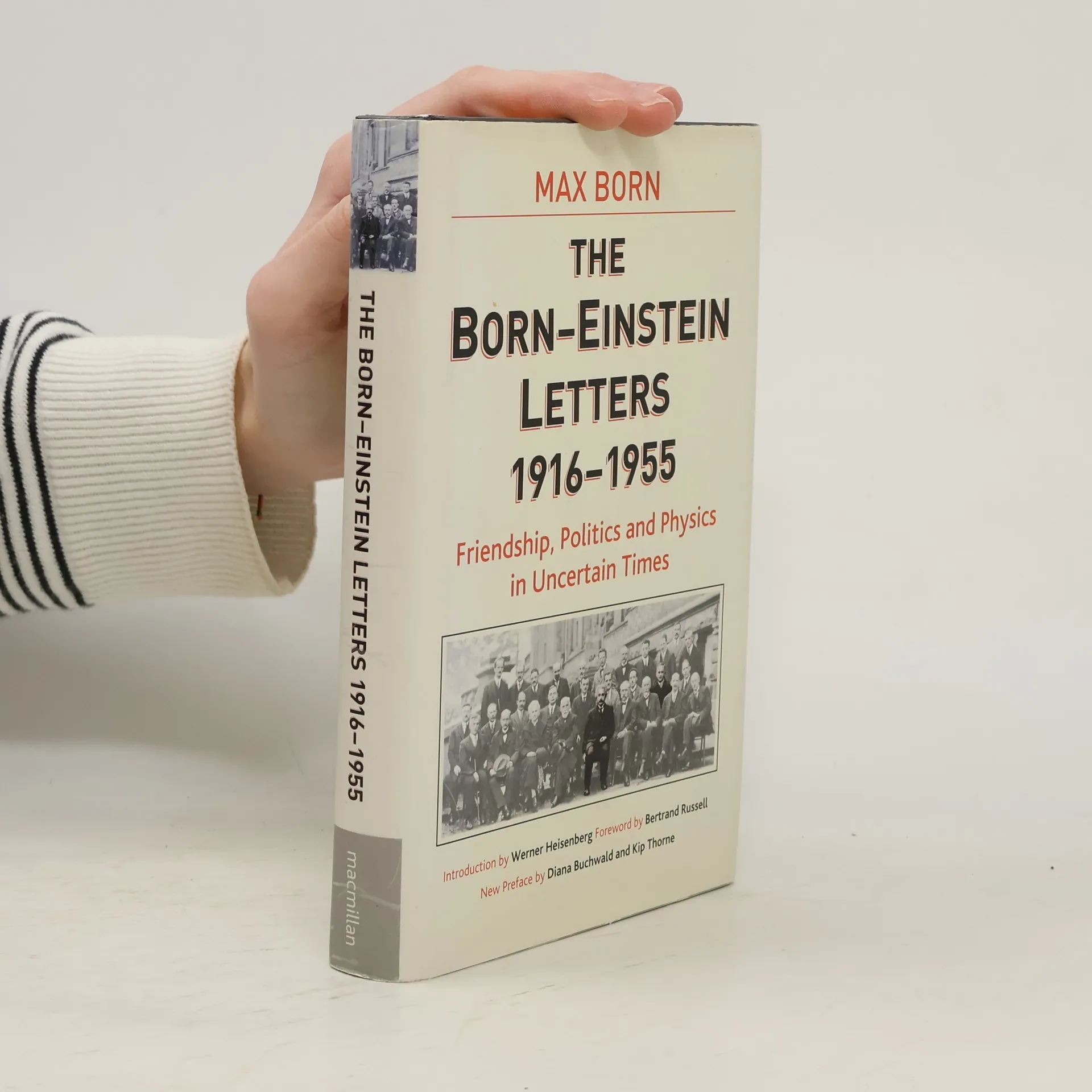
Friendship, Politics and Physics in Uncertain Times
235 Seiten
9 Lesestunden
Albert Einstein and Max Born were great friends. Their letters span 40 years and two world wars. In them they argue about quantum theory, agree about Beethoven's heavenly violin and piano duets (that they played together when they met) and chat about their families. Equally important, the men commiserate over the tragic plight of European Jewry and discuss what part they should play in the tumultuous politics of the time. Fascinating historically, The Born-Einstein Letters is also highly topical: scientists continue to struggle with quantum physics, their role in wartime and the public's misunderstanding. First published by Macmillan in 1971, this book is re-issued, with a substantial new preface by leading US physicists Kip Thorne and Diana Buchwald, as part of 2005's Relativity Centenary celebrations.
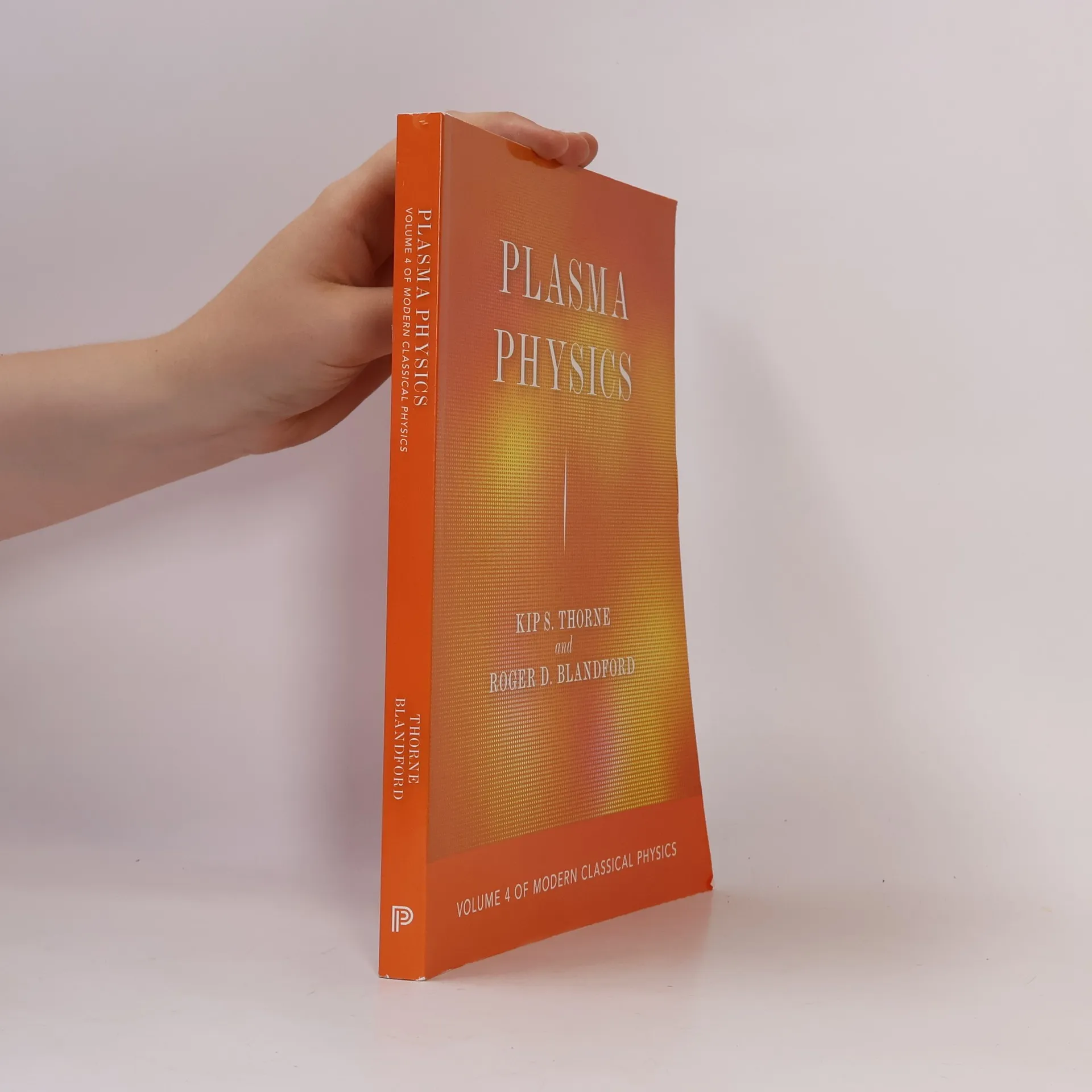
A groundbreaking textbook on twenty-first-century plasma physics and its applications is now available in five stand-alone volumes, ideal for graduate or advanced undergraduate courses in various fields. Each volume emphasizes fundamental concepts, modern applications, and provides a physical and intuitive understanding of the subject.
The volume on Plasma Physics offers an essential introduction, focusing on a gas that is significantly ionized, composed of electrons and ions, often influenced by magnetic fields. Plasmas are crucial in numerous contemporary applications, including controlled thermonuclear fusion, radio wave propagation in the ionosphere, and the behavior of the solar corona and wind. In astrophysics, plasmas are responsible for emissions across the electromagnetic spectrum, including phenomena from black holes, magnetized neutron stars, and ultrarelativistic outflows.
This volume also serves as supplementary reading for courses in astrophysics, geophysics, and controlled fusion. The five volumes are available individually as paperbacks and ebooks, covering Statistical Physics, Optics, Elasticity and Fluid Dynamics, Plasma Physics, and Relativity and Cosmology.
This collection features insights from renowned physicists on the nature of spacetime, time travel, and the future of science. Richard Price introduces spacetime physics, while Stephen Hawking discusses the concept of chronology protection. Igor Novikov explores the possibility of altering the past, and Kip S. Thorne speculates on future scientific advancements. Timothy Ferris addresses the challenges of making science accessible to the public, and Alan Lightman reflects on the intersection of physics and literature, highlighting the role of physicists as storytellers.