

The culture wars are pitting us against each other with a vitriol that is fueling outright violence. Slotkin looks to the foundational myths that have shaped American identity—the Frontier, the Founding, the Civil War (Emancipation and the Lost Cause), and the Good War—and reveals why they are bringing the US to the brink of an existential crisis.
Richard Slotkin Reihenfolge der Bücher
Richard Slotkin ist ein Kulturkritiker, Historiker und Romanautor, dessen Werk tief in die amerikanische Identität und Gewalt eintaucht. Seine Schriften untersuchen, wie diese Konzepte in Populärkultur und Geschichte geformt werden, wobei er sich auf anhaltende Erzählungen und deren Einfluss auf die amerikanische Psyche konzentriert. Slotkins akademischer Ansatz zeigt sich in seiner Fähigkeit, die komplexen historischen und kulturellen Kräfte aufzudecken, die das amerikanische Denken beeinflussen. Seine Werke bieten den Lesern tiefgreifende Einblicke in die beständigen Facetten der amerikanischen Kultur und ihre Entwicklung.


- 2024
- 2020
Regeneration Through Violence
The Mythology of the American Frontier, 1600-1860
- 684 Seiten
- 24 Lesestunden
Exploring the evolution of American cultural attitudes, Richard Slotkin examines how European settlers' anxieties influenced their mythology in the American West. Through an analysis of popular literature from the seventeenth to early nineteenth centuries, including captivity narratives and works by notable authors like Hawthorne and Melville, the book reveals how these narratives reflect the settlers' struggles to claim land and displace Native Americans, ultimately shaping the American identity.
- 1986
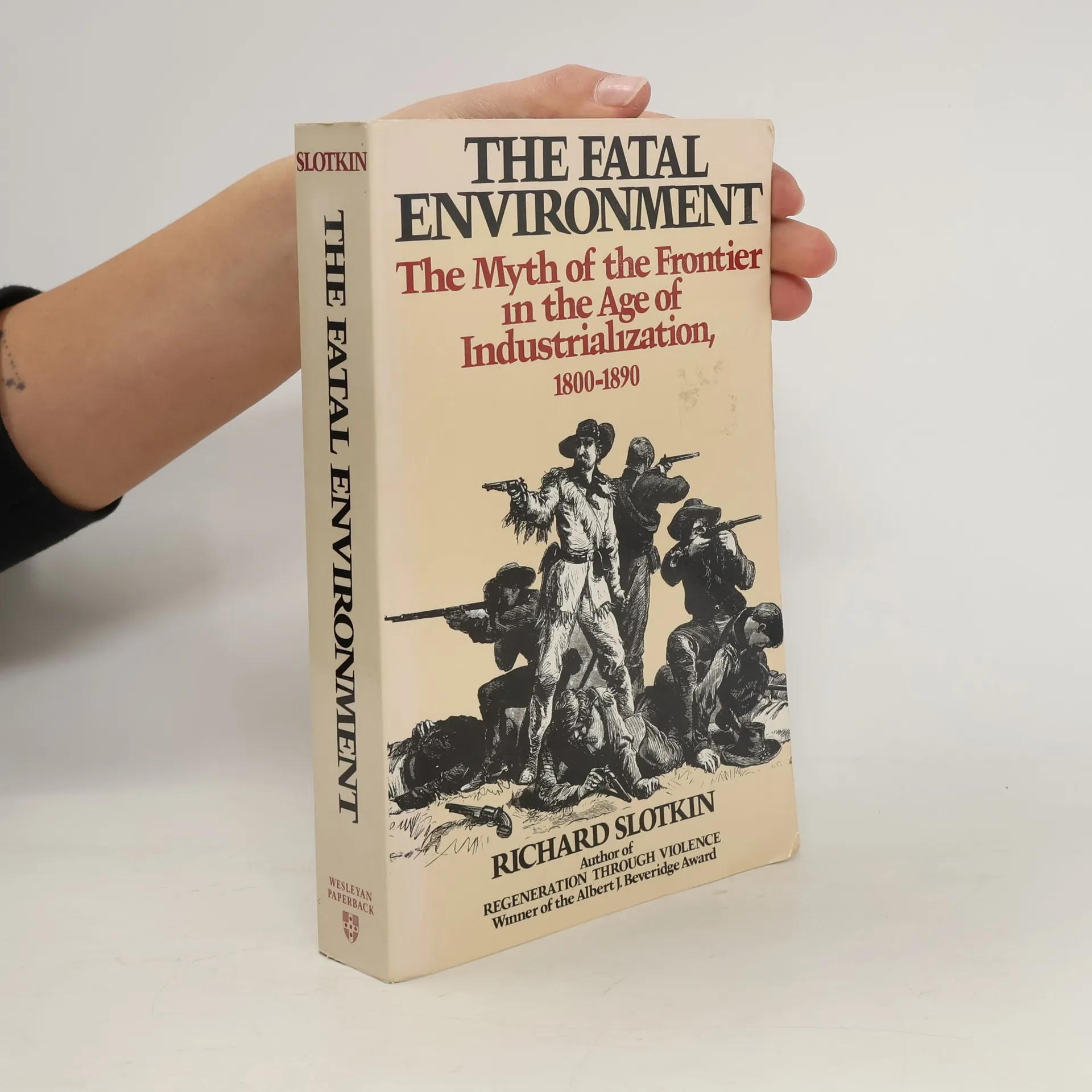
The fatal environment
The myth of the frontier in the age of industrialization, 1800-1890
In The Fatal Environment, Richard Slotkin demonstrates how the myth of frontier expansion and subjugation of the Indians helped to justify the course of America’s rise to wealth and power. Using Custer’s Last Stand as a metaphor for what Americans feared might happen if the frontier should be closed and the "savage" element be permitted to dominate the "civilized," Slotkin shows the emergence by 1890 of a myth redefined to help Americans respond to the confusion and strife of industrialization and imperial expansion.