

Bookbot

European Commission

    Fourth Framework Programme: EC Research Funding
    Breakdown in Human Adaptation to ‘Stress'
    The European Commission 1958-72 History And Memories
    The Teaching Profession in Europe
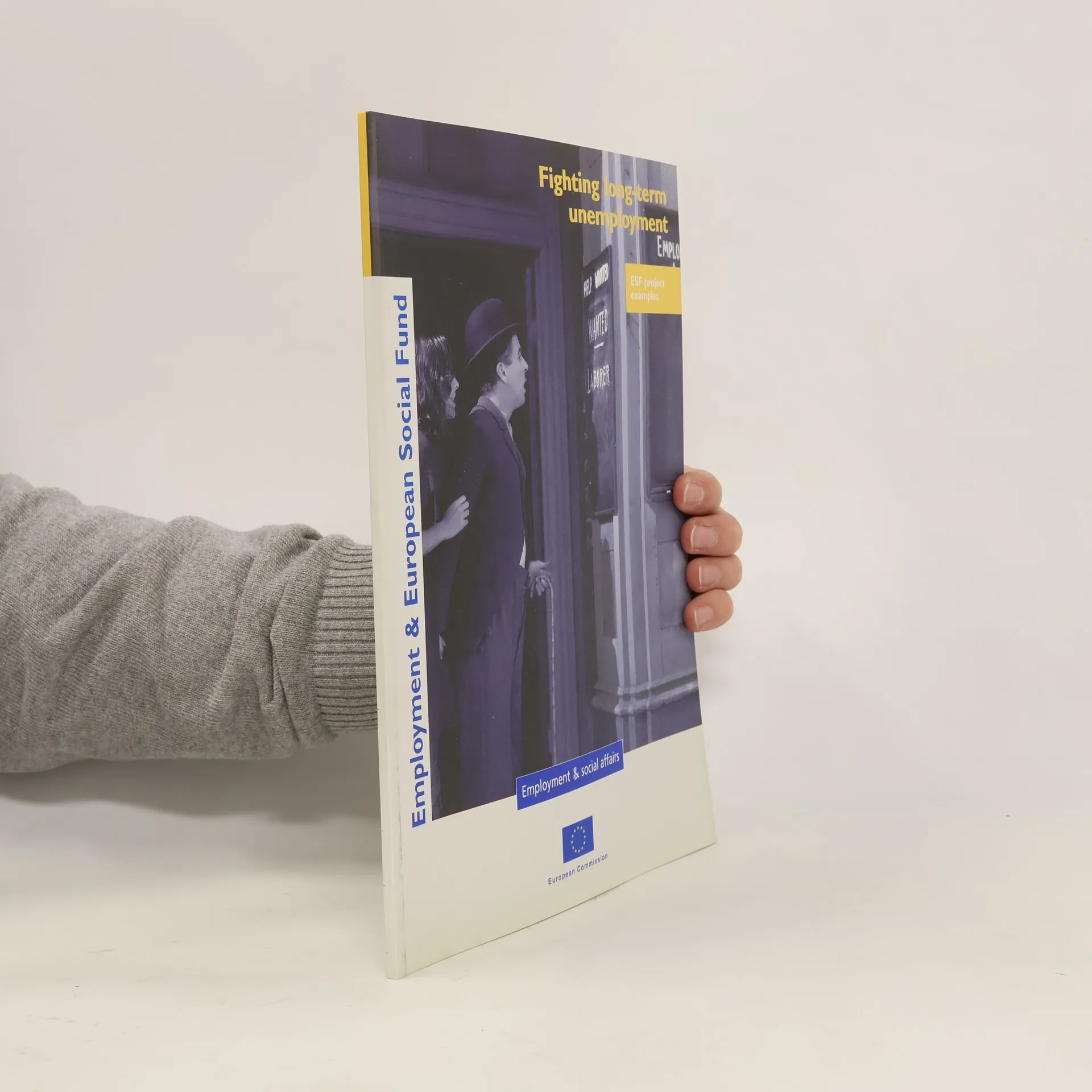
    Fighting Long-term Unemployment
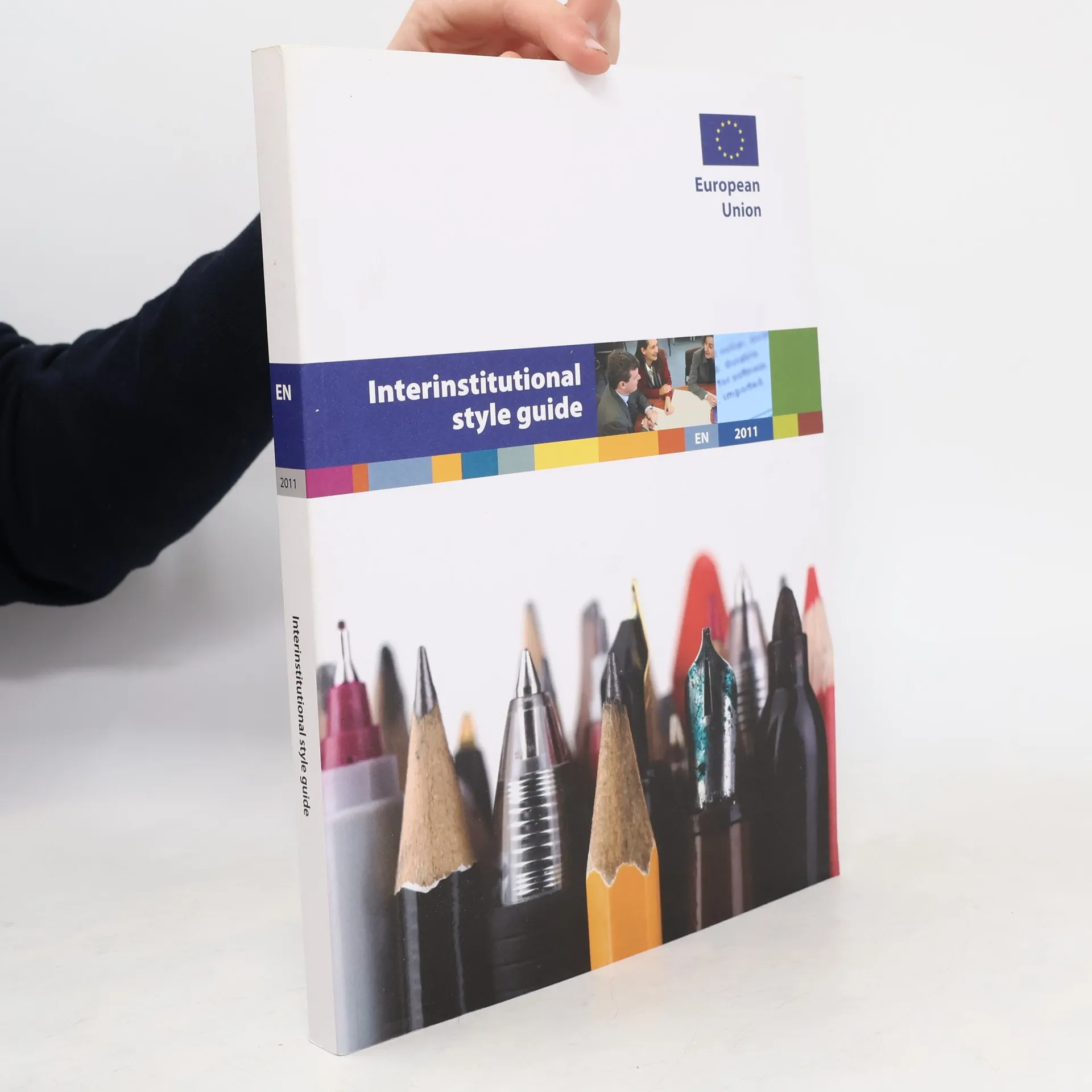
    Interinstitutional Style Guide. 2011
    • Interinstitutional Style Guide. 2011

      • 268 Seiten
      • 10 Lesestunden

      One of the European Union's priorities and vital tasks is to disseminate information in all languages. Twenty-three language communities have established a common working environment in order to present a consistent identity of the European Union institutions to citizens. This publication demonstrates that multilingualism need not be a source of disparity as it provides a common point of reference for the different language groups, as well as the institutions, bodies and agencies, which have multiplied over recent years. It draws together linguistic resources, turning apparent disparity into a source of unity between all those involved in producing texts for the European Union.

      Interinstitutional Style Guide. 2011
      3,0
    • The Teaching Profession in Europe

      Practices, Perceptions, and Policies

      This report analyzes the relationship between policies regulating the teaching profession in Europe and the attitudes, practices, and perceptions of teachers. It covers initial teacher education, continuing professional development, transnational mobility, teacher demographics, working conditions, and the profession's attractiveness. The focus is on nearly two million lower secondary education teachers across 28 EU Member States, along with Iceland, Liechtenstein, Montenegro, the former Yugoslav Republic of Macedonia, Norway, Serbia, and Turkey. Utilizing Eurydice and Eurostat/UOE data, as well as a secondary analysis of TALIS 2013, the report combines qualitative and quantitative evidence, referencing the year 2013/14. The Eurydice Network aims to understand and explain the organization and functioning of various education systems in Europe, providing descriptions, comparative studies, indicators, and statistics. All publications are freely available on the Eurydice website or in print upon request. Through its efforts, Eurydice promotes understanding, cooperation, trust, and mobility at both European and international levels, coordinated by the EU Education, Audiovisual and Culture Executive Agency.

      The Teaching Profession in Europe
    • Breakdown in Human Adaptation to ‘Stress'

      Towards a multidisciplinary approach Volume I

      • 622 Seiten
      • 22 Lesestunden

      Compendium of papers presented in workshops sponsored by the Commission of the European Communities as advised by the Committee on Medical and Public Health Research. (Dublin, Ireland (Dec. 1982), Utrecht, the Netherlands (Dec. 1982), K'oln, FRG (Jan. 1983), Bad Homberg, FRG (Feb. 1983), Dublin, Ireland (March 1983), and Pisa, Italy (April 1983))

      Breakdown in Human Adaptation to ‘Stress'
    • ESPRIT '84

      Status Report of Ongoing Work

      • 634 Seiten
      • 23 Lesestunden

      Hardbound. ESPRIT (European Strategic Programme for Research in Information Technology) is the most ambitious cooperative research programme ever embarked upon in Europe. It spans the area of information technology, enabling cooperation of several hundred large and small industrial companies and research institutions throughout twelve European nations. This volume comprises 82 technical papers selected from the 110 ongoing projects. To improve the value of the book as a source for public information and justification, summaries of all projects launched in 1984 and 1985 have also been included. The contributions are topically arranged to facilitate easy access by the reader.

      ESPRIT '84
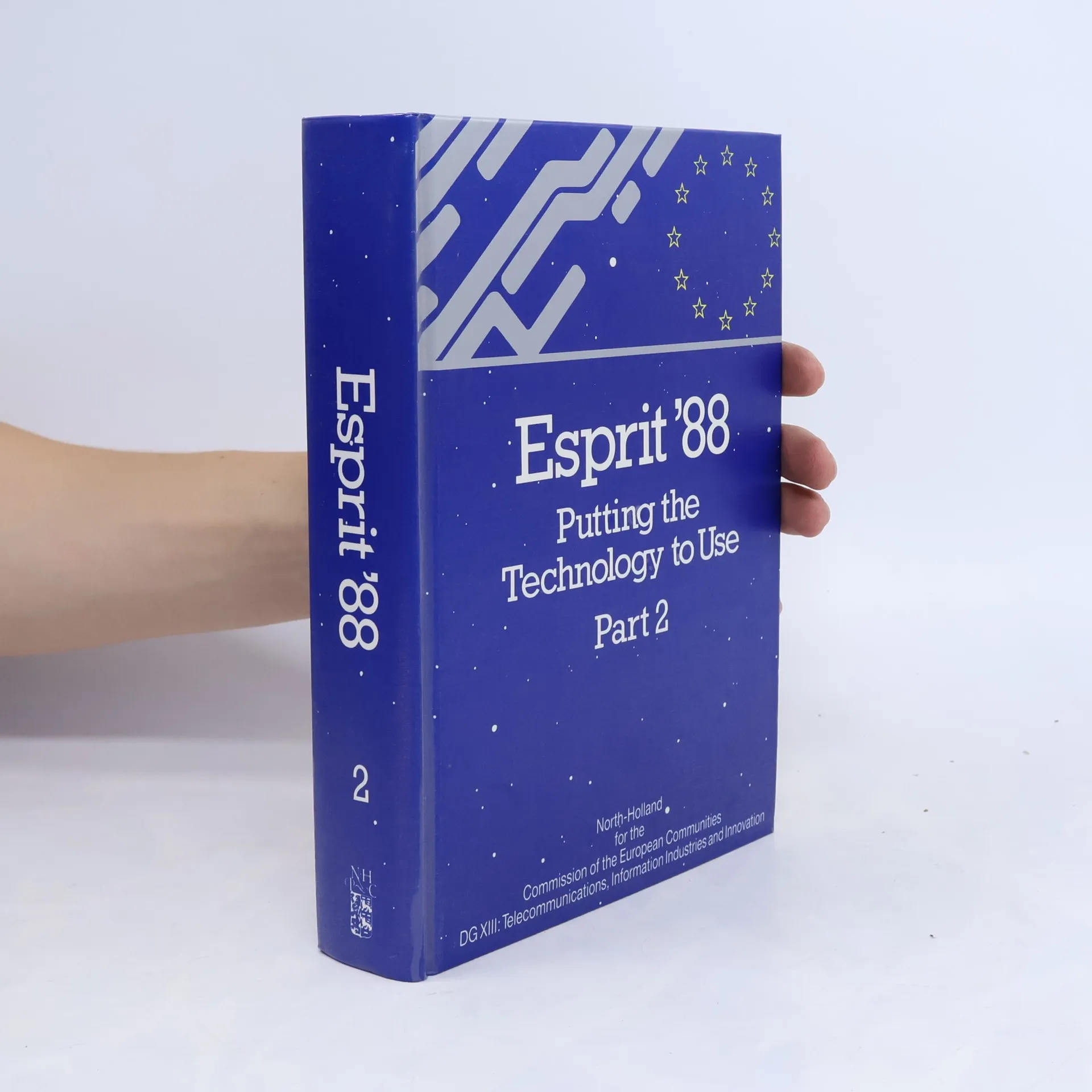
    • ESPRIT '88

      Putting the Technology to Use

      • 1784 Seiten
      • 63 Lesestunden

      Hardbound. Reports on the achievements and impact of selected ESPRIT projects are presented in these volumes. The majority of the papers cover the subjects of microelectronics and peripherals, technology, advanced information processing, office systems and computer integrated manufacturing. In addition, there is one session on the network development projects of ESPRIT. A good balance exists between the various specialised areas and also across different European national boundaries.

      ESPRIT '88
    • "The publication...consists of two parts: 1)Commission Communication adopted on 21 November 2001, "Making a European Area of lifelong learning a reality" COM (2001) 678 and 2)"Lifelong learning - indicators and practice" which is based on the Commission staff working document (28 November 2001) entitled "Lifelong learning-practice and indicators' SEC (2001) 1939"--[P.] 2 of cover.

      A European Area of Lifelong Learning