

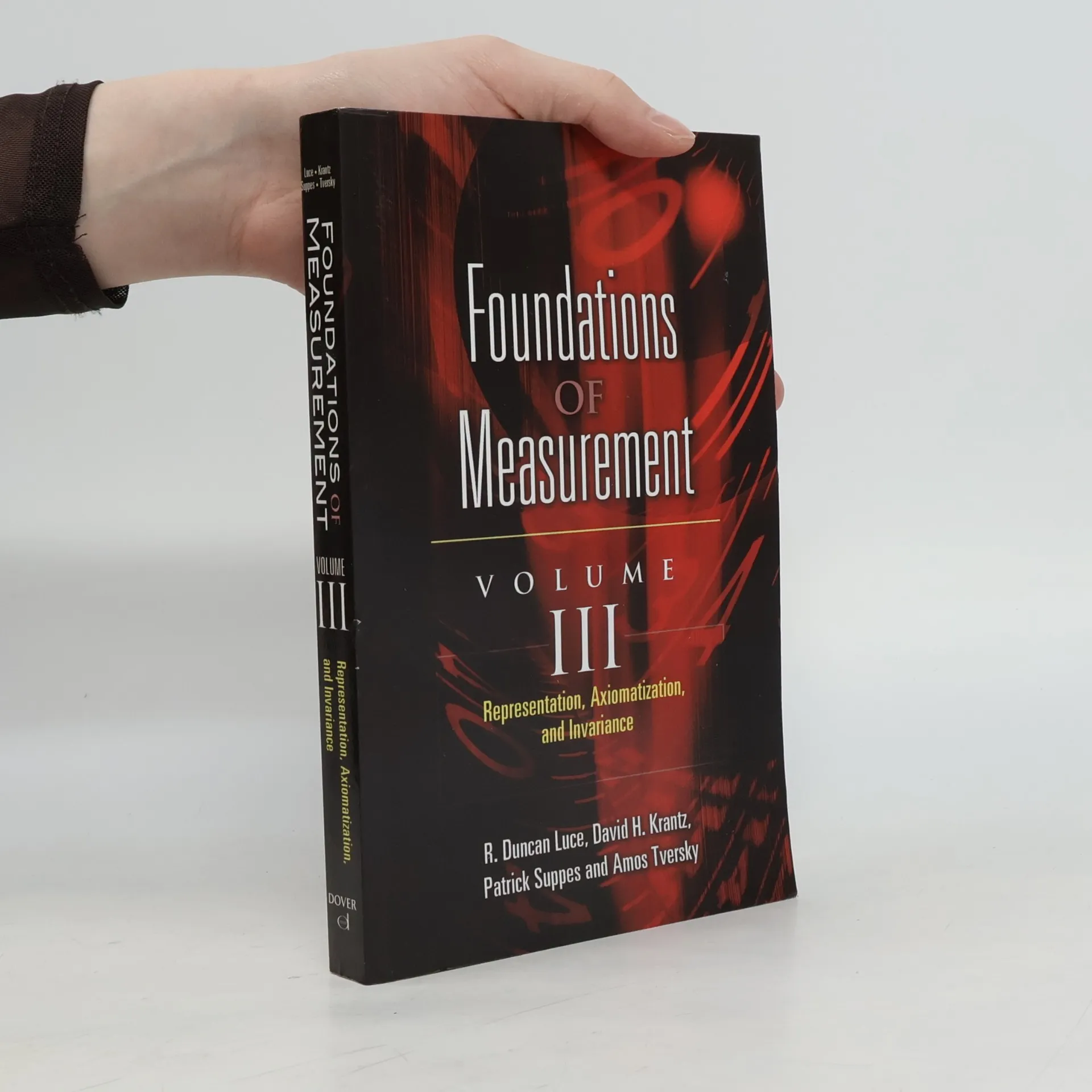
Third volume in the three books Foundations of Measurement series.Table of ContentsPreface Acknowledgments 1. Overview2. Nonadditive representations3. Scale types4. Axiomatization5. Invariance and meaningfulnessReferences
Robert Duncan Luce Bücher
R. Duncan Luce ist Distinguished Research Professor für Kognitionswissenschaften und Research Professor für Ökonomie an der University of California, Irvine. Seine Arbeit konzentriert sich auf mathematische Modelle menschlicher Entscheidungsfindung und Wahrnehmung. Luce formulierte zentrale Axiome und Theorien, die Prinzipien der Wahl und Psychophysik formalisieren und somit wesentlich zur Entwicklung mathematischer Verhaltenswissenschaften beitrugen. Seine innovativen Ansätze verbinden Mathematik mit Psychologie und Ökonomie und bieten tiefe Einblicke in rationales Verhalten.
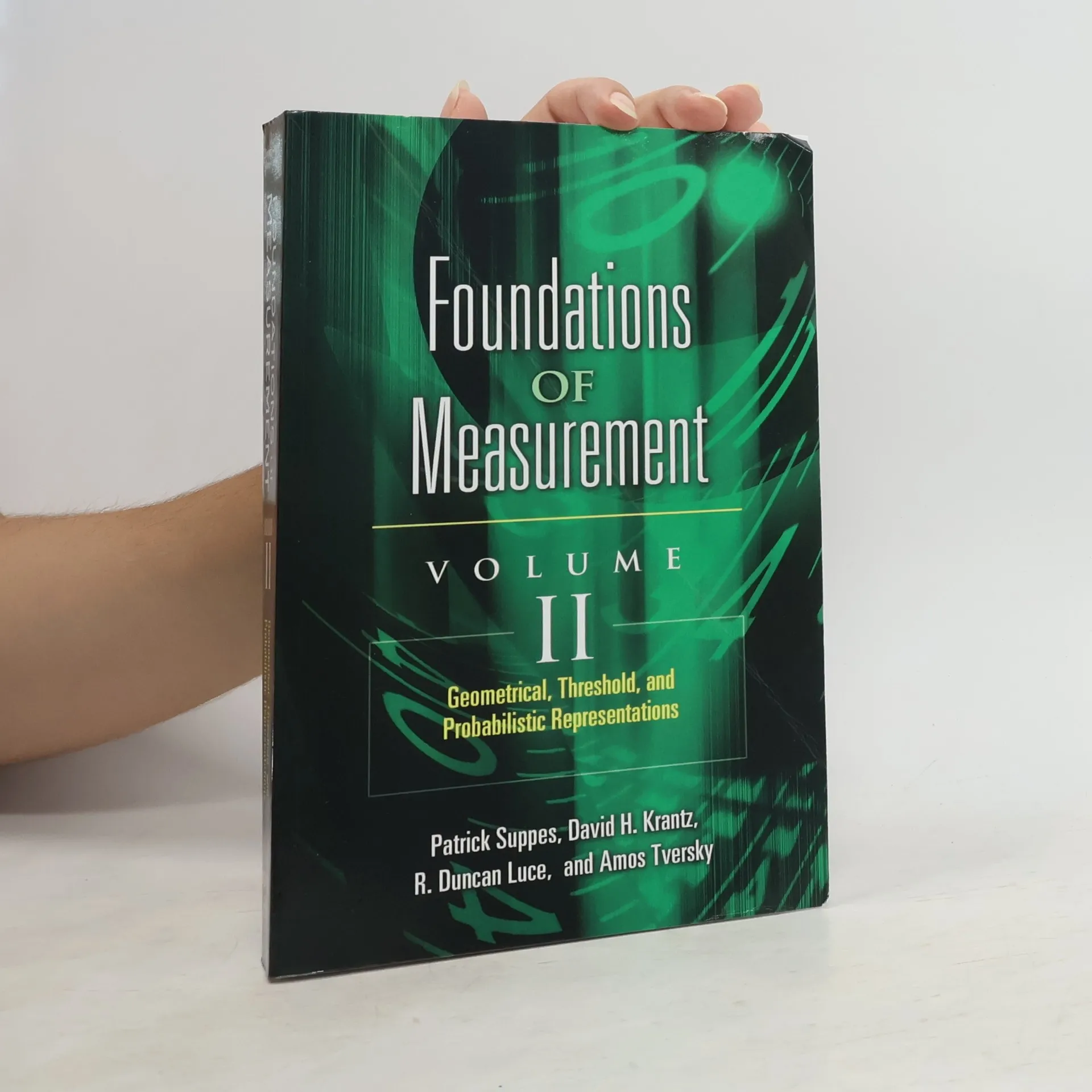
Foundations of Measurement Volume II
Geometrical, Threshold, and Probabilistic Representations
- 512 Seiten
- 18 Lesestunden
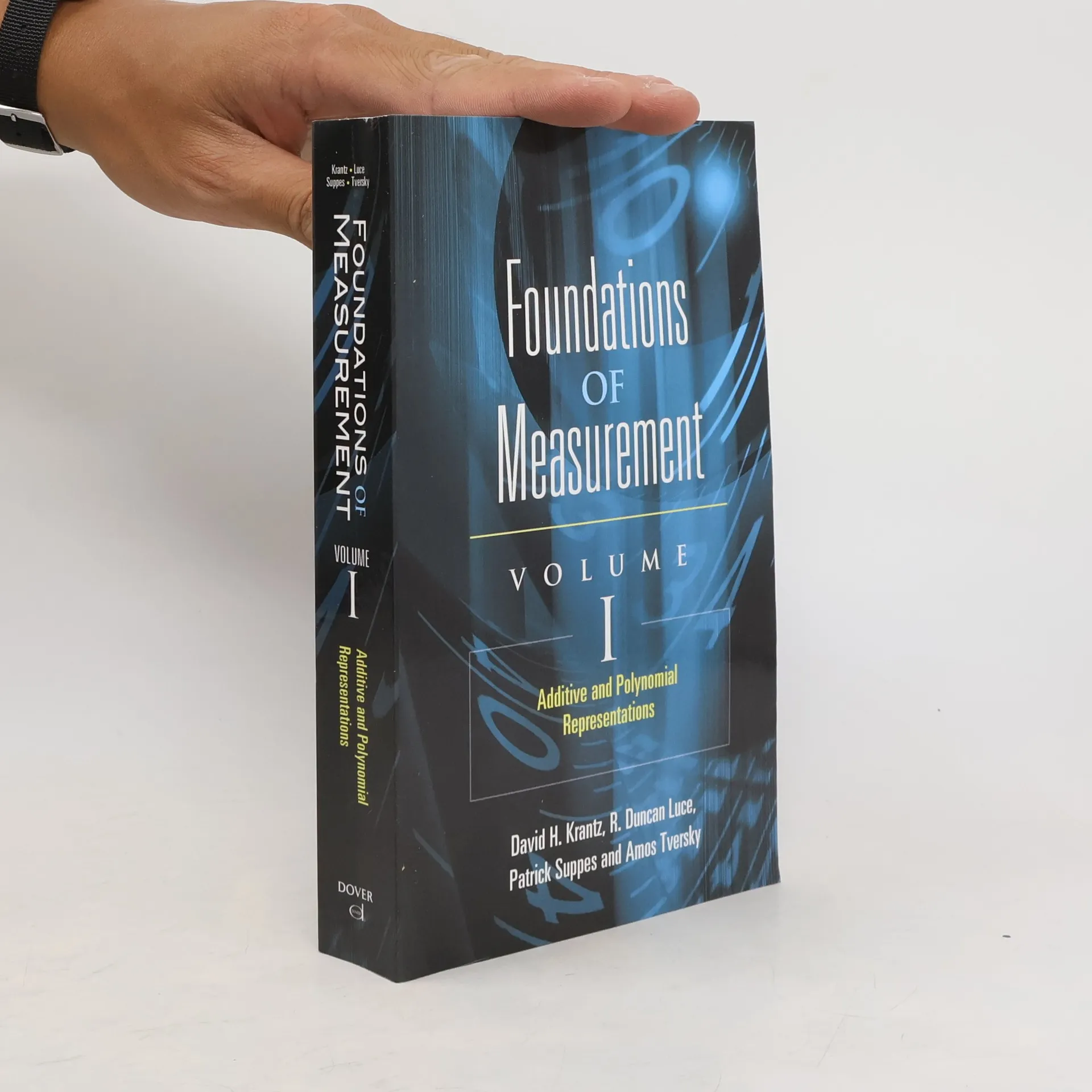
A classic series in the field of quantitative measurement, Volume I introduces the distinct mathematical results that serve to formulate numerical representations of qualitative structures. Volume II extends the subject in the direction of geometrical, threshold, and probabilistic representations, and Volume III examines representation as expressed in axiomatization and invariance. 1989 edition.
First volume in the three books Foundations of Measurement series.Table of contents:Preface1. Introduction2. Construction of numerical functions3. Extensive measurement4. Difference measurement5. Probability representations6. Additive conjoint measurement7. Polynomial conjoint measurement8. Conditional expected utility9. Measurement inequalities10. Dimensional analysis and numerical lawsAnswers and hints to selected exercisesReferences
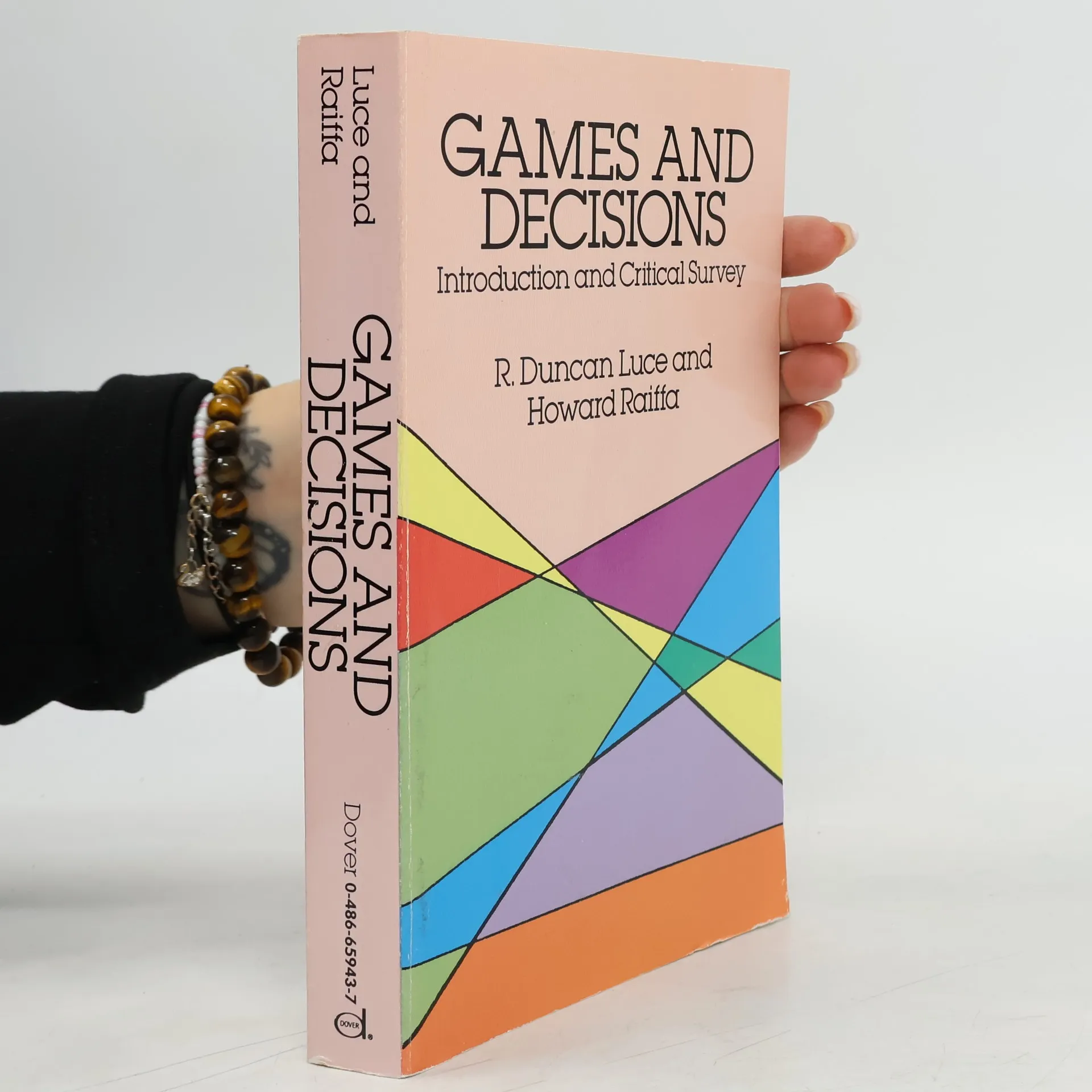
Superb non-technical introduction to game theory, primarily applied to social sciences. Clear, comprehensive coverage of utility theory, 2-person zero-sum games, 2-person non-zero-sum games, n-person games, individual and group decision-making, more. Bibliography.