

Ludwig Wittgenstein (1889-1951) is considered by most philosophers - even those who do not share his views - to be the most influential philosopher of the 20th century. His contributions to the philosophy of language, mind, meaning and psychology - as well as to logic, mathematics and epistemology - permanently altered the philosophical landscape, and his Tractatus Logico Philosophicus and Philosophical Investigations continue to be studied in philosophy departments around in the world. In this superb introduction and overview of Wittgenstein's life and work, William Child discusses: Wittgenstein's early work, Tractatus Logico-Philosophicus, including his account of language and thought Wittgenstein's subsequent rejection of some of the central doctrines of the Tractatus Wittgenstein's later philosophy intentionality and rule-following philosophy of mind and psychology in Philosophical Investigations knowledge and certainty, and Wittgenstein's final work philosophy of religion the legacy and influence of Wittgenstein's ideas in philosophy, and beyond. Including a chronology, glossary, and helpful conclusions to each chapter, Wittgenstein is essential reading for anyone coming to Wittgenstein's philosophy for the first time.
William A. P Childs Reihenfolge der Bücher (Chronologisch)
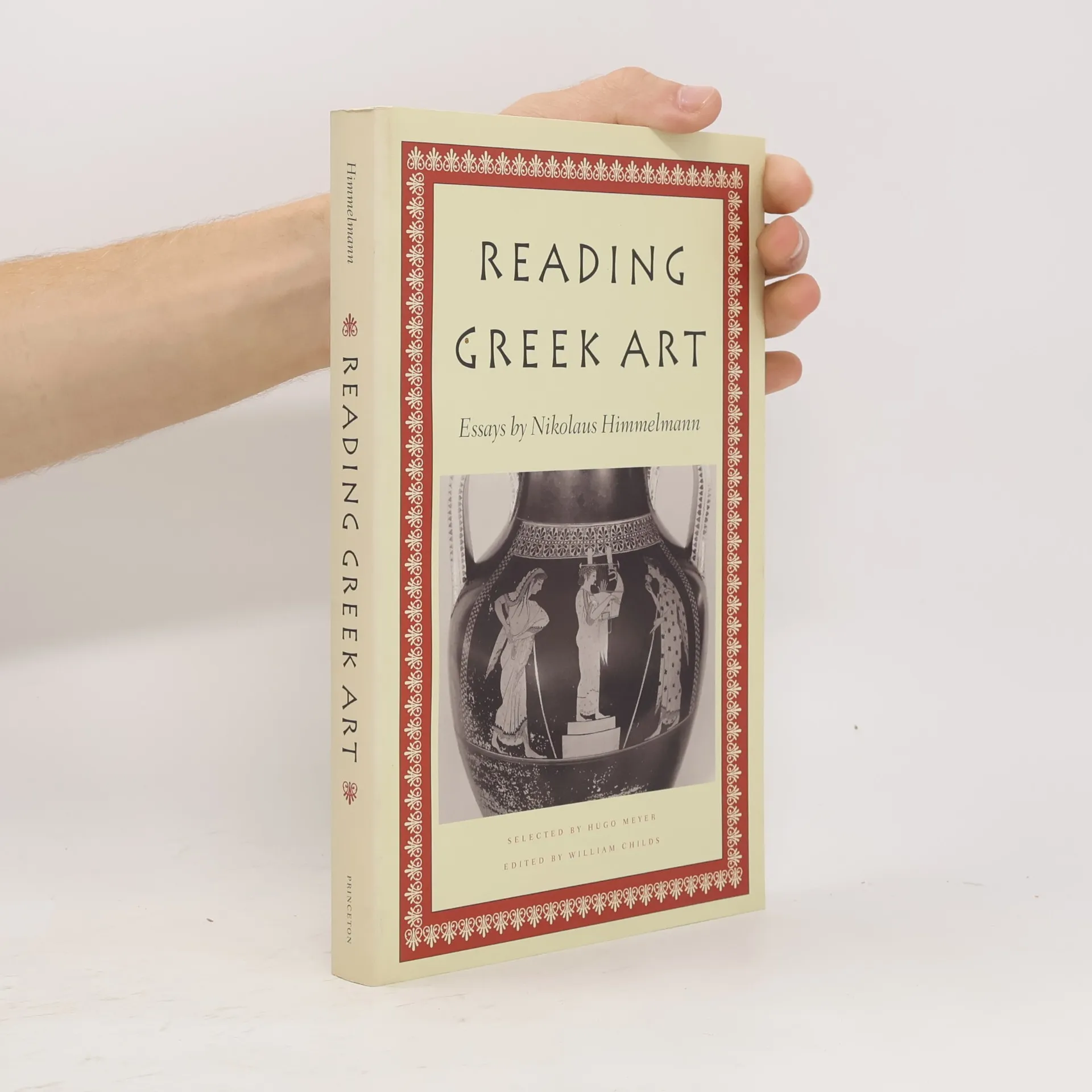

Reading Greek Art
- 317 Seiten
- 12 Lesestunden
Nikolaus Himmelmann is a distinguished scholar known for his extensive writings on Greek and Roman art and its reception in the post-antique world. This translation marks the first time his seminal works have been made available in English. The primary focus is on how ancient art communicated in its time and how modern cultures have navigated its ambiguous qualities. This collection serves as an essential introduction to Himmelmann's critical perspective on Greek art and the role of art in society. It enhances the original essays with updated references, additional illustrations, and thoughtfully organized related articles, showcasing both his diverse interests and the coherence of his vision. The book is structured in two parts: the first examines the relationship between form and content in Greek painting and sculpture, while the second offers Himmelmann's insights on approaching ancient art and the significance of antiquity in contemporary society. For years, the challenge of reading Himmelmann in German has hindered access for students and professionals. This English translation is a significant advancement for scholarship across various fields, including art history, ancient history, archaeology, and social and cultural history.