

The fourth edition of this popular pocket guide provides quick-reference information that will help you use Oracle's PL/SQL language, including the newest Oracle Database 11g features. It's a companion to Steven Feuerstein and Bill Pribyl's bestselling Oracle PL/SQL Programming . This concise guide boils down the most vital PL/SQL information into an accessible summary of: Fundamental language elements (e.g., block structure, datatypes, declarations) Statements for program control, cursor management, and exception handling Records, procedures, functions, triggers, and packages Calling PL/SQL functions in SQL Compilation options, object-oriented features, collections, and Java integration The new edition describes such Oracle Database 11g elements as PL/SQL's function result cache, compound triggers, the CONTINUE statement, the SIMPLE_INTEGER datatype, and improvements to native compilation, regular expressions, and compiler optimization (including intra-unit inlining). In addition, this book now includes substantial new sections on Oracle's built-in functions and packages. When you need answers quickly, the Oracle PL/SQL Language Pocket Reference will save you hours of frustration.
Bill Pribyl Reihenfolge der Bücher (Chronologisch)
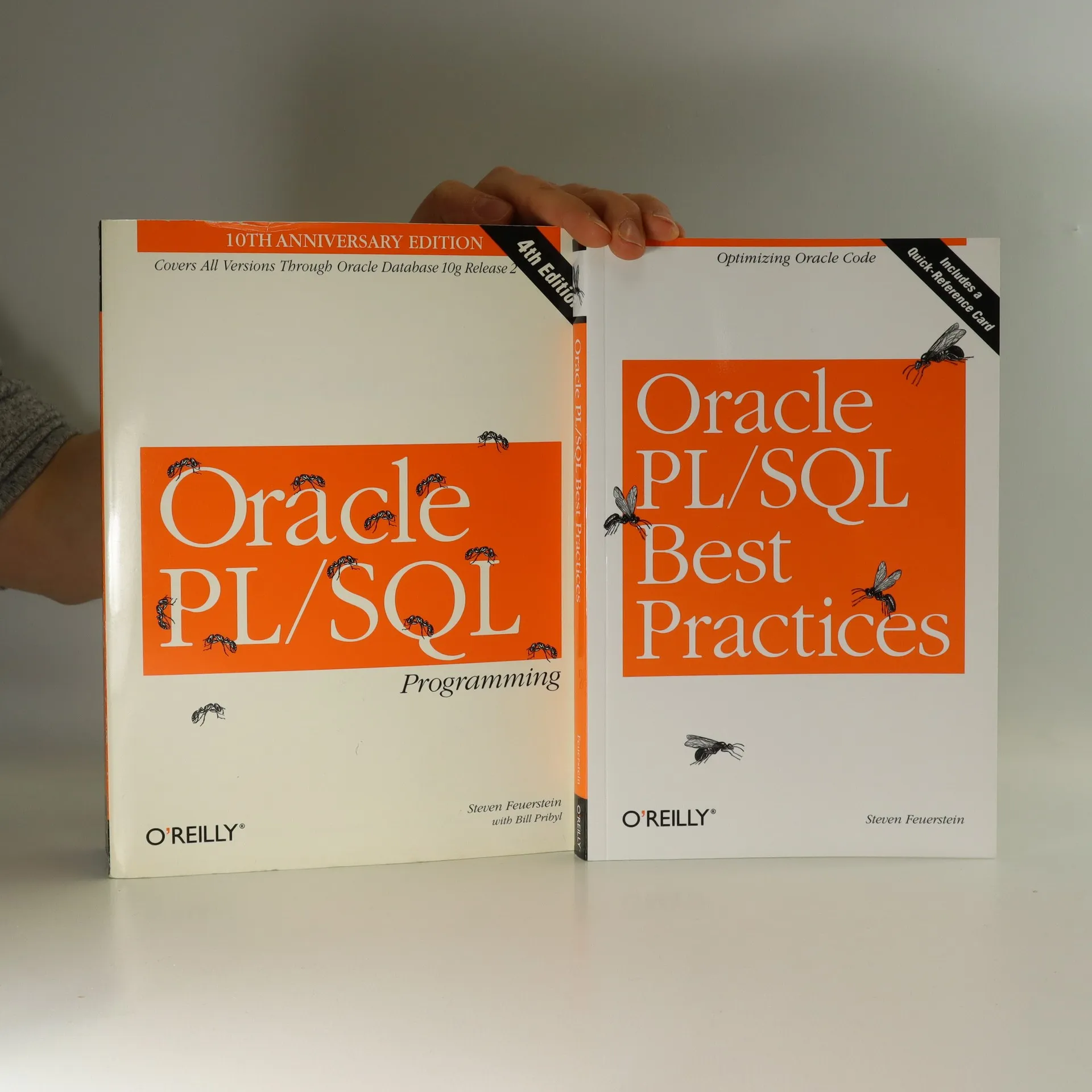

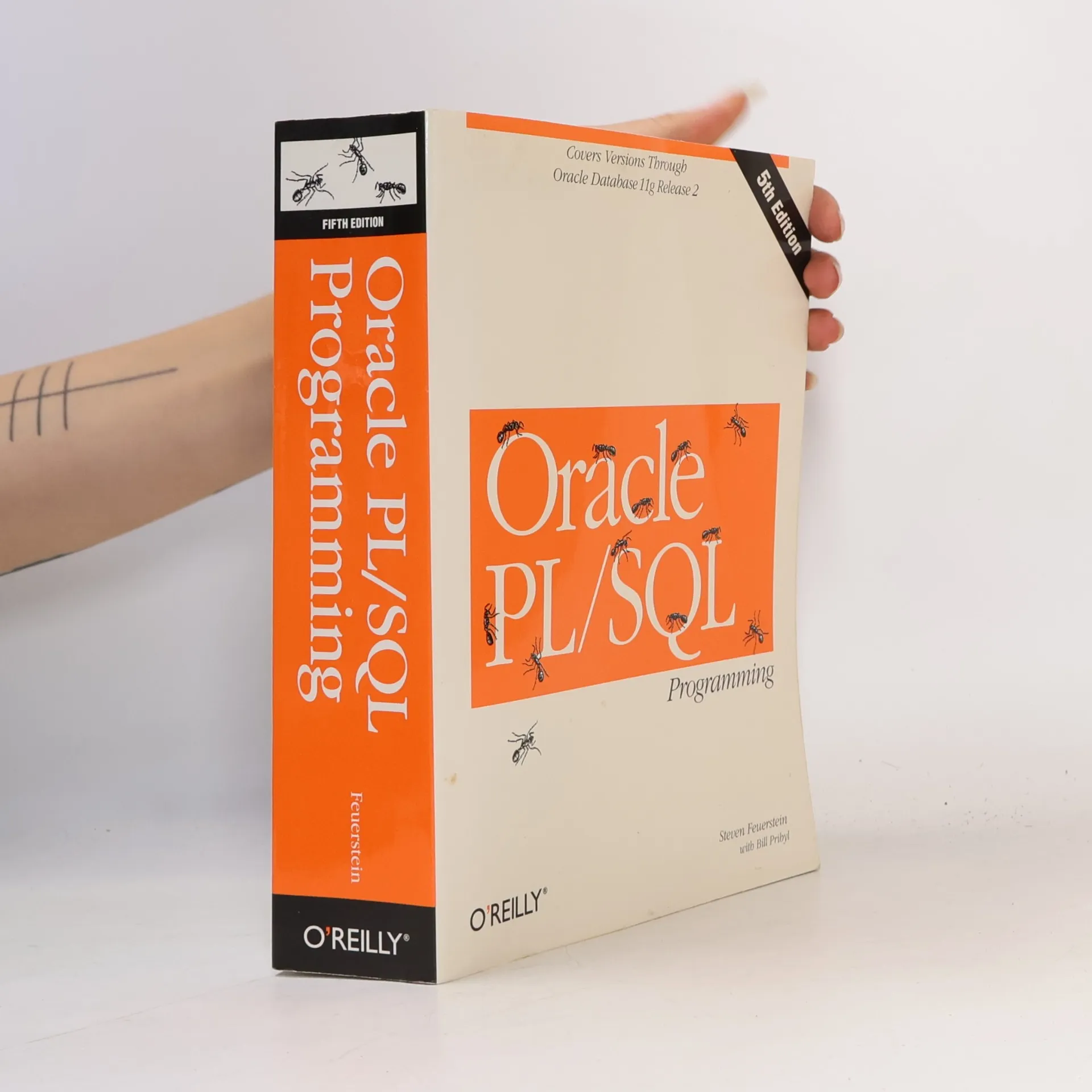
Oracle PL/SQL Programming
Covers Version 10g Oracle Database 11g Release 2 - 5th Edition
- 1186 Seiten
- 42 Lesestunden
This book serves as the definitive reference on PL/SQL, widely regarded as the premier Oracle programming guide. The fifth edition thoroughly updates language fundamentals, advanced coding techniques, and best practices for Oracle's procedural language, specifically tailored for Oracle Database 11g Release 2. It introduces new PL/SQL features and offers extensive code samples, from simple to complex applications, both in the book and on the companion website. This essential resource aids both novices and experienced Oracle programmers in quickly setting up PL/SQL programs, with clear instructions for executing, tracing, testing, debugging, and managing code. It includes a new chapter focused on optimizing PL/SQL performance and covers various topics such as datatypes, control statements, loops, exception handling, security, and PL/SQL architecture. Additionally, it explores new features of Oracle Database 11g, including edition-based redefinition, function result caching, the CONTINUE statement, fine-grained dependency tracking, and enhancements to native compilation, triggers, and dynamic SQL. The book also introduces new tools and techniques like PL/Scope, the PL/SQL hierarchical profiler, and SecureFiles technology for large objects, and guides readers in building modular PL/SQL applications using procedures, functions, triggers, and packages.