Dieser Autor konzentriert sich auf die Erforschung soziologischer und politischer Themen mit internationaler Relevanz. Seine Arbeit zeichnet sich durch eine tiefe analytische Perspektive und den Wunsch aus, komplexe soziale Phänomene zu verstehen. Leser werden seine eindringlichen Einblicke in politische und internationale Beziehungen zu schätzen wissen.
This is a new edition of Volume Three of the four volume collection of
documents on Nazism 1919-1945, with substantial revisions to three chapters
and the inclusion of many new documents, an index and a revised bibliography.
Political parties play a central, if not the central, political role in parliamentary democracies. They are also likely to play a key role in the establishment of new parliamentary democracies. This volume provides a systematic comparison of the democratic transitions in both Eastern and Southern Europe from this point of view. There are four main themes concerning the role of parties that are coping with the past (party identities and inheritances),the formation and performance of new democratic political elites, parties and alliances and their electoral behaviour. These themes guide the case studies, (which are written in comparative perspective), in four countries in both Southern and Eastern Europe. The countries covered include Italy, Spain, Greece, Portugal, Hungary, Romania, Poland and Bulgaria. Democratization is a very complex process, but what the study of political parties does is to focus on an area that links many of them. This book is intended to be a guide to students wishing to make sense of democratization and the role of political parties in that process.
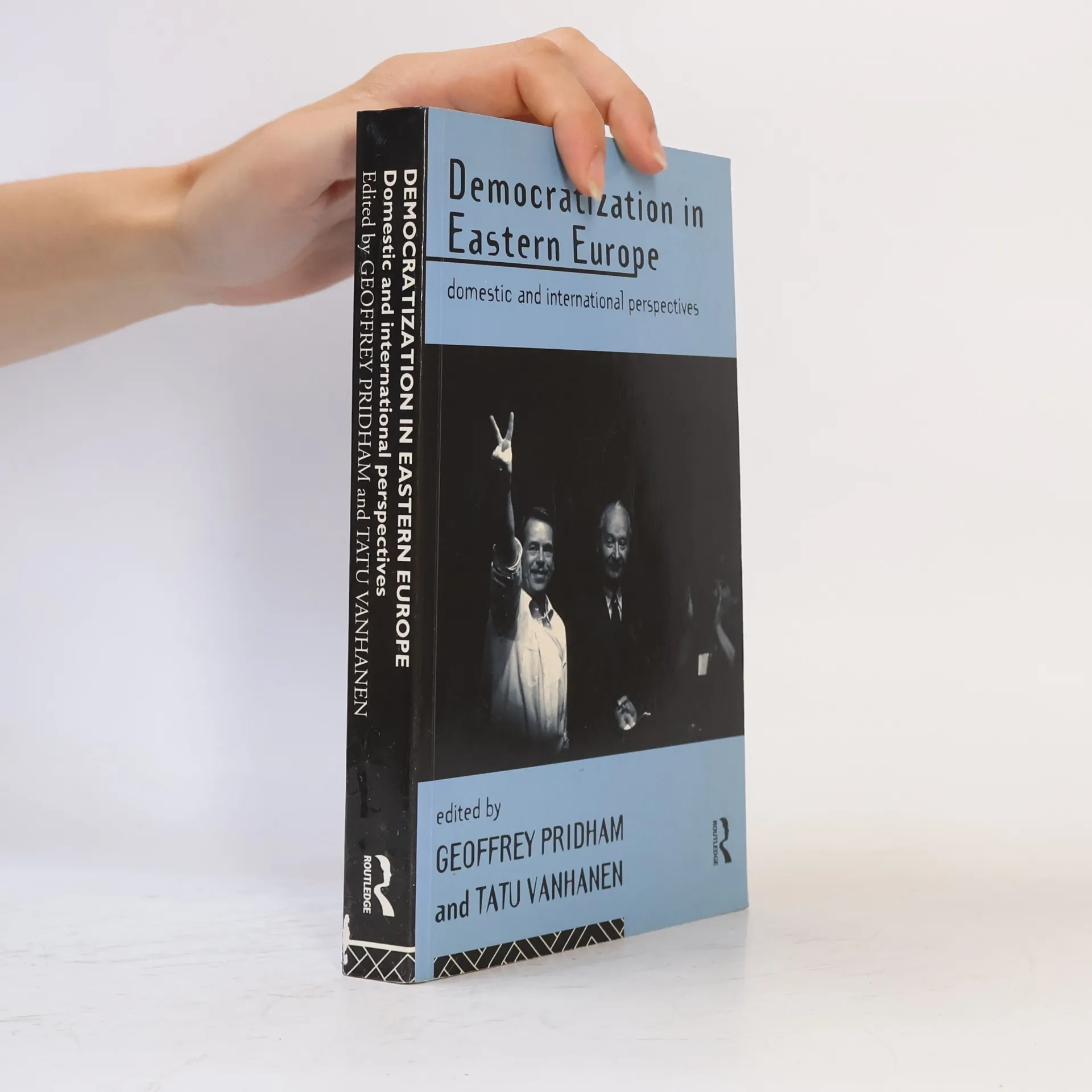
This book is an attempt to tackle the problem of democratization in East-Central Europe from a variety of theoretical perspectives. Its contributors look at the process of change within a comparative framework, discussing the emergence of multi-party and new electoral systems, comparing democratic transition in other parts of the world with that of Eastern Europe and analysing that region's relationship with the Soviet Union. Democratization in Eastern Europe will be indespensable to upper-level students of East European Politics, and will also be useful for those with more comparative and theoretical interests.