

Gratisversand in ganz Deutschland!
Bookbot

Mark Lutz

    Mark Lutz ist eine weltweit anerkannte Koryphäe im Bereich Python-Schulungen und eine prägende Figur der Python-Community, der die frühesten und meistverkauften Fachbücher zu diesem Thema verfasste. Seine umfangreiche Arbeit hat maßgeblich dazu beigetragen, Python als eine der weltweit am weitesten verbreiteten Programmiersprachen zu etablieren. Lutz engagiert sich seit 1992 aktiv in der Entwicklung und Förderung von Python, beginnend mit dem Schreiben von Büchern und dem Unterrichten in den späten 90er Jahren. Seine umfassende Expertise sowohl in der Lehre als auch im Schreiben hat ihn zu einer zentralen Figur in der Softwareentwicklung gemacht, mit Beiträgen, die sich von Compilern und Skriptanwendungen bis hin zu Client-Server-Systemen erstrecken.

    Learning Python. Covers Python 2.6 and 3.x.
    Programming Python. Covers Python 3.x.
    Python pocket reference
    (Alb-)Traumjob Redakteur
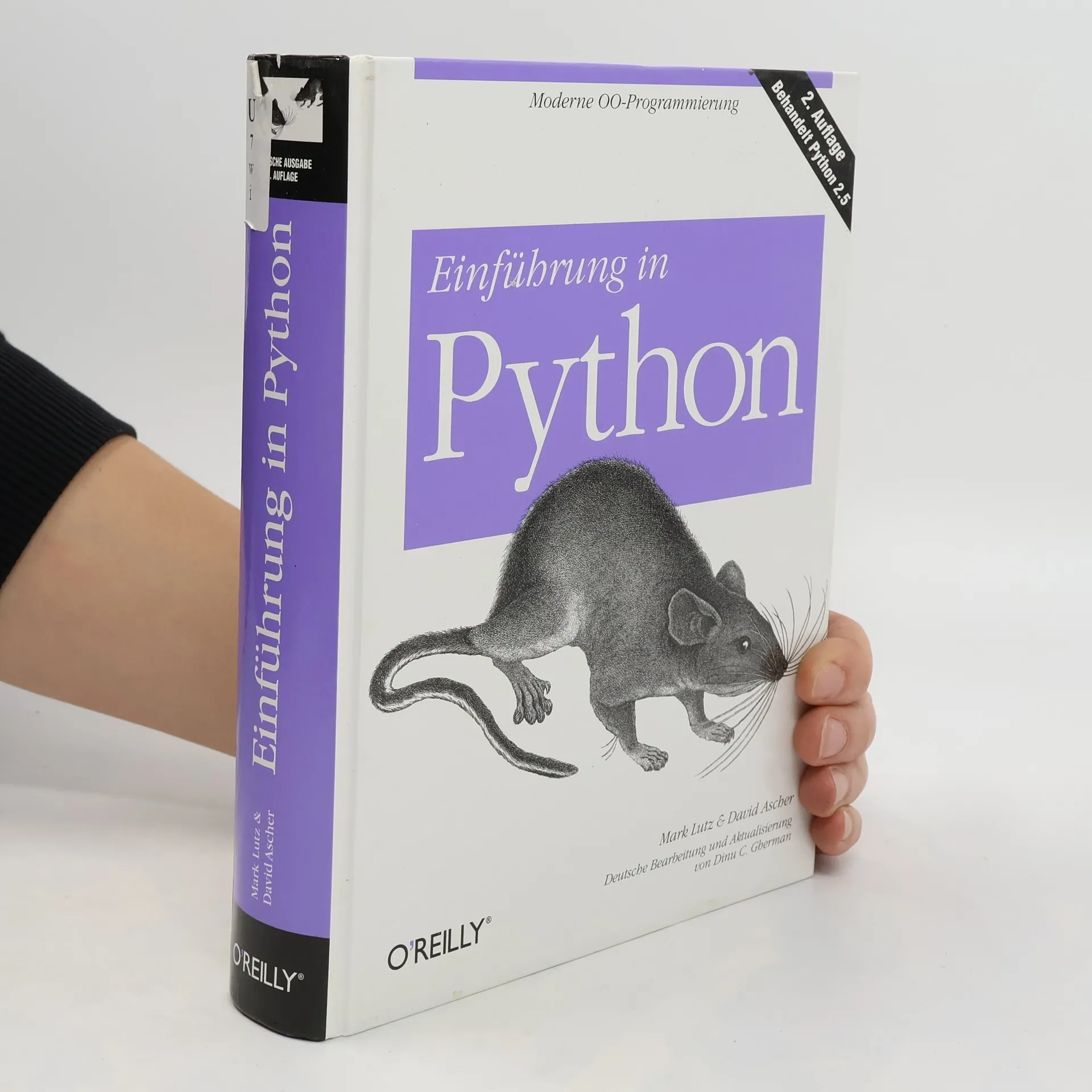
    Einführung in Python
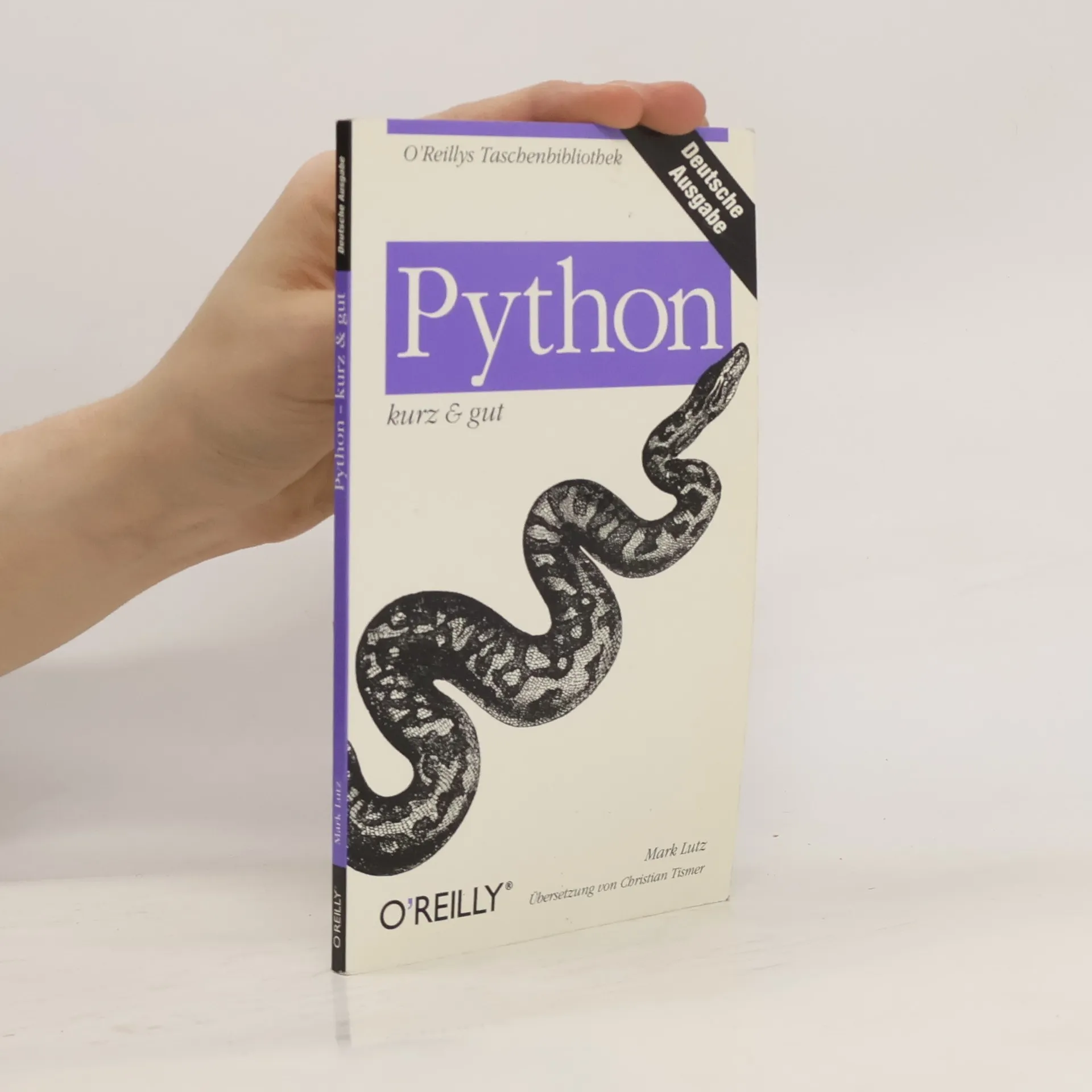
    Python - kurz & gut
    • Python ist eine objektorientierte Sprache zum Schreiben von Skripten, Programmen und Prototypen. Python ist frei verfügbar, leicht zu erlernen und zwischen allen wichtigen Plattformen portabel, einschließlich Linux, Unix, Windows und Mac OS. Python -- kurz & gut ist eine kompakte Referenz zum schnellen Nachschlagen aller wichtigen Sprachmerkmale und Elemente von Python, darunter: * Datentypen und Anweisungen * eingebaute Funktionen * objektorientierte Programmierung * Überladungsmethoden * The bright side of life * Bibliotheksmodule Die vorliegende 3. Auflage wurde für Python 2.4 aktualisiert, komplett überarbeitet und um neues Material zu String-Ersetzung und String-Methoden, Generator-Ausdrücke, Dekoratoren für Funktionen und Methoden sowie um einen detaillierten Index ergänzt.

      Python - kurz & gut
    • Google tut es, YouTube tut es, Zope und die NASA tun es - sie verwenden Python. Und das natürlich nicht ohne Grund! Python ist portabel, Open Source, modern, objektorientiert, mit schlankem Sprachkern bei gleichzeitig mächtigem Bibliotheksumfang. Für Anfänger ist aber noch ein weiterer Vorteil entscheidend: Python macht mit seiner übersichtlichen Syntax und seinem gut lesbaren Code den Einsteig leichter als die meisten anderen Sprachen. Die zweite Auflage von „Einführung in Python“ ist der ideale Begleiter für diesen Einstieg. Mark Lutz und David Ascher führen ihre Leser von den Grundlagen der Programmausführung über die einzelnen Sprachelemente und die objektorientierten Konzepte bis zu fortgeschritteneren Themen wie Ausnahmebehandlung und Python-Frameworks. Eine systematische Rundtour Die beiden Autoren sind nicht nur bekannte Python-Experten, sondern auch erfahrene Trainer, die wissen, wie man mit Neulingen verschiedene Verständnisklippen umschifft und sie systematisch zu echten Könnern macht. Grau ist alle Theorie In jedem Kapitel illustrieren zahlreiche Beispiele die vorgestellten Konzepte und Features, in den Übungen an den Kapitelenden können Sie Ihre neu erworbenen Fähigkeiten auf die Probe stellen. Python 2.5 kann noch mehr Dieses Buch behandelt die aktuelle Version 2.5 mit all ihren Verbesserungen und Erweiterungen.

      Einführung in Python
    • Python pocket reference

      • 266 Seiten
      • 10 Lesestunden
      4,2(175)Abgeben

      Updated for both Python 3.4 and 2.7, this guide provides concise information on Python types and statements, special method names, built-in functions and exceptions, commonly used standard library modules, and other prominent Python tools.--From back cover.

      Python pocket reference
    • If you've mastered Python's fundamentals, you're ready to start using it to get real work done. Programming Python will show you how, with in-depth tutorials on the language's primary application domains: system administration, GUIs, and the Web. You'll also explore how Python is used in databases, networking, front-end scripting layers, text processing, and more. This book focuses on commonly used tools and libraries to give you a comprehensive understanding of Python's many roles in practical, real-world programming. You'll learn language syntax and programming techniques in a clear and co

      Programming Python. Covers Python 3.x.
    • Google and YouTube use Python because it's highly adaptable, easy to maintain, and allows for rapid development. If you want to write high-quality, efficient code that's easily integrated with other languages and tools, this hands-on book will help you be productive with Python quickly -- whether you're new to programming or just new to Python. It's an easy-to-follow self-paced tutorial, based on author and Python expert Mark Lutz's popular training course. Each chapter contains a stand-alone lesson on a key component of the language, and includes a unique Test Your Knowledge section with practical exercises and quizzes, so you can practice new skills and test your understanding as you go. You'll find lots of annotated examples and illustrations to help you get started with Python 3.0. Learn about Python's major built-in object types, such as numbers, lists, and dictionaries Create and process objects using Python statements, and learn Python's general syntax model Structure and reuse code using functions, Python's basic procedural tool Learn about Python modules: packages of statements, functions, and other tools, organized into larger components Discover Python's object-oriented programming tool for structuring code Learn about the exception-handling model, and development tools for writing larger programs Explore advanced Python tools including decorators, descriptors, metaclasses, and Unicode processing

      Learning Python. Covers Python 2.6 and 3.x.
    • Python jest wieloparadygmatowym, wszechstronnym językiem programowania, zoptymalizowanym pod kątem efektywności pracy, czytelności kodu i jakości oprogramowania. Jego popularność rośnie, co wynika z wielości i różnorodności zastosowań oraz z tego, że jest darmowy i łatwo przenośny, można się go szybko nauczyć, a tworzenie kodu Pythona sprawia sporo przyjemności. Wszystkie te cechy dają zespołom deweloperskim strategiczną przewagę w dużych i małych projektach. Aby wykorzystać zalety Pythona, konieczne jest zdobycie solidnych podstaw tego języka, a następnie dogłębne zrozumienie bardziej zaawansowanych koncepcji i porządne ich przećwiczenie podczas pisania własnego kodu. To kompleksowy podręcznik do nauki programowania w Pythonie. Jego piąte wydanie zostało gruntownie zaktualizowane i rozbudowane o dodatkowe treści. Omówiono tu najnowsze wersje Pythona w liniach 3.X i 2.X, czyli 3.3 i 2.7, i dodano opisy nowych lub rozszerzonych mechanizmów, takich jak obsługa formatu JSON, moduł timeit, pakiet PyPy, metoda os.popen, generatory, rekurencje, słabe referencje, atrybuty i metody mro , iter , super, slots , metaklasy, deskryptory, funkcja random, pakiet Sphinx i wiele innych. W książce znalazło się mnóstwo ćwiczeń, quizów, pomocnych ilustracji oraz przykładów kodu. Jest to kompendium dla każdego, kto chce szybko zacząć programować w Pythonie i tworzyć wydajny kod o wysokiej jakości. W tej książce przedstawiono między innymi: -składnię Pythona i koncepcje związane z iteracjami -dokładny opis ważniejszych wbudowanych typów obiektów i ich możliwości -struktury programistyczne wyższego poziomu -programowanie funkcyjne i programowanie zorientowane obiektowo -zaawansowane zagadnienia dla profesjonalistów Już dziś zacznij pisać znakomity kod w Pythonie!

      Python. Wprowadzenie. Wydanie V