

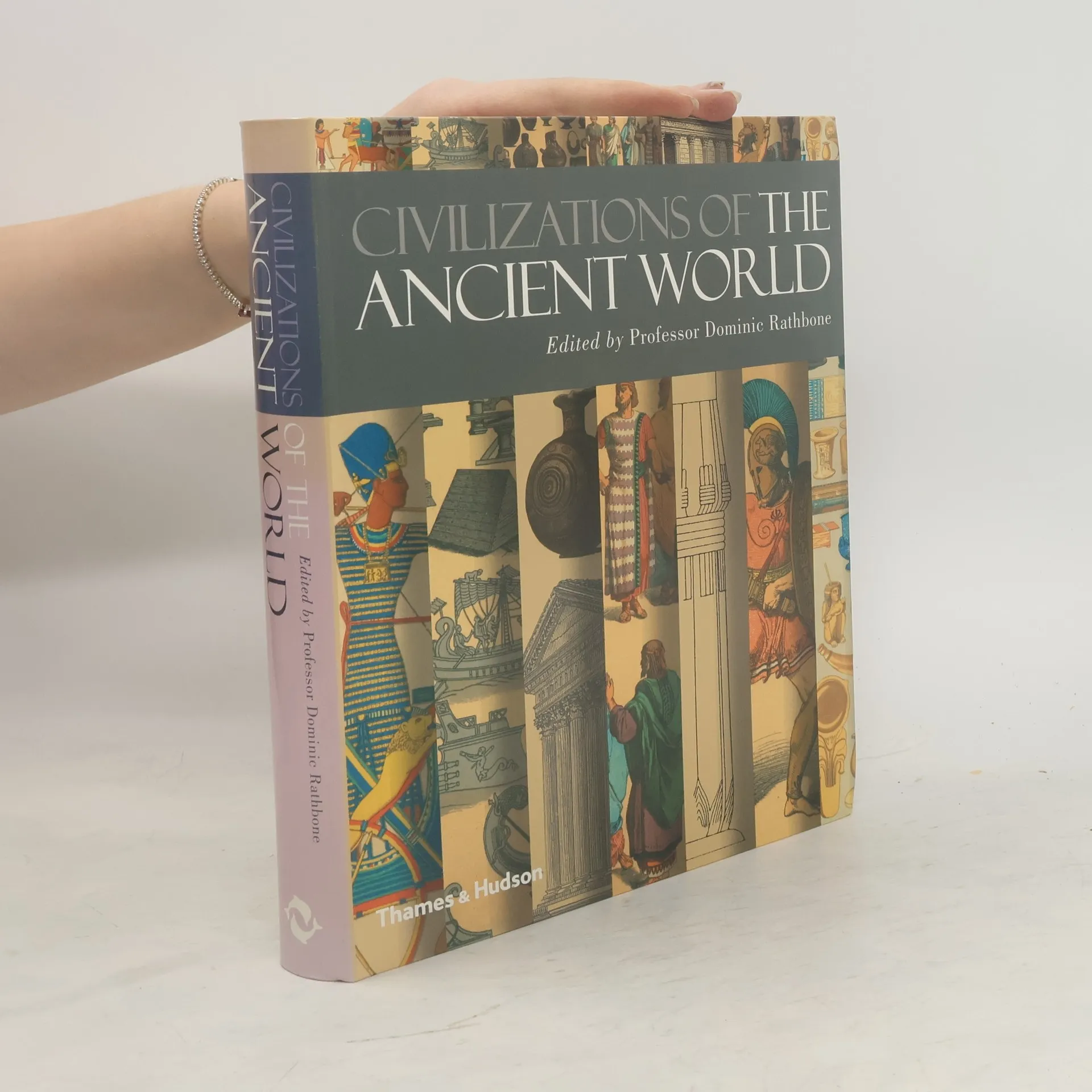
"Civilizations of the Ancient World offers a unique approach to exploring the cultures of the key civilizations of ancient times. By combining historic engravings with a modern commentary that is at once authoritative and accessible, it creates both a celebration of ancient cultures and an invaluable reference for all students of early history." "The main section of the book focuses on Egypt, Mesopotamia. Greece and Rome, offering a detailed exposition of each in turn through a thematic approach to key aspects of these ancient cultures. Government, society, warfare, religion, work, technology, trade, leisure, architecture, food, costume and daily life are all unveiled in vivid detail through carefully designed compositions of both coloured and monotone engravings. A supplementary section features timelines, maps and overviews of the other key civilizations that were flourishing throughout the world at the same time. The result is a close-up view of the four great civilizations that hold a particular fascination for modern readers, alongside a broader, contextual panorama of the global cultures that shaped the ancient world. The book has over 1,000 colour and black-and-white illustrations."--Jacket.
Dominic Rathbone Bücher
Volume V of the new edition of The Cambridge Ancient History encompasses the first classic age of European civilization—the fifth century B.C. This was the first and last period before the Romans in which great political and military power was located in the same place as cultural importance. This volume, therefore, is more narrowly focused geographically than its predecessors and successors, and hardly strays beyond Greece. Athens is at the center of the picture, both politically and culturally, but events and achievements elsewhere are assessed as carefully as the nature of our sources allows. Two series of narrative chapters, one on the growth of the Athenian empire and the development of Athenian democracy, the other on the Peloponnesian War that brought them down, are divided by a series of studies in which the artistic and literary achievements of the fifth century are described.