Richard WilkinsonReihenfolge der Bücher (Chronologisch)
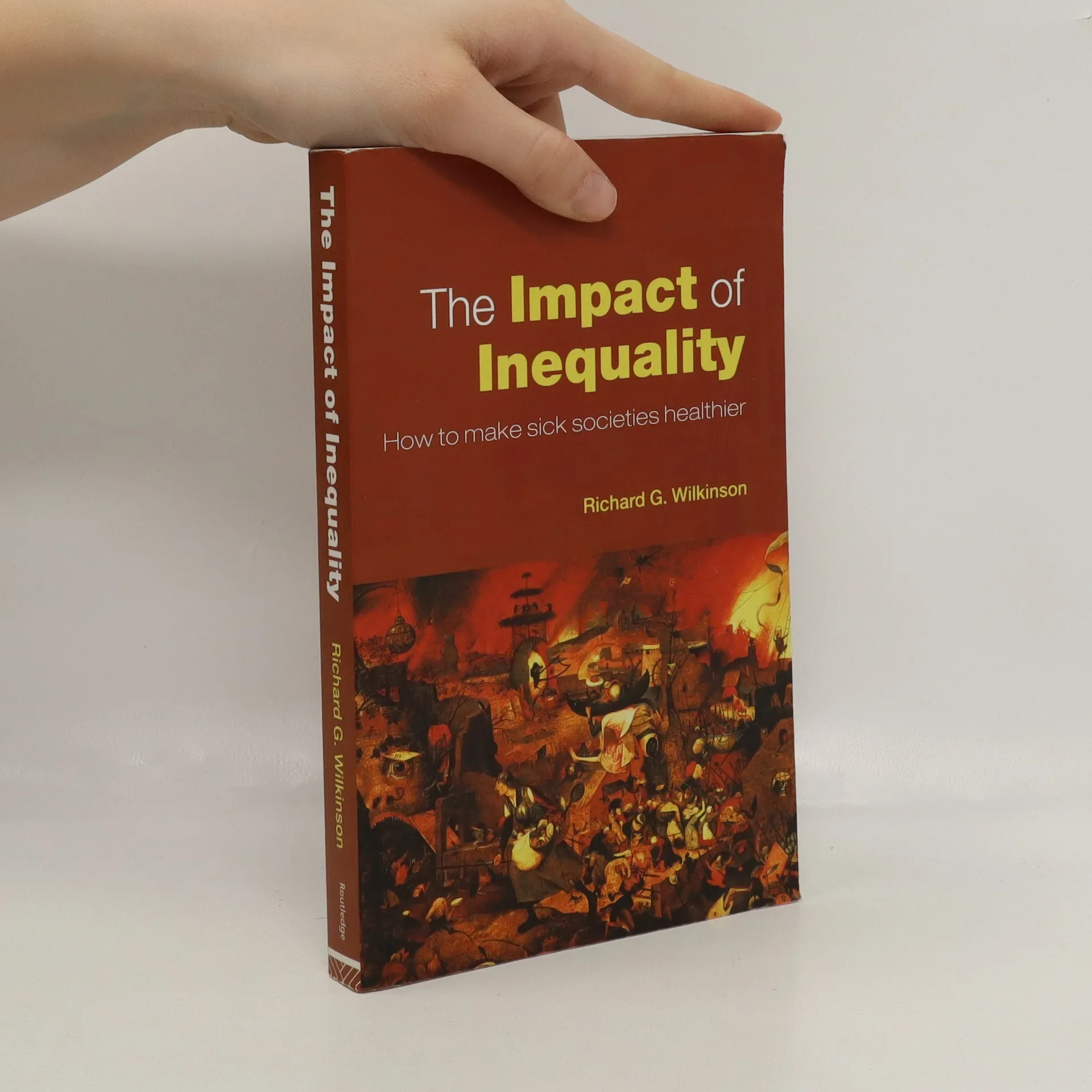
Richard G. Wilkinson ist ein britischer Forscher, der sich mit sozialen Ungleichheiten im Gesundheitswesen und den sozialen Determinanten von Gesundheit befasst. Er ist vor allem für seine Argumente bekannt, dass Gesellschaften mit einer gleichmäßigeren Einkommensverteilung bessere Gesundheitsergebnisse erzielen als solche mit größeren Unterschieden zwischen Arm und Reich. Seine Arbeit zeigt, wie Ungleichheit nicht nur Einzelpersonen, sondern die gesamte Gesellschaft beeinflusst und wie diese Unterschiede die menschliche Gesundheit und das Wohlbefinden prägen. Er betont die Verknüpfung von sozialer Gerechtigkeit und öffentlicher Gesundheit und weist auf systemische Ursachen für gesundheitliche Ungleichheiten hin.
The journey of retirement after nearly fifty years ignites a celebration of adventure, romance, and introspection in this collection. It explores the question of "What's next?" through a diverse array of poetic forms, including ekphrastic, concrete, and villanelle styles, blending playful and reflective tones. Each poem captures unique experiences, inviting readers to engage with the richness of life's transitions and the beauty of new beginnings.
"Why are people more relaxed and at ease with one another in some countries than others? Why do we worry so much about what others think? Why is the American dream more of a reality in Denmark than the USA? The answer to all these questions is inequality, and it affects how we think, fell, and behave as individuals. In The inner level, Richard Wilkinson and Kate Pickett set out the overwhelming evidence that material inequities have powerful psychological effects. Status differences lead to fragile egos, insecurity, increased anxiety, depression, and addiction. Drawing together many of the most urgent problems facing individuals today, this book shows that societies based on fundamental equalities, sharing, and reciprocity generate much higher levels of well-being, and it lays out the path towards them"--Page 4 of cover
Richard Wilkinson and Kate Pickett's The Spirit Level, now published in more than twenty languages, has been one of the most influential non-fiction books published in the last decade, showing conclusively how less equal societies fare worse than more equal ones across a whole range of social measures - health, education, levels of violence, life expectancy and child wellbeing - and initiating the enormous public attention now given to the impacts of inequality. Based on an equally impressive range of data and analysis, The Inner Level now shows the impact inequality has on individuals- how it affects us psychologically, makes social relations more stressful, undermines self-confidence and distorts natural differences in personal abilities. It demonstrates that societies based on fundamental equalities, sharing and reciprocity produce much higher levels of wellbeing than those based on excessive individualism, competitiveness and social aggression. Like its predecessor, The Inner Level will transform ideas of how we should organise the way we live together.
Die wichtigsten Kunstschätze alter Kulturen Die schönsten Exponate aus den berühmtesten Museen der Welt: Das „Museum der Weltkulturen“ vereint mehr als 160 Kunstwerke in akribisch detaillierten Illustrationen. Ein Rundgang durch das Museum, von dem alle nur träumen können: Es vereinigt die schönsten Exponate, die in Wirklichkeit rund um den Globus verstreut sind. Sie erzählen vom Alltag, der Religion und der Kunst alter Zivilisationen und geben uns unschätzbare Einblicke in das Entstehen unserer eigenen Kultur. Schmuck, Waffen, Alltagsgegenstände und Kunstwerke – mehr als 140 Gegenstände aus den vergangenen Kulturen der Chinesen, Römer, Mayas, Kelten u. v. m. zeichnen in detailgetreuen Illustrationen ein eindrucksvolles Bild lang vergangener Zeiten. Ausstattung: 57 Farbtafeln; Spot-Lackierung auf dem Cover
Welcome To The Museum! This museum is open all hours. It houses an astonishing collection of more than 130 artefacts from ancient civilisations. Learn about the people of the ancient world and discover the amazing objects they left behind.Enter here to explore the past in all its glory.
Proč jsme nedůvěřivější spíše k Britům než k Japoncům? Proč mají Spojené státy vyšší míru těhotenství nezletilých než Francie? Jak to, že jsou Řekové obéznější a Švédi štíhlejší? Příčinou je: sociální nerovnost. Tato průkopnická kniha dvou britských akademiků, založená na mnohaletém výzkumu, poskytuje důkazy o tom, že:
• téměř vše – od délky života po četnost depresí, od násilí po negramotnost – je ovlivněno ne tím, jak je společnost bohatá, ale jak je rovnostářská;
• společnosti s větší propastí mezi bohatými a chudými jsou špatné pro každého člena této společnosti – včetně bohatých;
• můžeme najít pozitivní řešení a dojít k spokojenější a spravedlivější budoucnosti.
Kniha předkládá pozoruhodné údaje; rozdíly, a to i mezi bohatými tržními demokraciemi navzájem, jsou markantní. Jde k jádru zjevného kontrastu mezi materiálním úspěchem a sociálními nedostatky mnoha moderních společností, ale neposkytuje nám toliko klíč k diagnóze našich neduhů. Říká nám také, jak přesunout rovnováhu od sebestředného individualistického „konzumerismu“ k přátelštější a více spolupracující společnosti. Ukazuje cestu ven ze sociálních a environmentálních problémů a otevírá nové přístupy k zlepšení skutečné kvality života, a to nejen pro chudé, ale pro každého. Naléhavá, provokativní a skutečně povznášející kniha může být předzvěstí nového způsobu myšlení a měla by oživit naši politiku a veřejnou debatu o tom, jak naše společenství uspořádat.
Pour le professeur d'épidémiologie sociale, l'analyse des études statistiques et épidémiologiques prouve que les inégalités en matière de santé proviennent principalement des inégalités sociales. Il met en lumière les preuves concrètes des effets des inégalités sociales, leurs mécanismes psychologiques et sociaux, et leurs effets sur l'anxiété, la dépression et la violence. Pourquoi les pauvres vivent-ils dix ans de moins que les riches ? Pour Wilkinson, ce sont les inégalités sociales et non le niveau absolu des revenus qui déterminent les inégalités de santé et de longévité. Chômeurs et travailleurs manuels vivent en moins bonne santé et moins longtemps, parce qu'ils sont en bas de l'échelle sociale. Il est important de savoir qu'à niveau de vie moyen comparable, des inégalités sociales plus grandes engendrent une santé moins bonne. Les maladies naissent de l'interaction entre nous et notre environnement. La vie en société détermine notre vécu : le stress, l'anxiété et la dépression transforment les inégalités sociales en inégalités de santé. Ce livre montre que la santé est d'abord une question d'inégalité sociale.
Dieses Standardwerk, das als Plädoyer für eine gerechtere Gesellschaft für Furore gesorgt hat, erscheint jetzt als Broschur. Wilkinson und Pickett erklären in diesem bahnbrechenden Buch, warum Ungleichheit krank macht – nicht nur den Einzelnen, sondern die gesamte Gesellschaft. Ob Kriminalität, Gewalt, Drogenmissbrauch, Teenageschwangerschaften, Fettleibigkeit, geringer Bildungsstand, niedrige Lebenserwartung oder soziale Immobilität: überall zeigt sich, dass unter den Industriestaaten die Länder mit den größten Einkommensunterschieden die geringste Lebensqualität haben, dass es eine direkte Korrelation zwischen dem Grad der Ungleichheit und dem Gelingen einer Gesellschaft gibt. Als wesentliche und verheerende Ursache machen die renommierten Epidemiologen Statusangst aus: der Druck der Hierarchie – denn nichts anderes ist Ungleichheit – und die Angst vor dem sozialen Abstieg setzen die Menschen unter chronischen Stress, was in sozialen Krisen mündet.
This lively biography of Louis XIV focuses on Louis's personal life while keeping the needs of the history student at the forefront. This second edition includes an updated biography, new sections on the women at Louis's court, France in an international context, and Louis's involvement in ballet. It is essential reading for all history students.
In this book, pioneering social epidemiologist Richard Wilkinson, shows how inequality affects social relations and well-being. In wealthy countries, health is not simply a matter of material circumstances and access to health care; it is also how your relationships and social standing make you feel about life. Using detailed evidence from rich market democracies, the book addresses people's experience of inequality and presents a radical theory of the psychosocial impact of class stratification. The book demonstrates how poor health, high rates of violence and low levels of social capital all reflect the stresses of inequality and explains the pervasive sense that, despite material success, our societies are sometimes social failures. What emerges is a new conception of what it means to say that we are social beings and of how the social structure penetrates our personal lives and relationships.
Among the developed countries it is not the richest societies which have the best health, but those which have the smallest income differences between rich and poor. Inequality and relative poverty have absolute effects: they increase death rates. But why? How can smaller income differences raise average life expectancy?Using examples from the USA, Britain, Japan and Eastern Europe, and bringing together evidence from the social and medical sciences, Unhealthy Socities provides the explanation. Healthy, egalitarian societies are more socially cohesive. They have a stronger community life and suffer fewer of the corrosive effects of inequality. As well as inequality weakening the social fabric, damaging health and increasing crime rates, Unhealthy Societies shows that social cohesion is crucial to the quality of life.The contrast between the material success and social failure of modern societies marks an imbalance which needs attention. The relationship between health and equality suggests that important social needs will go unmet without a larger measure of social and distributive justice. This path-breaking book is essential reading for health psychologists, sociologists, welfare economists, social policy analysts and all those concerned with the future of developed societies.