


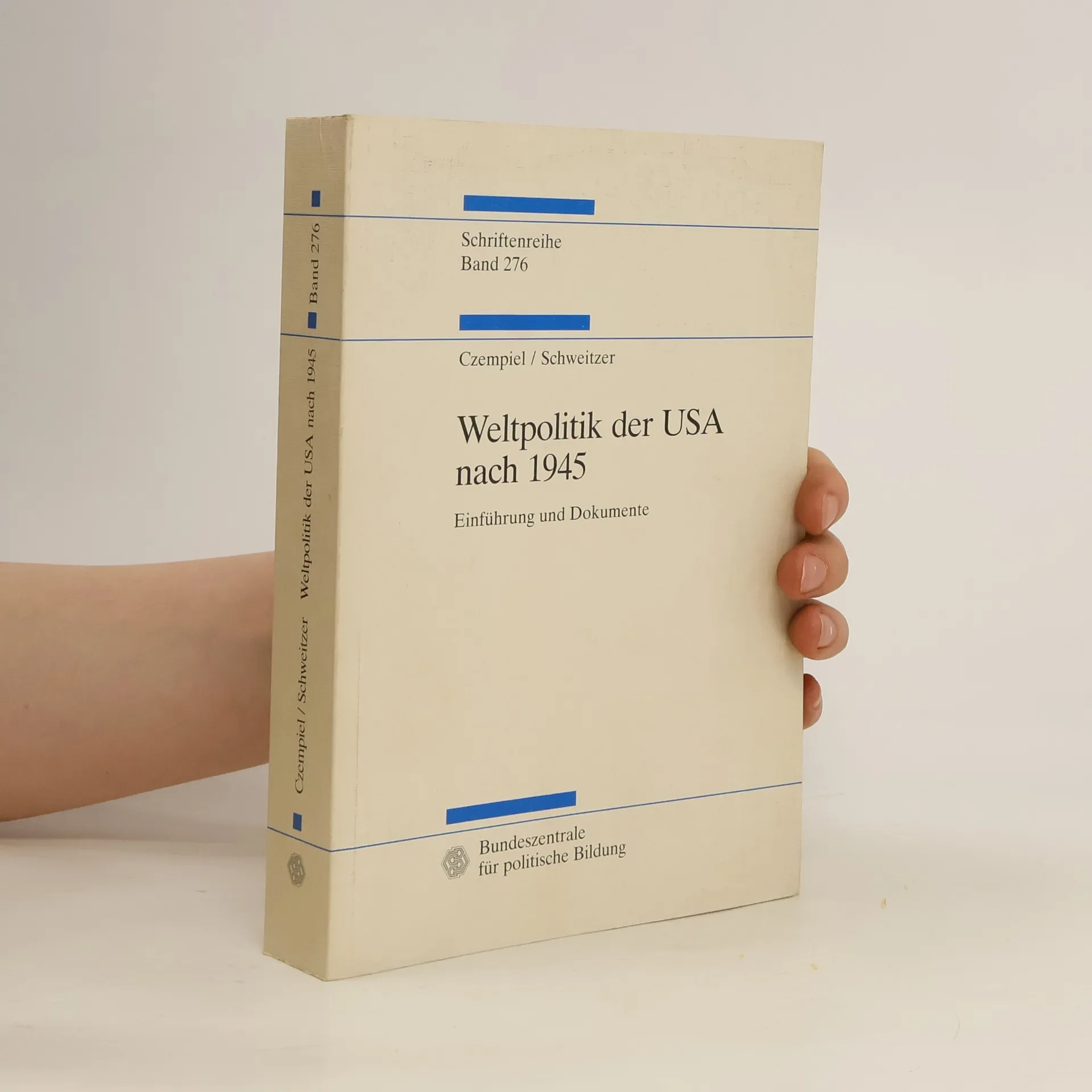
Weltpolitik der USA nach 1945
- 563 Seiten
- 20 Lesestunden
1. Die Entwicklung der amerikanisch-sowjetischen Beziehungen 247 2. Die Europa-Politik 253 3. Die USA in Vietnam 258 4. Die USA und die Dritte Welt 260 Dokumente 40-48 264 V. 1970-1980: Von der Koexistenz zur Kooperation 303 Einfuhrung 303 1. Weltpolitik im Dreieck 305 2. Die Nixon-Doktrin 313 3. Engagement in Nahost 316 4. Die Renaissance der Macht 319 Dokumente 49-62 322 VI. Die achtziger Jahre - Zuruck zur Konfrontation? 383 Einfuhrung 383 1. Aufrustung und Re-Konfrontation 385 2. Die neue Weltpolitik 390 Dokumente 63-65 394 Anhang 405 Zeittafel 407 Auswahlbibliographie 437 Register 463 Die Autoren 477 8 Einleitung 1984 blicken die USA auf 35 Jahre der Fuhrung des westlichen Bundnisses zuruck. Unter amerikanischer Anleitung wurde die NATO 1949 gegrundet, als Kernstuck des zweiten Entwurfs der amerikanischen Weltpolitik nach 1945. Der erste Entwurf hatte zu den Vereinten Nationen gefuhrt, beruhte auf der Hoffnung, dass die Kriegsallianz auch die Friedensallianz sein werde. Als diese Hoffnung im Kalten Krieg zerstob, vertrauten die USA die Sicherheit der westlichen Welt und ihre Fuhrungsposition der Nordatlantischen Verteidigungs allianz an; sie ist bis heute das Kernstuck der Atlantischen Gemeinschaft geblieben. 35 Jahre der Weltfuhrung und der Fuhrung des Westens durch die USA -Anlass und Zeitraum sind gross genug, um eine Zwischenbilanz zu versuchen."