The story follows plumber Barry Blogs, who fulfills his childhood dream of becoming a magician after a talking cat introduces him to Real Magic. However, his excitement quickly turns to frustration as he struggles with the unpredictable nature of his newfound powers, leading to a series of humorous mishaps. The narrative blends fantasy with comedic elements, showcasing Barry's journey as he navigates the challenges of mastering magic.
Swimhiking in Britain and Europe describes routes from Scotland to Cyprus. The introduction explains how a swimhike combines swimming and hiking in one continuous journey, and gives instructions on how to make your own swimsac. Once equipped, the first half of the book covers routes across Britain, and the second half describes routes all over the continent. The chapters on each route include stories about the locations and characters who have lived there, from saints to cannibals, and describe some of the adventures that might befall the swimhiker, whether this is being ticked off, stung by jellyfish, or-more seriously-caught in a current. Swimhiking in Britain and Europe is illustrated throughout with colourful maps and pictures. Its author, Peter Hayes, is the creator of the Frog Graham Round.
Kniha PREČO? Ako pochopiť holokaust skúma jednu z najtragickejších udalostí v
dejinách ľudstva a odpovedá na osem najčastejších otázok, ktoré sa s ňou
spájajú: Prečo Židia? Prečo práve Nemci? Prečo vraždenie? Prečo bol holokaust
taký rýchly a rozsiahly? Prečo sa Židia väčšmi nebránili? Prečo bola pomoc
zvonka taká obmedzená? Napriek množstvu kníh a filmov, múzeí a pomníkov,
výpovedí pamätníkov a výučbe venovanej holokaustu sa zdá, že ani po viac ako
sedemdesiatich rokoch sa nepodarilo nájsť ucelené vysvetlenie toho, ako sa
mohla v srdci civilizovanej Európy v 20. storočí udiať taká nepredstaviteľná
masakra. Americký historik Peter Hayes, odborník na dejiny Nemecka a genocídy,
na základe rozsiahleho výskumu a štatistických údajov pútavým spôsobom
vyvracia mnohé mylné predstavy a interpretácie a odpovedá na všetky kľúčové,
nepríjemné a bolestivé otázky. „Táto kniha je dômyselnou odpoveďou na
provokatívnu otázku: ,Načo ďalšia kniha o holokauste?‘ Hayes píše zrozumiteľne
a jeho pozoruhodný text je mrazivou zbierkou varovných signálov, minulých i
súčasných.“ — Kirkus Reviews „Zrozumiteľná a veľmi dobre napísaná kniha, ktorá
je dôležitá v dnešnej dobe strachu, propagandy a fake news.“ — Times Higher
Education „Jasný a zručne napísaný úvod do dejín holokaustu. Na rozdiel od
väčšiny kníh o holokauste sa autor sústreďuje nato, aby čitateľom pomohol
pochopiť, prečo sa holokaust stal, prečo sa udial tak, ako sa udial, a aké mal
následky.“ — Jewish Telegraphic Agency
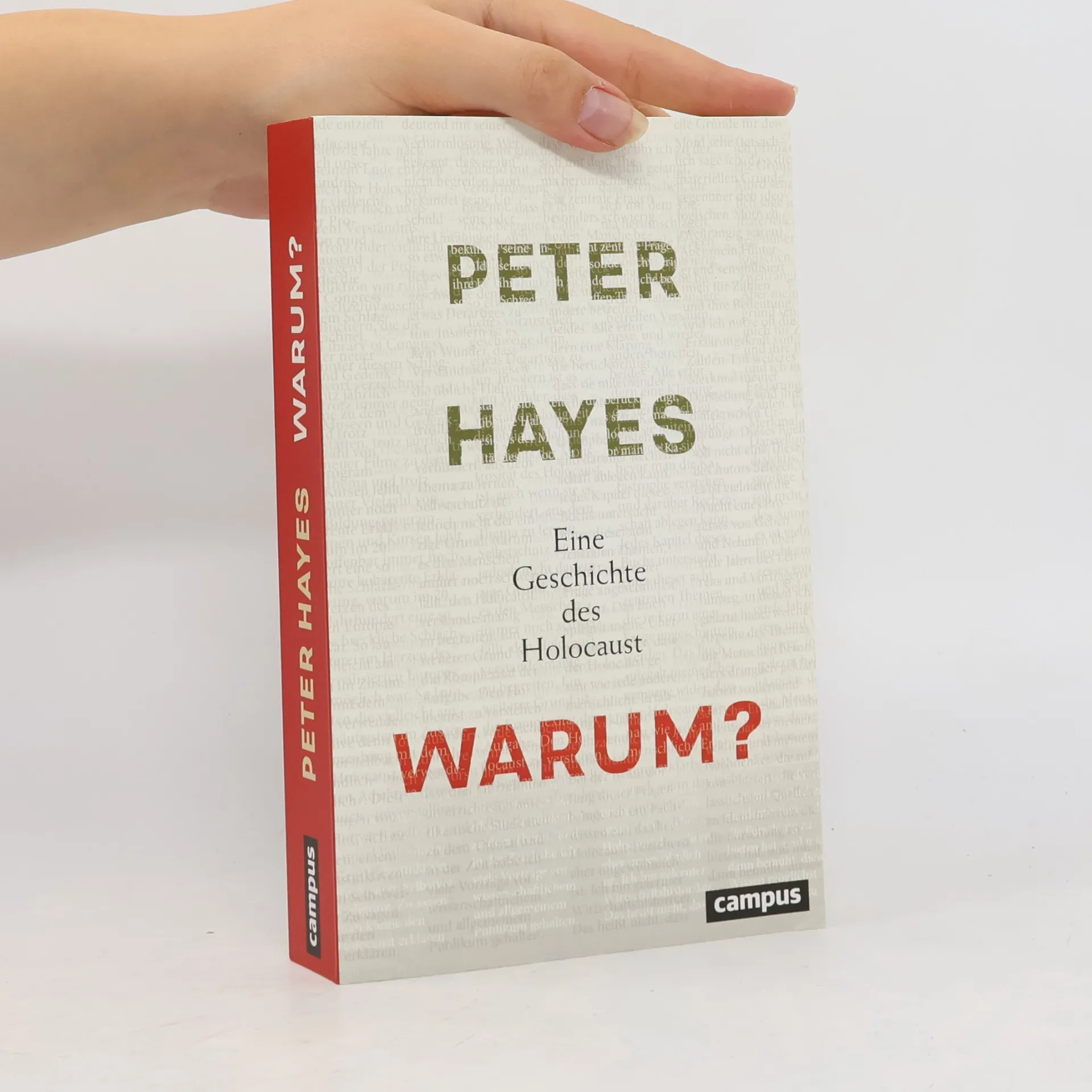
Featured in the PBS documentary, "The US and the Holocaust" by Ken Burns, Lynn Novick and Sarah Botstein "Superbly written and researched, synthesizing the classics while digging deep into a vast repository of primary sources." —Josef Joffe, Wall Street Journal Why? explores one of the most tragic events in human history by addressing eight of the most commonly asked questions about the Holocaust: Why the Jews? Why the Germans? Why murder? Why this swift and sweeping? Why didn’t more Jews fight back more often? Why did survival rates diverge? Why such limited help from outside? What legacies, what lessons? An internationally acclaimed scholar, Peter Hayes brings a wealth of research and experience to bear on conventional views of the Holocaust, dispelling many misconceptions and challenging some of the most prominent recent interpretations.
When Father Christmas gives the World's Children cheap presents they make a Huge Fuss. To solve this problem a special computer is dropped at the North Pole, so that Santa can get children the expensive presents they need. But the problems have only just begun... This 140-page fully illustrated book makes ideal bedtime reading.
An exploration of the most commonly asked questions about the Holocaust challenges misconceptions and discusses how no single theory fully explains the tragedy, drawing on a wealth of scholarly research and experience to offer new insights.
Warum geschah der Holocaust, die Ermordung von Millionen jüdischer Menschen während des Nationalsozialismus? Peter Hayes ist der erste Historiker, der die Frage nach dem Warum ins Zentrum eines Buches stellt. Hayes spannt den Bogen von den Ursprüngen des Antisemitismus bis hin zur Bestrafung von NS-Verbrechern nach 1945. So gelingt ihm ein kluger und präziser Überblick über die Vernichtung der europäischen Juden. Ein eindrucksvolles Buch, an dem künftig nicht vorbeizukommen sein wird. „Das Buch spiegelt meine Überzeugung wider, dass der Holocaust genau wie jede andere menschliche Erfahrung erklärbar ist, auch wenn das nicht einfach ist.“ Peter Hayes
As the Holocaust passes out of living memory, future generations will no longer come face-to-face with Holocaust survivors. But the lessons of that terrible period in history are too important to let slip past. How Was It Possible?, edited and introduced by Peter Hayes, provides teachers and students with a comprehensive resource about the Nazi persecution of Jews. Deliberately resisting the reflexive urge to dismiss the topic as too horrible to be understood intellectually or emotionally, the anthology sets out to provide answers to questions that may otherwise defy comprehension. This anthology is organized around key issues of the Holocaust, from the historical context for antisemitism to the impediments to escaping Nazi Germany, and from the logistics of the death camps and the carrying out of genocide to the subsequent struggles of the displaced survivors in the aftermath. Prepared in cooperation with the Jewish Foundation for the Righteous, this anthology includes contributions from such luminaries as Jean Ancel, Saul Friedlander, Tony Judt, Alan Kraut, Primo Levi, Robert Proctor, Richard Rhodes, Timothy Snyder, and Susan Zuccotti. Taken together, the selections make the ineffable fathomable and demystify the barbarism underlying the tragedy, inviting readers to learn precisely how the Holocaust was, in fact, possible.
The book reveals unconventional dieting wisdom derived from philosophical works, featuring insights from notable thinkers. It showcases Bergson's laughter diet, Plato's view linking weight to democracy, and Hobbes' diet contract. Additionally, it explores the unique approaches of four German philosophers: Marx's revolutionary diet, Hegel's dialectic on dieting, Schopenhauer's perspective on women's diets, and Nietzsche's berdiet. Each concept offers a surprising take on weight management, blending philosophy with practical dieting strategies.
The story follows Little Princess Doody, who resides in a pink palace with her royal parents and the Cook, her rival. Known for her occasional lies and sense of fairness, Doody embarks on ten whimsical adventures. Highlights include her escapades of freeing zoo animals, discovering a golden egg, and trading her crown for magic peas, showcasing her imaginative spirit and playful nature.