

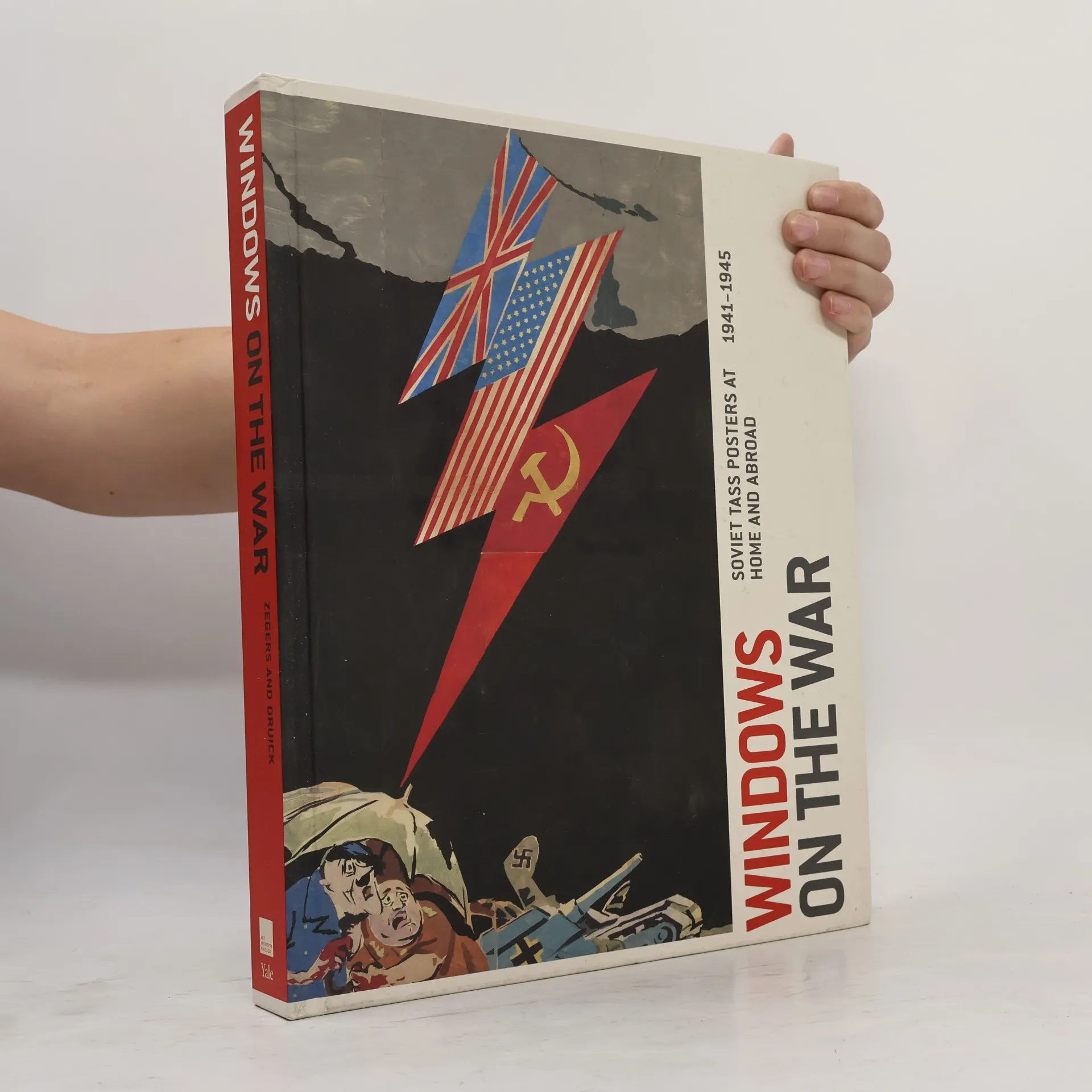
This groundbreaking publication is the first in English to focus on posters created by the Soviet Union's TASS News Agency to support the war effort. Designed by a collective of writers, printers, and artists, including Mikhail Cheremnykh and the Kukryniksy, these striking six-foot-tall stenciled posters were displayed daily in public windows and sent abroad to rally support from Allied and neutral nations. Drawn from the Art Institute of Chicago's collection and other holdings, these TASS posters have remained unseen since World War II. An international team of scholars presents these posters as both historical artifacts and artworks, showcasing how leading artists employed innovative techniques to contribute to the war effort, marking a significant chapter in design and propaganda history. The publication is richly illustrated with photographs, documentary materials, and memorabilia, juxtaposed with TASS poster images. It also includes documents that highlight the expression of Russian cultural life in the United States during the war, providing a captivating glimpse into the Eastern Front experience.
Robert Bird Reihenfolge der Bücher (Chronologisch)


Andrei Rublev
- 87 Seiten
- 4 Lesestunden
Andrei Tarkovsky (1932-1986) was one of the great poets of world cinema. A fiercely independent artist, Tarkovsky crafted poignantly beautiful films that have proven inscrutable and been bitterly disputed. These qualities are present in abundance in Andrei Rublev (1966), Tarkovsky's first fully mature film. Ostensibly a biographical study of Russia's most famous medieval icon-painter, Andrei Rublev is both lyrical and epic, starkly naturalistic and allegorical, authentically historical and urgently topical. While much remains mysterious in Andrei Rublev, critics have recently begun to reappraise it as a groundbreaking film that undermines comfortable notions of life and spirituality. Robert Bird's multifaceted account of Andrei Rublev extends this reevaluation of Tarkovsky's radical aesthetic by establishing the film's historical context and presenting a substantially new reading of key scenes. Bird definitively establishes the film's tortured textual history, which has resulted in two vastly different versions. He relates the film to traditions in Russian art and intellectual history, but finally his analysis focuses on Andrei Rublev as a visual and narrative artwork that treats profound existential questions by challenging conventional notions of representation and vision.