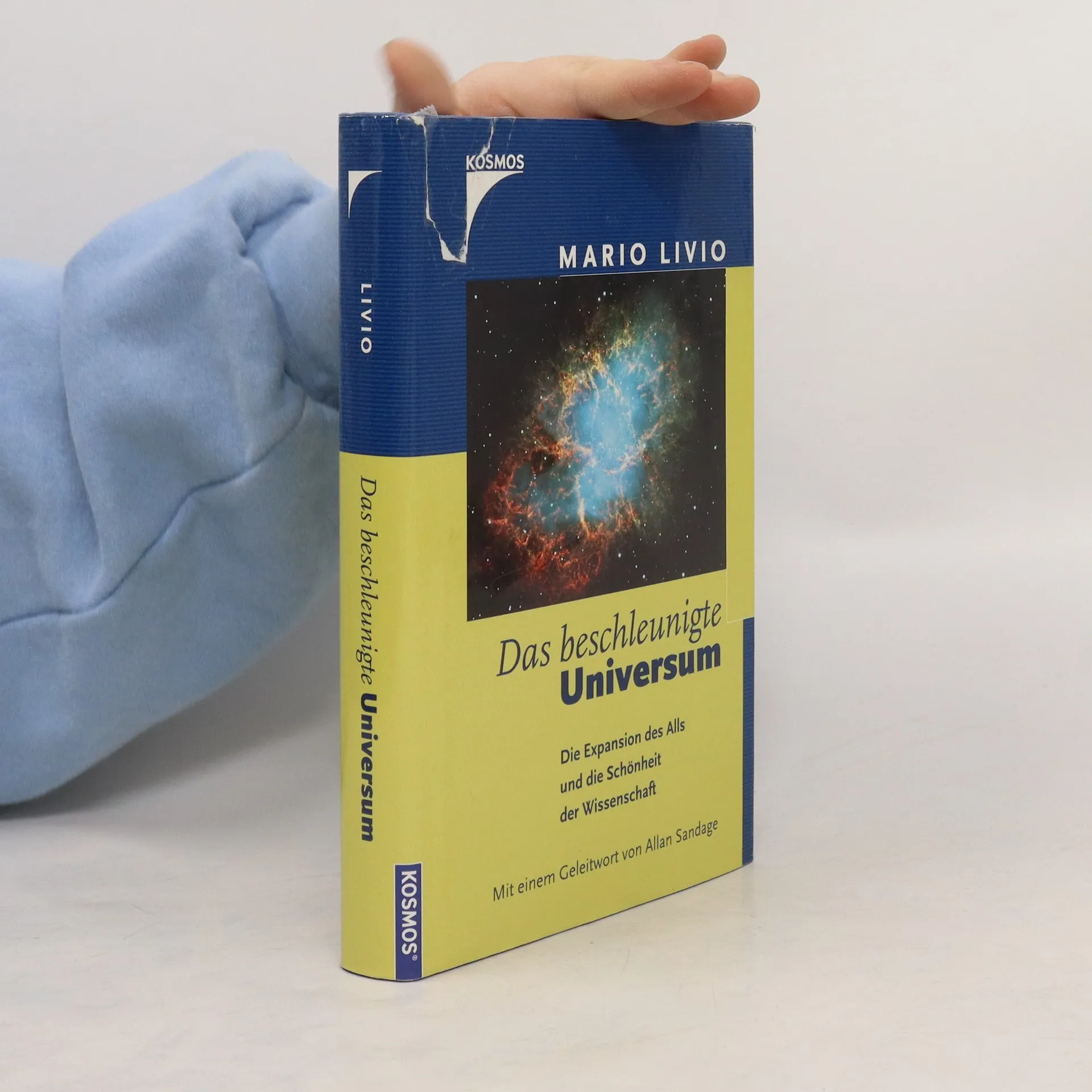
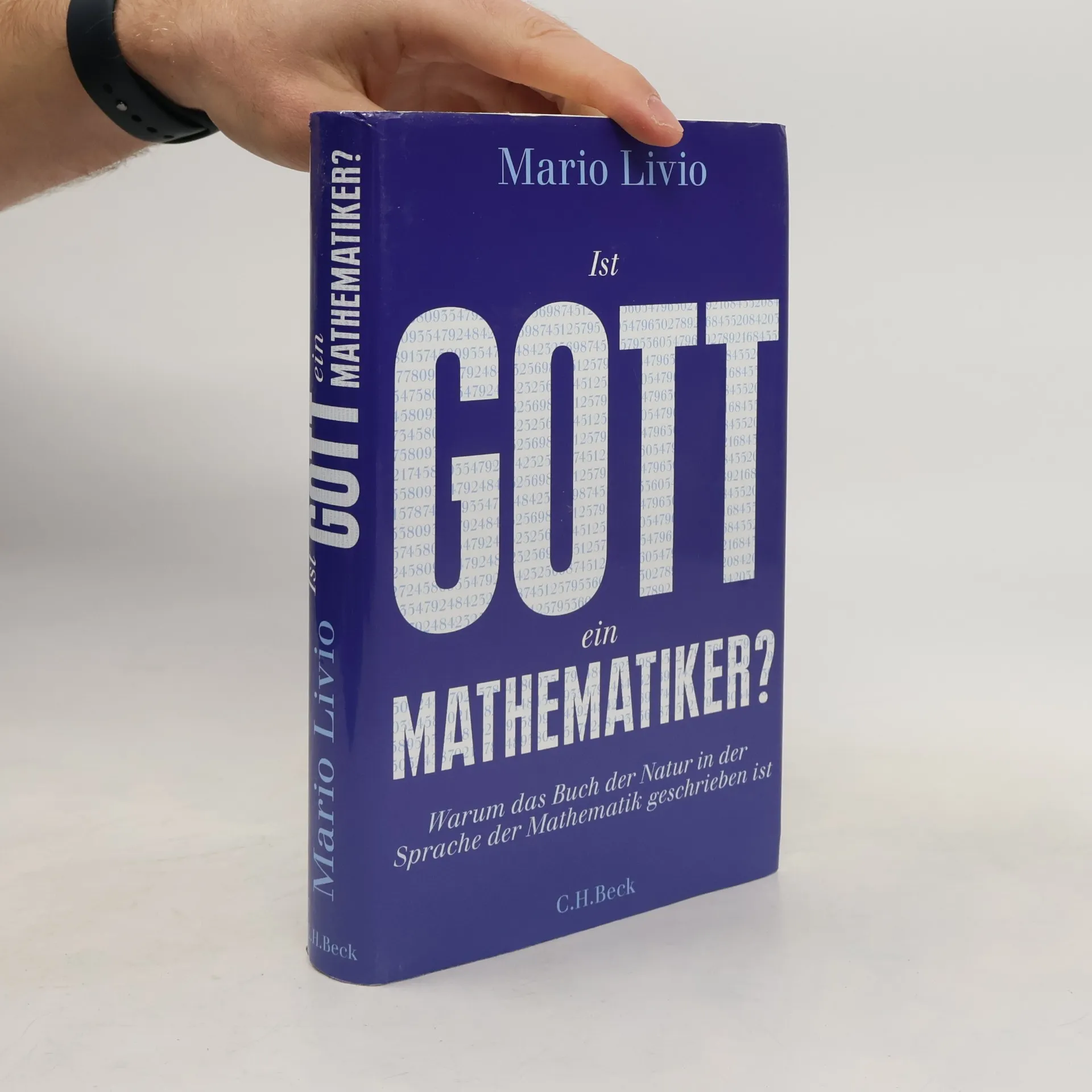
Gott, die Menschen und die Zahlen - eine faszinierende Reise durch die Geschichte der Mathematik Werden mathematische Erkenntnisse erfunden oder werden sie entdeckt? Diese Frage bildet den roten Faden, an dem der Astrophysiker Mario Livio mit großer Lebendigkeit durch die Geistesgeschichte des mathematischen und naturwissenschaftlichen Denkens führt. Zugleich wirft sein Buch einen frischen und unterhaltsamen Blick auf die Lebensgeschichten und die Erkenntnisse großer Denker wie Pythagoras, Platon, Newton und Einstein. Von der Antike bis in unsere Tage haben sich Wissenschaftler und Philosophen darüber gewundert, wie eine so abstrakte Disziplin wie die Mathematik die Natur derart perfekt erklären kann. Sogar mehr als das: Mathematiker haben oft Voraussagen gemacht, etwa über die Existenz bestimmter Teilchen, die sich später als richtig erwiesen haben. Das leicht zugängliche Buch zeigt, warum die Mathematik eine so überragende Rolle bei der Formulierung von Naturgesetzen spielt.
Mario Livio Bücher



Galileo Galilei. Das Wissen im Kampf mit der Macht, Biografie
- 376 Seiten
- 14 Lesestunden
In "Der Mann, der die Welt in Bewegung brachte" beschreibt Mario Livio Galileos Entdeckungen und seinen Konflikt mit der Kirche, der den Kampf zwischen Wissenschaft und religiöser Autorität symbolisiert. Die Biographie beleuchtet Galileos Persönlichkeit, seine Methoden und die Auswirkungen seiner Forschungen auf die Wissenschaft und Gesellschaft des 17. Jahrhunderts.
Das beschleunigte Universum
- 254 Seiten
- 9 Lesestunden
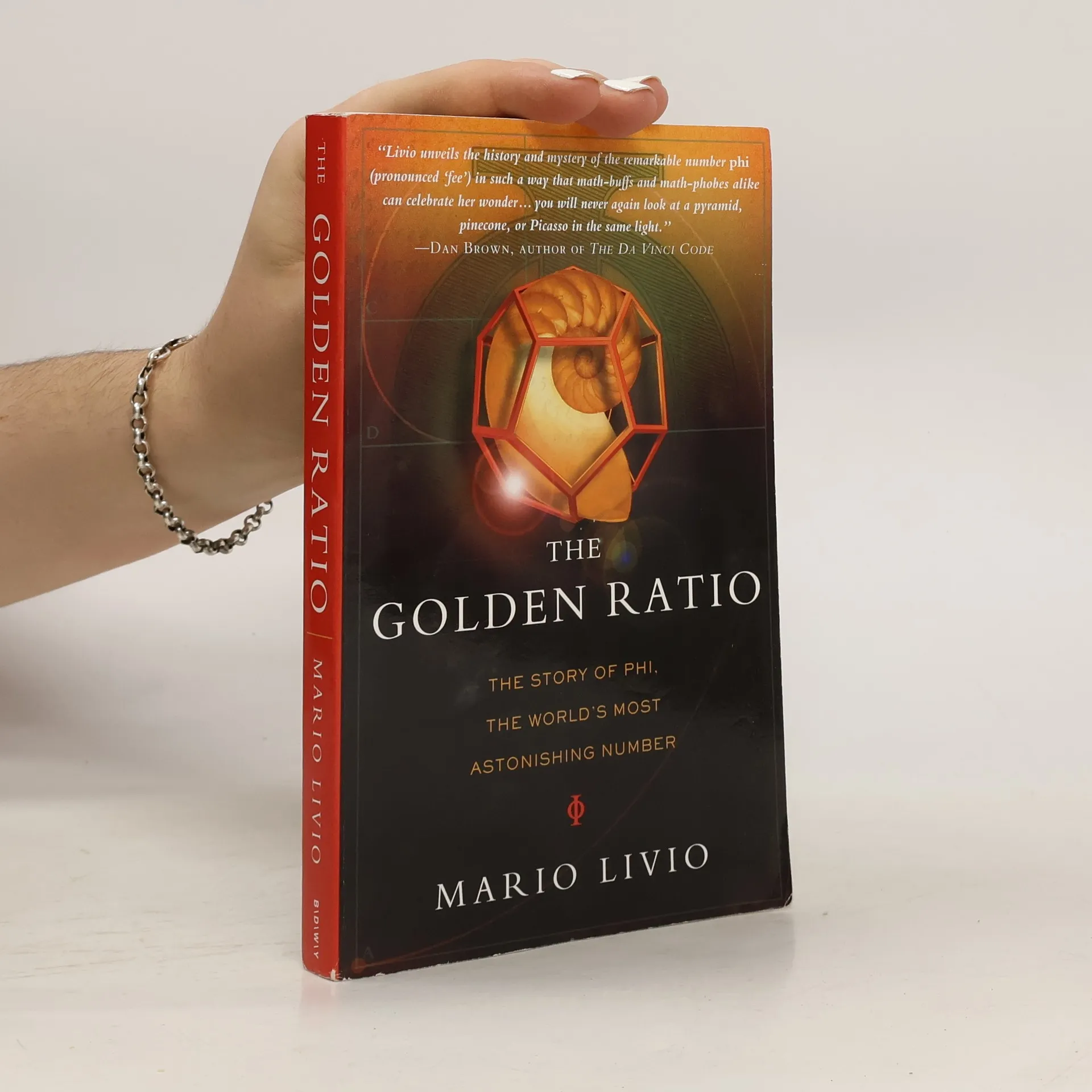
"Das beschleunigte Universum" ist nicht nur ein informatives Buch über moderne Kosmologie. Es ist reich an Erzählungen und vor allem eine Feier des menschlichen Geistes in seiner Suche nach Schönheit in allen Dingen. Es bietet eine klare Erklärung der außergewöhnlichen Entdeckungen, die die letzten Jahre zu einem goldenen Zeitalter der beobachtenden Kosmologie gemacht haben. Mario Livio konstruiert ein provokantes Argument für die Bedeutung der Ästhetik in der Entwicklung der Wissenschaft und für die Untrennbarkeit von Wissenschaft, Kunst und Kultur. Ein aufregender, einfacher Bericht über das Universum, das durch die moderne Astronomie enthüllt wird. Ein Buch mit Charme, Schönheit, Eleganz und Bedeutung.
Galileo
- 304 Seiten
- 11 Lesestunden
An interpretation of the life of Galileo Galilei, one of history's greatest and most fascinating scientists, that sheds new light on his discoveries and how he was challenged by science deniers.
The Golden Ratio. The Story of Phi, The World's Most Astonishing Number
- 304 Seiten
- 11 Lesestunden
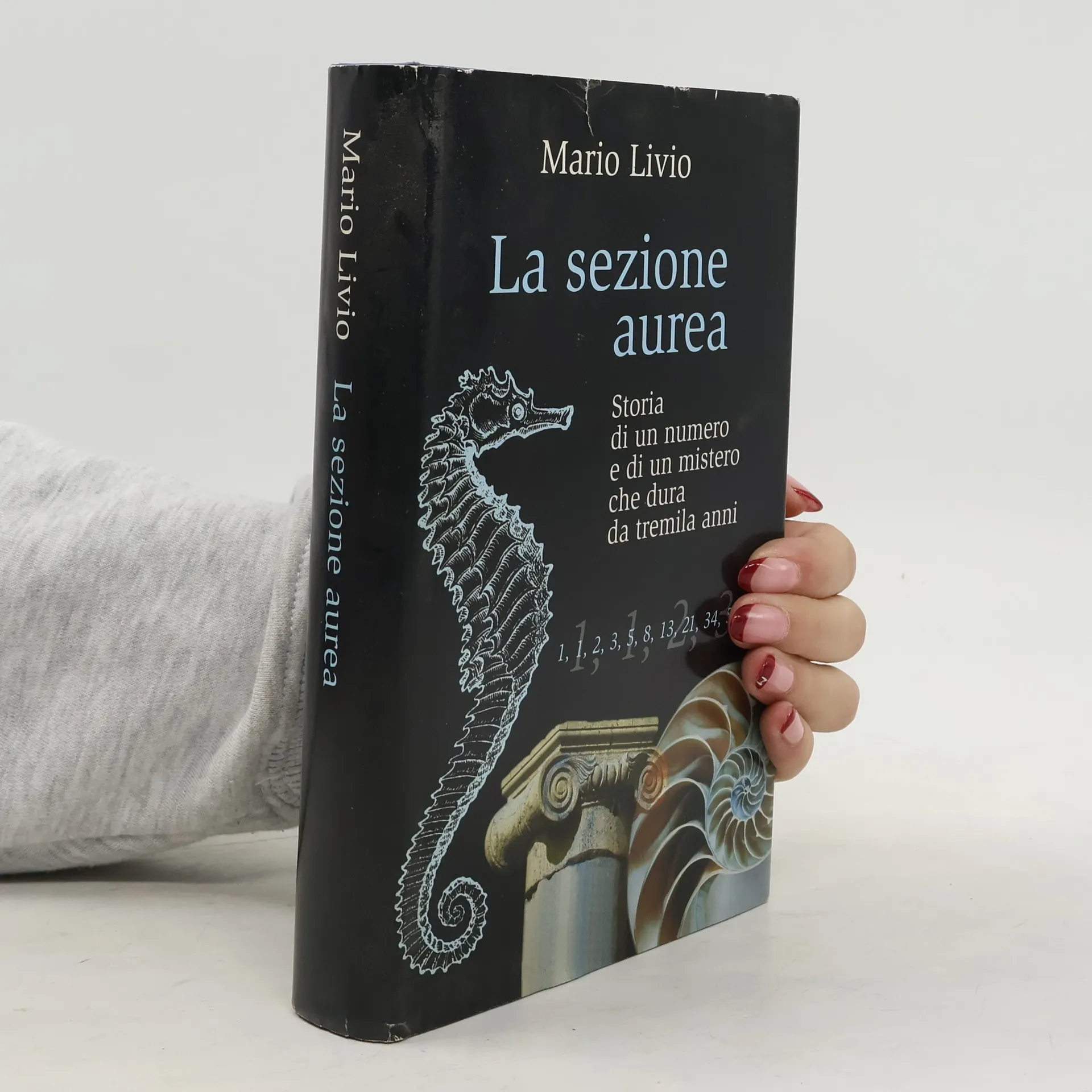
"The Golden Ratio is a captivating journey through art and architecture, botany and biology, physics and mathematics. It tells the human story of numerous phi-fixated individuals, including the followers of Pythagoras who believed that this proportion revealed the hand of God; astronomer Johannes Kepler, who saw phi as the greatest treasure of geometry; such Renaissance thinkers as mathematician Leonardo Fibonacci of Pisa; and such masters of the modern world as Goethe, Cezanne, Bartok, and physicist Roger Penrose. Wherever his quest for the meaning of phi takes him, Mario Livio reveals the world as a place where order, beauty, and eternal mystery will always coexist."--Goggle Books
Equation That Couldn´t Be Solv
- 368 Seiten
- 13 Lesestunden
What do Bach's compositions, Rubik's Cube, the way we choose our mates, and the physics of subatomic particles have in common? All are governed by the laws of symmetry, which elegantly unify scientific and artistic principles. Yet the mathematical language of symmetry-known as group theory-did not emerge from the study of symmetry at all, but from an equation that couldn't be solved.For thousands of years mathematicians solved progressively more difficult algebraic equations, until they encountered the quintic equation, which resisted solution for three centuries. Working independently, two great prodigies ultimately proved that the quintic cannot be solved by a simple formula. These geniuses, a Norwegian named Niels Henrik Abel and a romantic Frenchman named Évariste Galois, both died tragically young. Their incredible labor, however, produced the origins of group theory.The first extensive, popular account of the mathematics of symmetry and order, The Equation That Couldn't Be Solved is told not through abstract formulas but in a beautifully written and dramatic account of the lives and work of some of the greatest and most intriguing mathematicians in history.
Brilliant Blunders
- 352 Seiten
- 13 Lesestunden
Mario Livio shows how even geniuses made major mistakes and how their errors were an essential aspect to achieving scientific breakthroughs
Space Telescope Science Institute Series - 21: Black Holes
Proceedings of the Space Telescope Science Institute Symposium, Held in Baltimore, Maryland, April 23-26, 2007
- 332 Seiten
- 12 Lesestunden
Black holes, once considered to be of purely theoretical interest, play an important role in observational astronomy and a range of astrophysical phenomena. This volume is based on a meeting held at the Space Telescope Science Institute, which explored the many aspects of black hole astrophysics. Written by world experts in areas of stellar-mass, intermediate-mass and supermassive black holes, these review papers provide an up-to-date overview of developments in this field. Topics discussed range from black hole entropy and the fate of information to supermassive black holes at the centers of galaxies, and from the possibility of producing black holes in collider experiments to the measurements of black hole spins. This is an invaluable resource for researchers currently working in the field, and for graduate students interested in this active and growing area of research.