

The invaluable companion to the new edition of the bestselling How to Measure Anything This companion workbook to the new edition of the insightful and eloquent How to Measure Anything walks readers through sample problems and exercises in which they can master and apply the methods discussed in the book.
Douglas W. Hubbard Bücher
1. Januar 1962


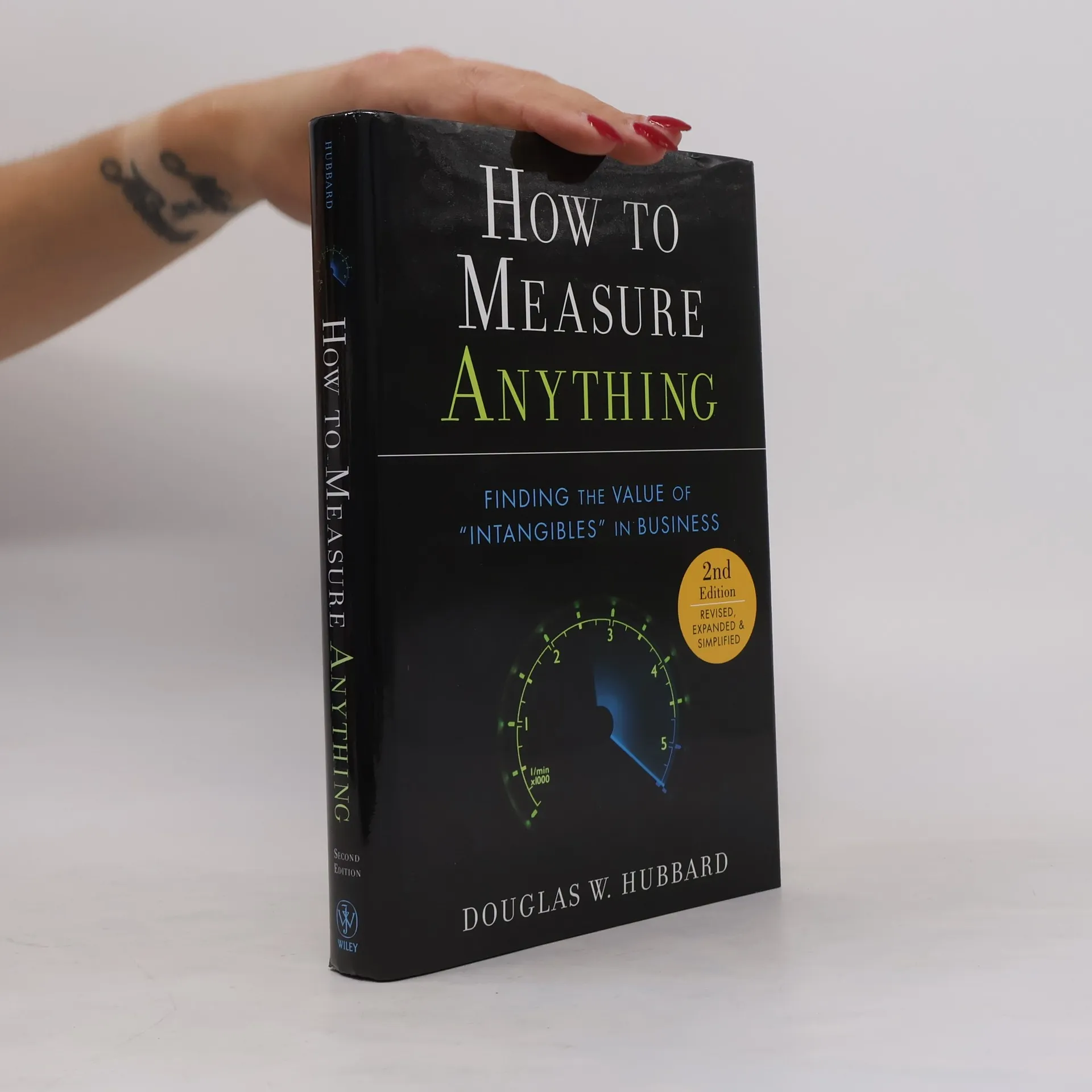

Now updated with new research and intuitive explanations, this book offers a demystifying guide for managers to make less risky, more profitable business decisions. It reveals how to measure aspects of your business previously deemed "immeasurable," such as customer satisfaction, organizational flexibility, technology risk, and technology ROI. The text provides powerful measurement methods applicable to risk management and customer satisfaction, challenging the notion that certain elements are immeasurable due to misconceptions about measurement techniques. It addresses common reasoning behind claims of immeasurability and offers practical methods for assessing various "intangibles." The author incorporates recent research, particularly regarding methods that resemble measurement but act as a "placebo effect" for management, clarifying how to distinguish effective techniques from management myths. Written by Douglas Hubbard, a recognized expert and creator of Applied Information Economics, this edition illustrates how his approach has been successfully applied across industries, demonstrating that any problem, regardless of its complexity or uncertainty, can be measured using proven methods.
The Failure of Risk Management
Why It's Broken and How to Fix It - Second Edition
- 336 Seiten
- 12 Lesestunden
This practical guide addresses significant flaws in current risk analysis methods, highlighting that conventional approaches often lack accurate quantitative analysis, leading to strategies that can worsen situations. Many prevalent methods fail to include performance measurement systems, resulting in ineffective risk management strategies and unrealistic perceptions of risk across various sectors. The book offers an expert examination of critical areas in risk management, such as assessment and evaluation methods, mitigation strategies, and common errors in quantitative models. It emphasizes the importance of appropriate risk methodology through guidance on probability modeling and empirical inputs. Author Douglas W. Hubbard, a recognized leader in risk management, combines scientific analysis with real-world examples to provide a thorough investigation of practices in the field. This revised second edition features updated data sets, expanded coverage of innovative statistical methods, and new case studies on contemporary issues like data breaches and natural disasters. Readers can identify deficiencies in their current risk strategies, adopt calibrated approaches using modern statistical tools, and stay informed about developments in the rapidly evolving risk analysis industry. This resource is invaluable for business leaders, policymakers, managers, consultants, and practitioners across various sectors.