
Bookbot

A. C. Cawley

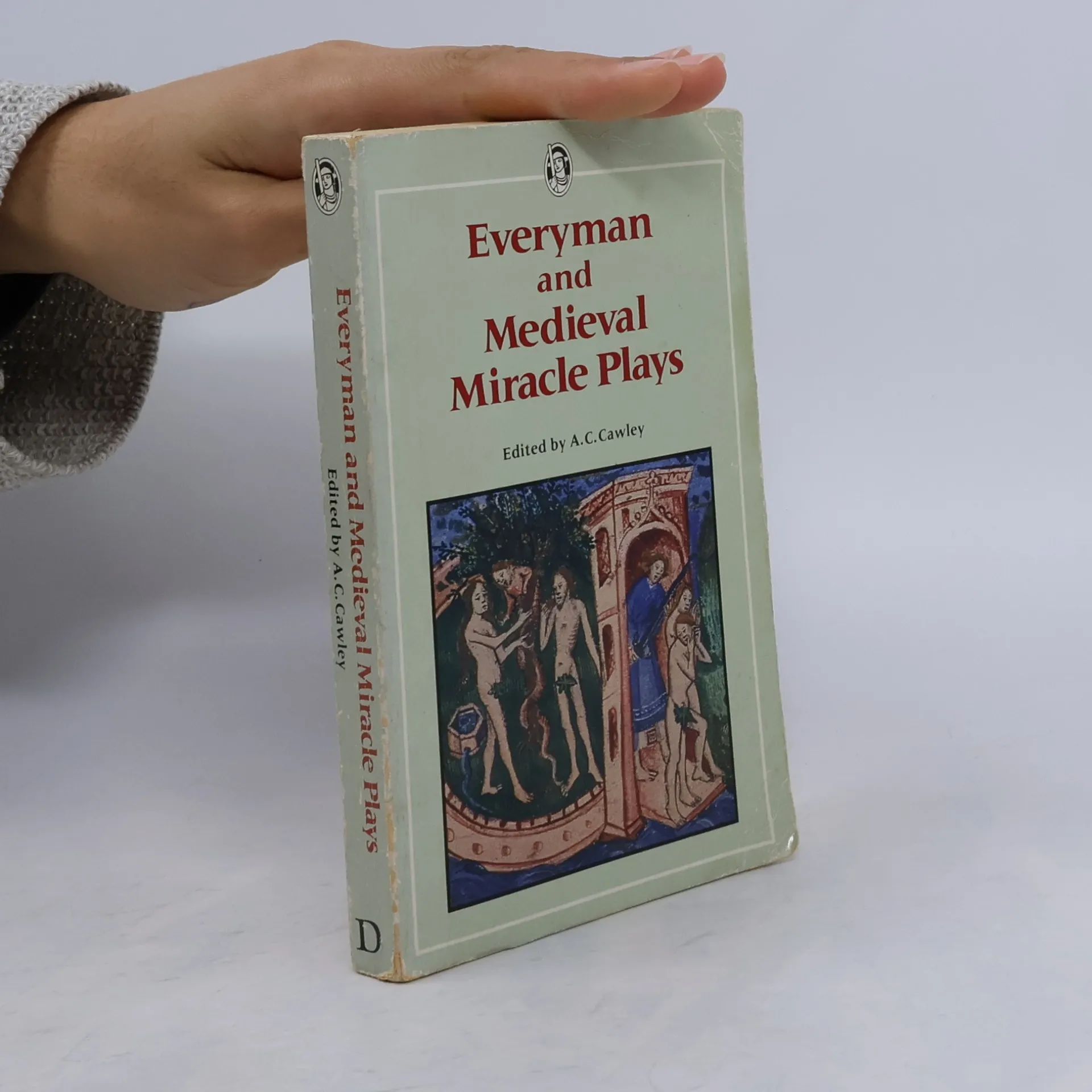
    Everyman and Medieval Miracle Plays
    The Canterbury Tales
    • The Canterbury Tales

      Lektüre mit Audio-Online

      The procession that crosses Chaucer's pages is as full of life and as richly textured as a medieval tapestry. The Knight, the Miller, the Friar, the Squire, the Prioress, the Wife of Bath, and others who make up the cast of characters -- including Chaucer himself -- are real people, with human emotions and weaknesses. Chaucer's genius bursts forth from every page of The Canterbury Tales. According to the General Prologue, each pilgrim was meant to tell two tales on the way to Canterbury and two on the way back. Although he never finished this enormous project and the completed tales were not finally revised, the work remains a cornerstone of English literature. Scholars are uncertain about the order of the tales, and since the printing press had yet to be invented when Chaucer wrote, The Canterbury Tales has been preserved in several handwritten manuscripts. This collection captures the diversity of medieval society and explores themes of love, morality, and the human condition through its vivid storytelling.

      The Canterbury Tales
      4,0
    • Everyman and Medieval Miracle Plays

      • 266 Seiten
      • 10 Lesestunden

      Apart from the morality play Everyman this volume contains a selection of fifteenth-century biblical pageants, some of which are influenced by the Latin liturgical dramas of the medieval Church. Most of them are Corpus Christi pageants, chosen for their intrinsic merit from the cycles of York, Chester, Wakefield, Coventry and 'N.town'. There is also a translation of the Cornish Death of Pilate to represent this unique branch of Celtic literature. Professor Cawley has preserved the original words of the plays, but for the convenience of the general reader many archaic forms and spellings are modernized both within the line and in rhyme. Original stage directions are given and those in Latin are translated; difficult words and short phrases are glossed in the margin, while longer word-groups needing explanation are paraphrased in footnotes.

      Everyman and Medieval Miracle Plays
      3,4