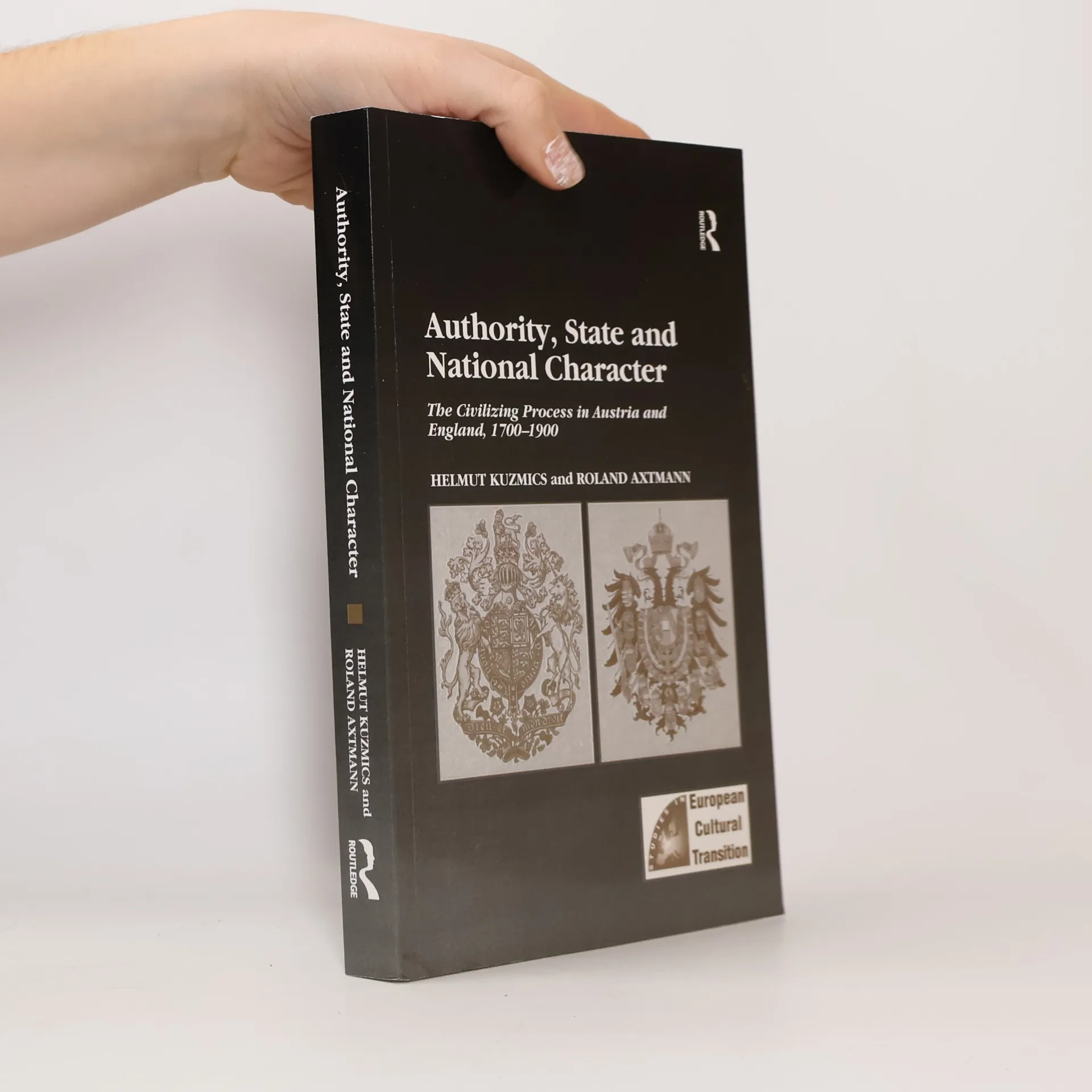
Studies in European Cultural Transition: Authority, State and National Character
The Civilizing Process in Austria and England, 1700–1900
- 376 Seiten
- 14 Lesestunden
This book offers a cross-disciplinary study that merges historical macro-sociology and sociology of emotions with historical anthropology and cultural studies. Utilizing Norbert Elias's concepts on the Civilizing Process, it explores the elusive qualities of 'Englishness' and 'Austrianness' that emerged before the First World War. The authors examine the evolution of political authority structures and their emotional underpinnings as collective habitus (national character), focusing on England and Austria from 1700 to 1900. Their analysis draws primarily on literary sources, including novels and plays, through a sociology of literature lens. Axtmann and Kuzmics contend that the distinct national characters in England and Austria stem from differing experiences of power and authority. They argue that national character formation is influenced by the balance of external constraints and self-restraint, as well as the emotional experiences tied to power dynamics. The authors illustrate how Austria's bureaucratic state, with its patrimonial traits, contrasts with England's self-organizing civil society, leading to divergent institutional authority structures and emotional experiences of that authority. By employing detailed case studies and texts, they provide insights into the complex and often intangible aspects of national identity.