

Bookbot

Graeme D. Ruxton

    Experimental Design for the Life Sciences
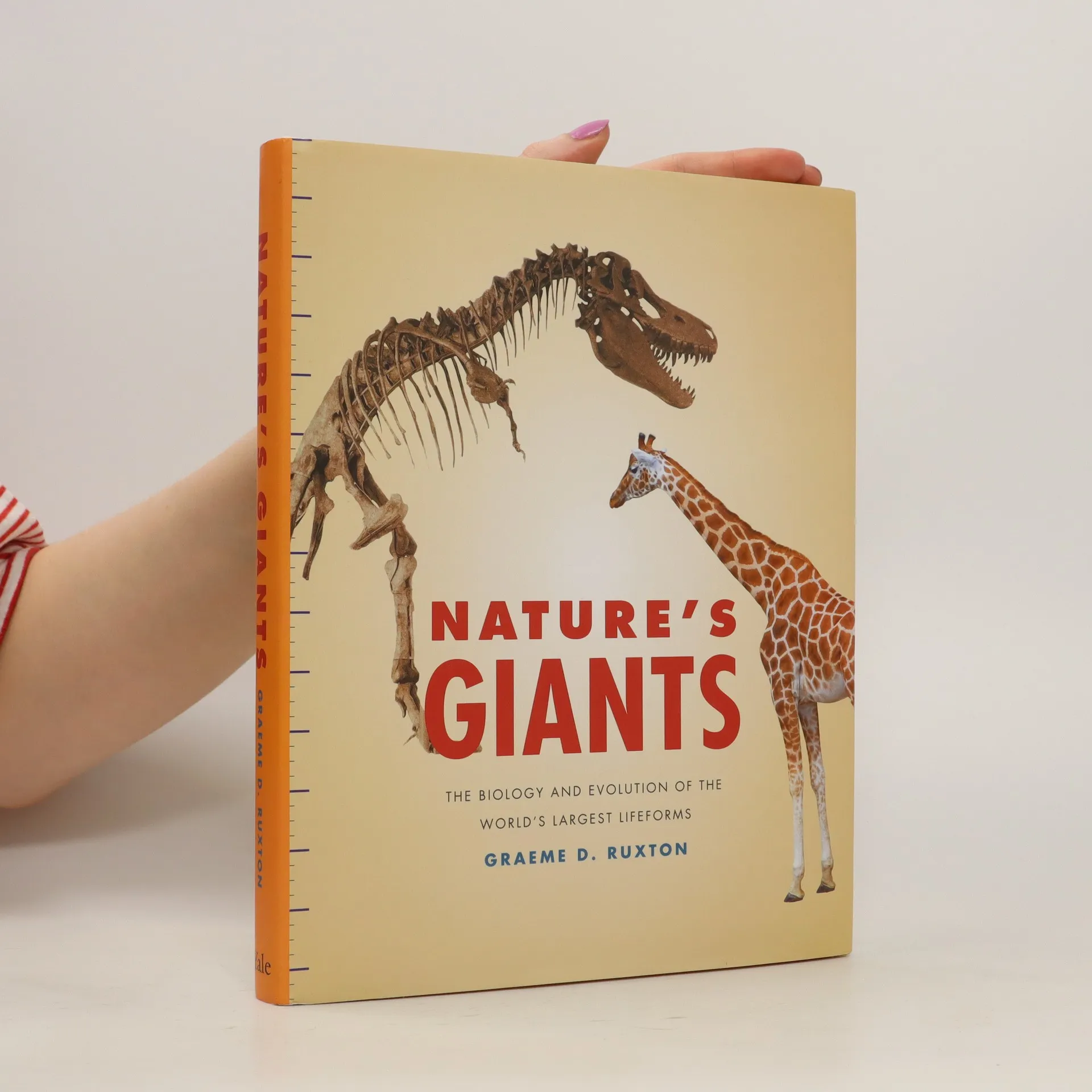
    Nature's Giants. The Biology and Evolution of the World's Largest Lifeforms
    • A beautifully illustrated exploration of the science behind the awe-inspiring giants of past and present The colossal plants and animals of our world--dinosaurs, whales, and even trees--are a source of unending fascination, and their sheer scale can be truly impressive. Size is integral to the way that organisms experience the world: a puddle that a human being would step over without thinking is an entire world to thousands of microscopic rotifers. But why are creatures the size that they are? Why aren't bugs the size of elephants, or whales the size of goldfish? In this lavishly illustrated new book, biologist Graeme Ruxton explains how and why nature's giants came to be so big--for example, how decreased oxygen levels limited the size of insects and how island isolation allowed small-bodied animals to evolve larger body sizes. Through a diverse array of examples, from huge butterflies to giant squid, Ruxton explores the physics, biology, and evolutionary drivers behind organism size, showing what it's like to live large.

      Nature's Giants. The Biology and Evolution of the World's Largest Lifeforms
      4,1
    • At the core of effective research is the careful design of experiments. Unfortunately, successful designs often emerge only after a frustrating trial-and-error process that squanders time and resources. This new edition teaches students how to design experiments effectively, equipping them with essential skills for future research. The text employs an approachable style to explain the critical elements of experimental design in clear, practical terms, enabling students to grasp challenging concepts like power analysis and pseudoreplication. It emphasizes the connections between experimental design, statistics, and ethical considerations. A variety of examples from primary literature and the authors' experiences highlight the practical relevance of experimental design in biological research. As the only undergraduate text focused on this topic, it illustrates that good experimental design is rooted in clear thinking and biological understanding rather than mathematical complexity. **Pedagogical Features:** * Self-test questions with answers at the end reinforce key facts and encourage self-assessment. * Take-home messages throughout chapters focus on the principles students must master. * Ethical issues are highlighted in the margins, raising awareness of this crucial aspect of the field.

      Experimental Design for the Life Sciences