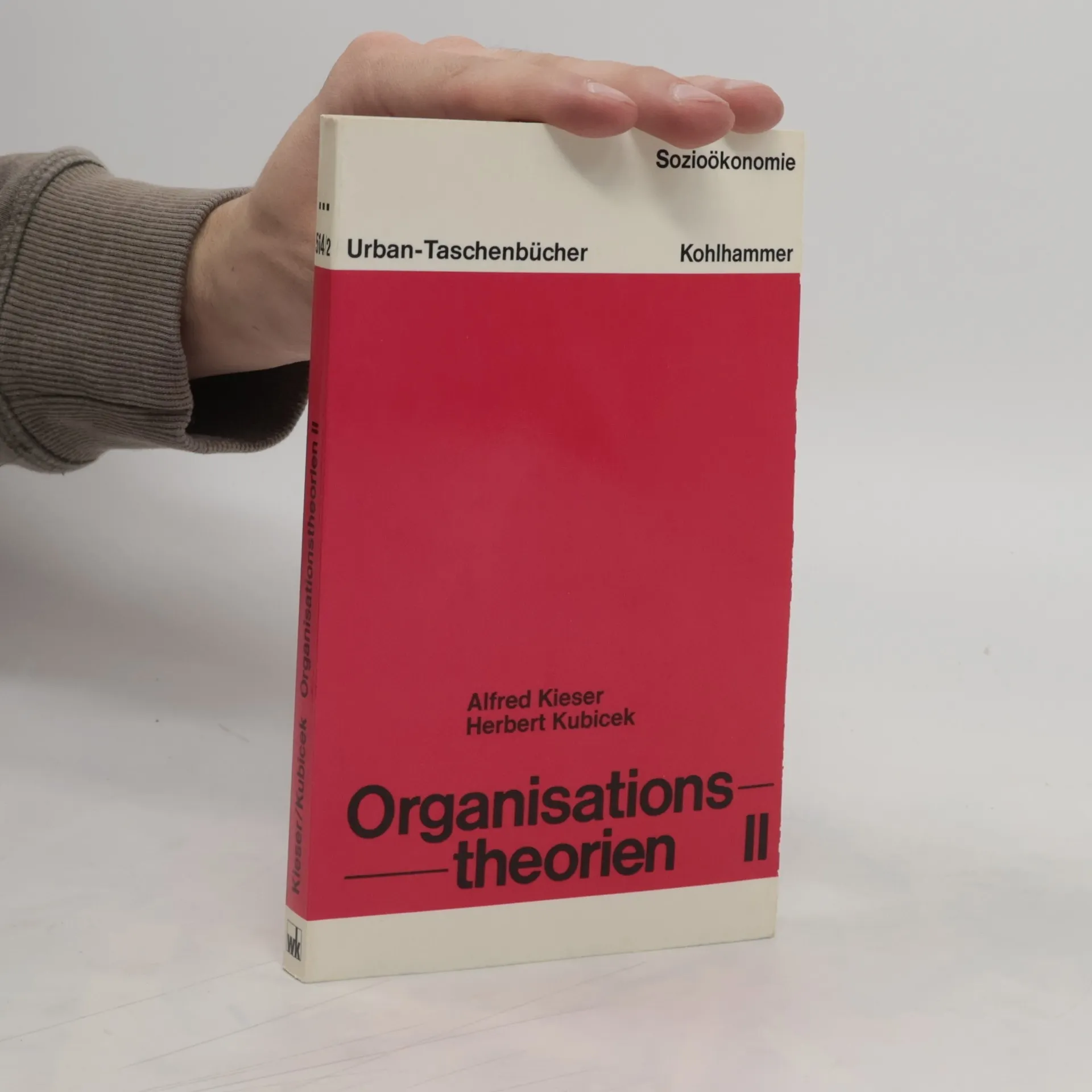
Prof. Dr. Dr. h.c. Alfred Kieser und Prof. Dr. Mark Ebers präsentieren in dieser Neuauflage einen Klassiker der Organisationstheorie, der durch interessante Neuerungen besticht. Kritiken, die die wissenschaftliche Darstellung als „typisch deutsch akademisch“ bemängeln, werden energisch zurückgewiesen. Im Bereich der Organisationstheorie gibt es bereits genug gegenstandsversunkene Literatur, weshalb eine fundierte wissenschaftliche Herangehensweise von großer Bedeutung ist.
Die Neuauflage verzichtet auf konstruktivistische Ansätze und integriert stattdessen Giddens' Strukturaktionstheorie sowie Luhmanns Systemtheorie. Dies zeugt von einer kontinuierlichen kritischen Prüfung der theoretischen Ansätze. Die neuen Kapitel bieten auch für Kenner der vorherigen Auflage frische Perspektiven.
Das Buch führt in zentrale Organisationstheorien ein, darunter Max Webers Bürokratietheorie, Scientific Management, Human Relations, Organisationsentwicklung, verhaltenswissenschaftliche Entscheidungstheorie, den situativen Ansatz, neue Institutionenökonomie sowie evolutionstheoretische Ansätze. Es fördert ein kritisches Verständnis der theoretischen Grundlagen des Fachs und behandelt diese in geschlossener und kompakter Form über 12 Kapitel hinweg. Die 6. Auflage ergänzt zudem ein Kapitel zu Organisationen in Luhmanns Systemtheorie, was die Relevanz und Aktualität des Werkes unterstreicht.
In diesem Lehrbuch wird eine integrative und ganzheitliche Vorstellung von Unternehmungspolitik beschrieben, die sich aus drei Schritten zusammensetzt: Dem Setzen von Zielen, dem Treffen von Entscheidungen und der Durchsetzung der Ziele. Besondere Bedeutung wird dabei den politischen Prozessen in allen Bereichen der Zielbildung, Zieldurchsetzung und Zielveränderung zugeschrieben. Angaben zum Autor: Prof. Dr. Alfred Kieser, Lehrstuhl für Allgem. Betriebswirtschaftslehre, insbes. Organisation; Prof. Dr. Walter A. Oechsler, Lehrstuhl für Allgem. Betriebswirtschaftslehre, insbes. Personal. Die Autoren sind weitere Professoren der Universität Mannheim.