Paul Guyer ist ein herausragender amerikanischer Philosoph, der für seine tiefgehende Gelehrsamkeit zu Immanuel Kant und der Ästhetik bekannt ist. Er gilt als führende Autorität im Kantianismus und hat bedeutende kantische Werke herausgegeben und übersetzt. Guyers umfangreiche Schriften befassen sich mit der Geschichte der Philosophie und untersuchen zentrale Fragen nach Wissen, Vernunft und Geschmack. Seine fundierten Analysen bieten den Lesern tiefe Einblicke in die Entwicklung philosophischer Ideen und die Natur des ästhetischen Urteils.
This book tells the story of idealism in modern philosophy, from the
seventeenth century to the turn of the twenty-first. Guyer and Horstmann
discuss many philosophers who have played a role in the development of
idealism, including Descartes, Hobbes, Spinoza, Leibniz, Locke, Berkeley,
Hume, Kant, Hegel, Schopenhauer, Nietzsche, and Wittgenstein.
Kant is the most significant Enlightenment philosopher. With an overview of Kant's life and times, this title introduces Kant's metaphysics and epistemology, explaining his arguments about the nature of space, time and experience in his most influential but difficult work, 'The Critique of Pure Reason'.
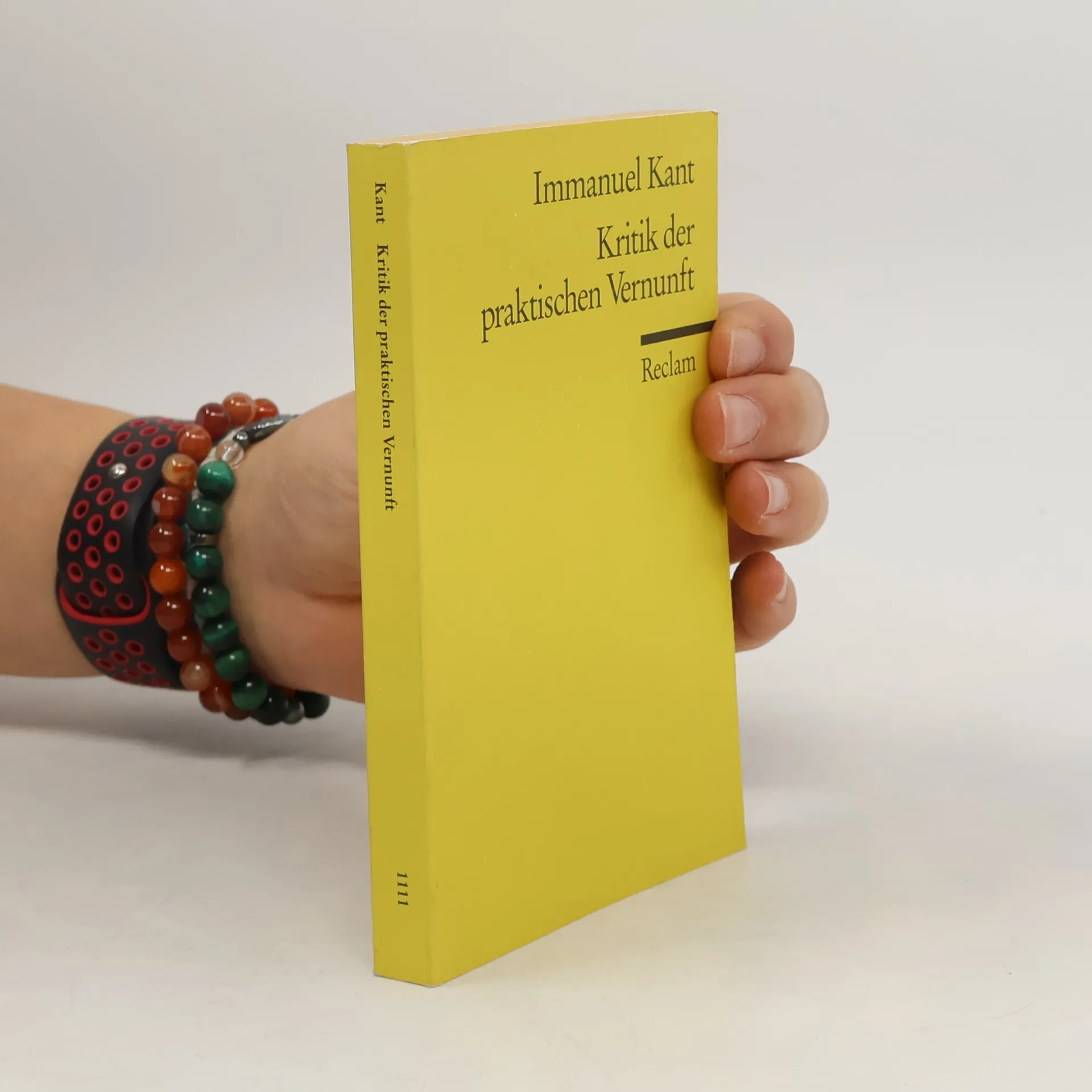
Kritik der praktischen Vernunft (Riga: Johann Friedrich Hartknoch, 1788), 292 pp. [Ak. 5:1-164] “Critique of Practical Reason.” Translated by Lewis White Beck, Immanuel Kant: Critique of Practical Reason & Other Writings in Moral Philosophy (Chicago: University of Chicago Press, 1949). Translated by Mary J. Gregor in Immanuel Kant, Practical Philosophy, edited by Mary J. Gregor (Cambridge: Cambridge University Press, 1996), pp. 139-271. Kant sent the manuscript to the printers (Grünert, in Halle) in the summer of 1787 (letter to C. G. Schütz, 25 June 1787: “I intend to send it to Halle for printing next week” (Ak. 10:490); letter to L. H. Jakob, 11 September 1787: “My Critique of Practical Reason is at Grunert’s now” (Ak. 10:494). Originally given to Wasianski as a gift, Kant’s own copy of this book is available in Halle's university archive. Kant’s marginalia are recorded in the “Lesarten” printed in Ak. 5, & a complete set of facsimilies of this copy is available at the Berlin-Brandenburg Academy of Sciences.