


Bookbot

Werner Hildenbrand

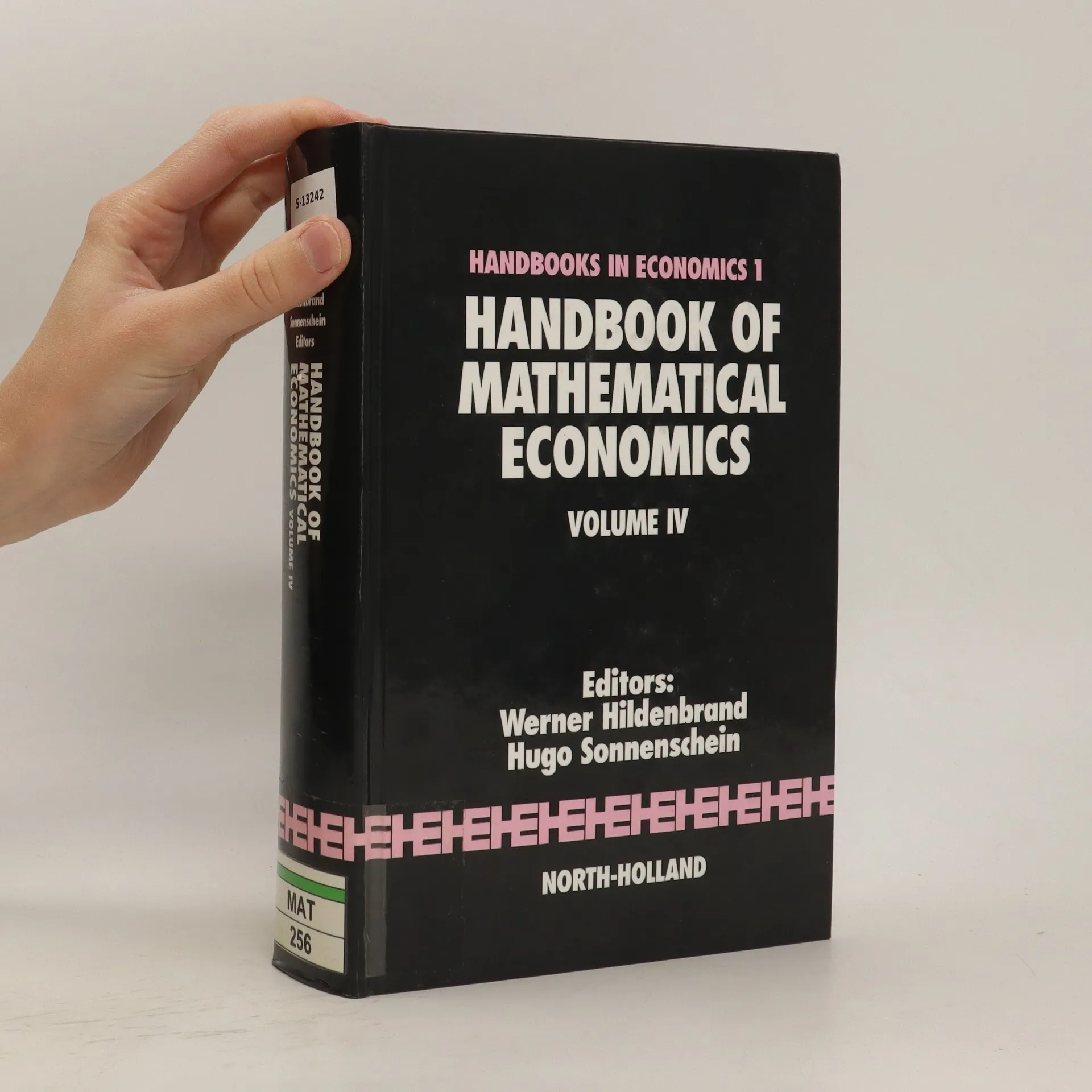
    Handbook of mathematical economics. Volume IV
    Market Demand
    Finanzmärkte im Spannungsfeld von Globalisierung, Regulierung und Geldpolitik
    • Globale Finanzmärkte erfüllen unverzichtbare Aufgaben für eine effiziente Allokation der Ressourcen und für die Disziplinierung der Politik. Sie belohnen „gute“ Politiken durch Kapitalzuflüsse, und sie bestrafen eine „schlechte“ Politik durch Abwanderung. Trotz dieser Vorteile ist die Mobilität des internationalen Kapitals zunehmend in die Kritik geraten. Sie kann - jenseits der Fundamentalfaktoren - zu weltweiten Verzerrungen der Finanzmarktpreise führen, die tief in die realwirtschaftliche Sphäre hineinreichen und die Aktionsparameter der Geld- und Währungspolitik lähmen. Ist die Globalisierung der Finanzmärkte zu weit gegangen? International renommierte Autoren diskutieren im vorliegenden Band drei zentrale Eckpunkte des Spannungsfeldes, innerhalb dessen die Finanzmärkte stehen: die Globalisierungswirkungen, die Balance zwischen Wettbewerb und Regulierung und die Perspektiven für die europäische Währungspolitik.

      Finanzmärkte im Spannungsfeld von Globalisierung, Regulierung und Geldpolitik
    • Market Demand

      Theory and Empirical Evidence

      • 216 Seiten
      • 8 Lesestunden

      Focusing on market demand, Hildenbrand introduces a groundbreaking theory developed over a decade of research, emphasizing the significance of household heterogeneity over individual rationality in the Law of Demand. The book shifts the traditional analysis from individual behavior to exploring how the properties of market demand arise from the aggregation process. This innovative perspective challenges conventional economic thought and offers new insights into the dynamics of demand in diverse populations.

      Market Demand
    • The Handbook of Mathematical Economics aims to provide a definitive source, reference, and teaching supplement for the field of mathematical economics. It surveys the state of the art of mathematical economics as of the late 1970s. This is a constantly developing field, and all authors were invited to review and appraise the current status and recent developments in their presentations. In addition to its use as a reference, it is intended that this Handbook will assist researchers and students working in one branch of mathematical economics to become acquainted with other branches of this field. The emphasis of this fourth volume is on choice under uncertainty, general equilibrium analysis under conditions of uncertainty, economies with an infinite number of consumers or commodities, and dynamical systems. The book thus reflects some of the ideas that have been most influential in mathematical economics since the appearance of the first three volumes. Researchers, students, economists, and mathematicians will all find this Handbook to be an indispensable reference source. It surveys the entire field of mathematical economics, critically reviewing recent developments. The chapters are written at an advanced level suitable for professional, teaching, and graduate-level use.

      Handbook of mathematical economics. Volume IV