

Martin Beckmann Bücher

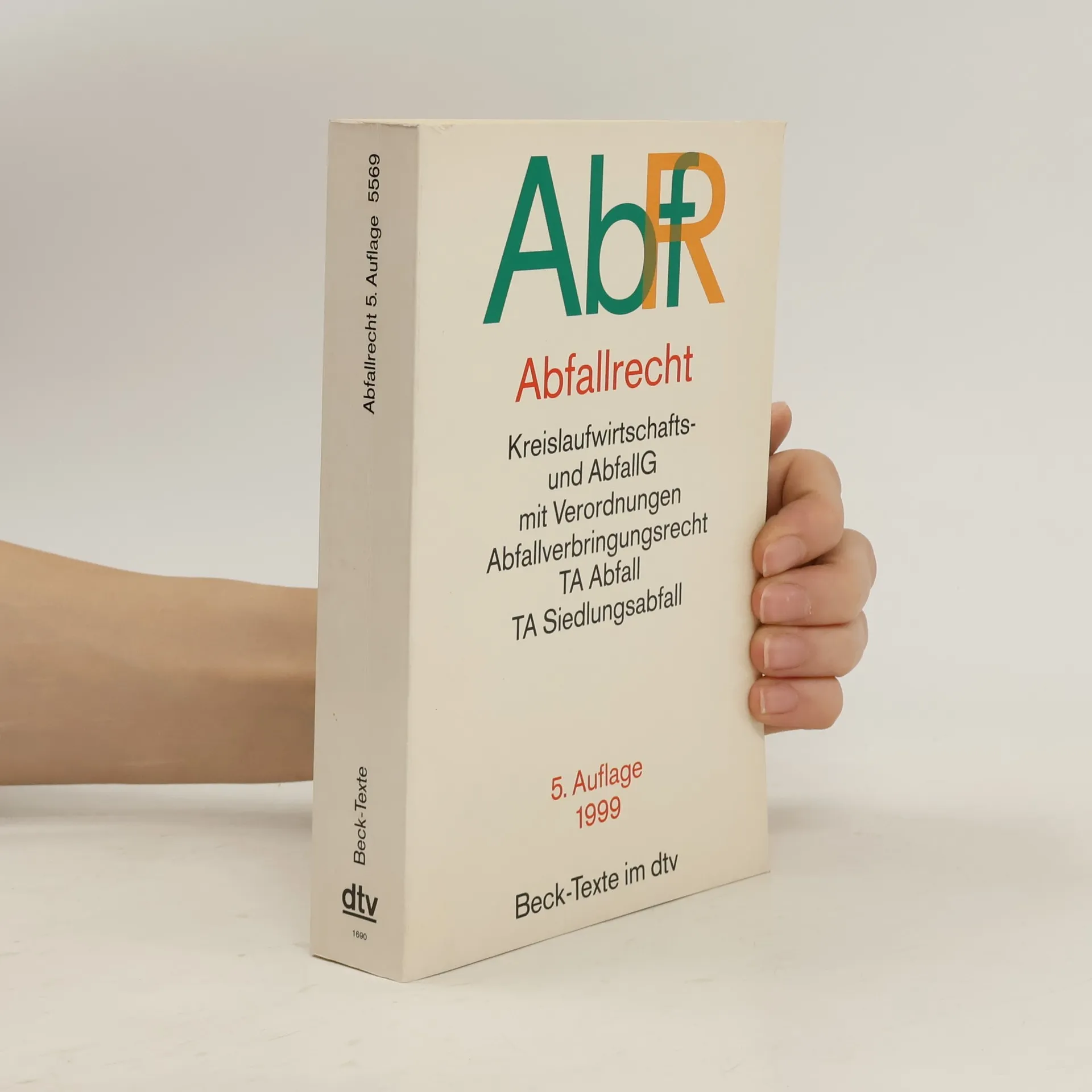
Kreislaufwirtschaftsgesetz
mit Verordnungen, Verpackungsgesetz, Elektro- und Elektronikgerätegesetz, Batteriegesetz, Abfallverbringungsrecht
The Roman empress Faustina the Younger, wife of the emperor Marcus Aurelius and mother to at least eleven imperial children, including the future emperor Commodus, not only played a key role in Roman history of the 2nd century AD but also was the subject of almost unparalleled commemoration in visual media, especially sculpture and coinage, during her lifetime. This book examines the single largest surviving ancient source for the portraiture and public image of Faustina the Younger: the coinage struck in her name under Antoninus Pius and Marcus Aurelius. The coinage of Faustina the Younger is rich in original iconography and long in duration but its chronology and the relationships between its various types are unclear at best, unknown at worst. This study seeks to remedy this situation by employing the methodology of die analysis to create a new and firm chronology for Faustina's coinage. The results make it possible to establish an authoritative typology for Faustina's portraiture and to show the precise relationship between the diverse obverse and reverse types. The die analysis also clarifies Faustina's complicated iconographic program, making it possible to compare it directly with the iconography of the better-dated coinage of her male contemporaries. Taken together, these results permit a complete re-evaluation of the coinage, portraits and public image of Faustina the Younger.