Russische Avantgarde
- 119 Seiten
- 5 Lesestunden




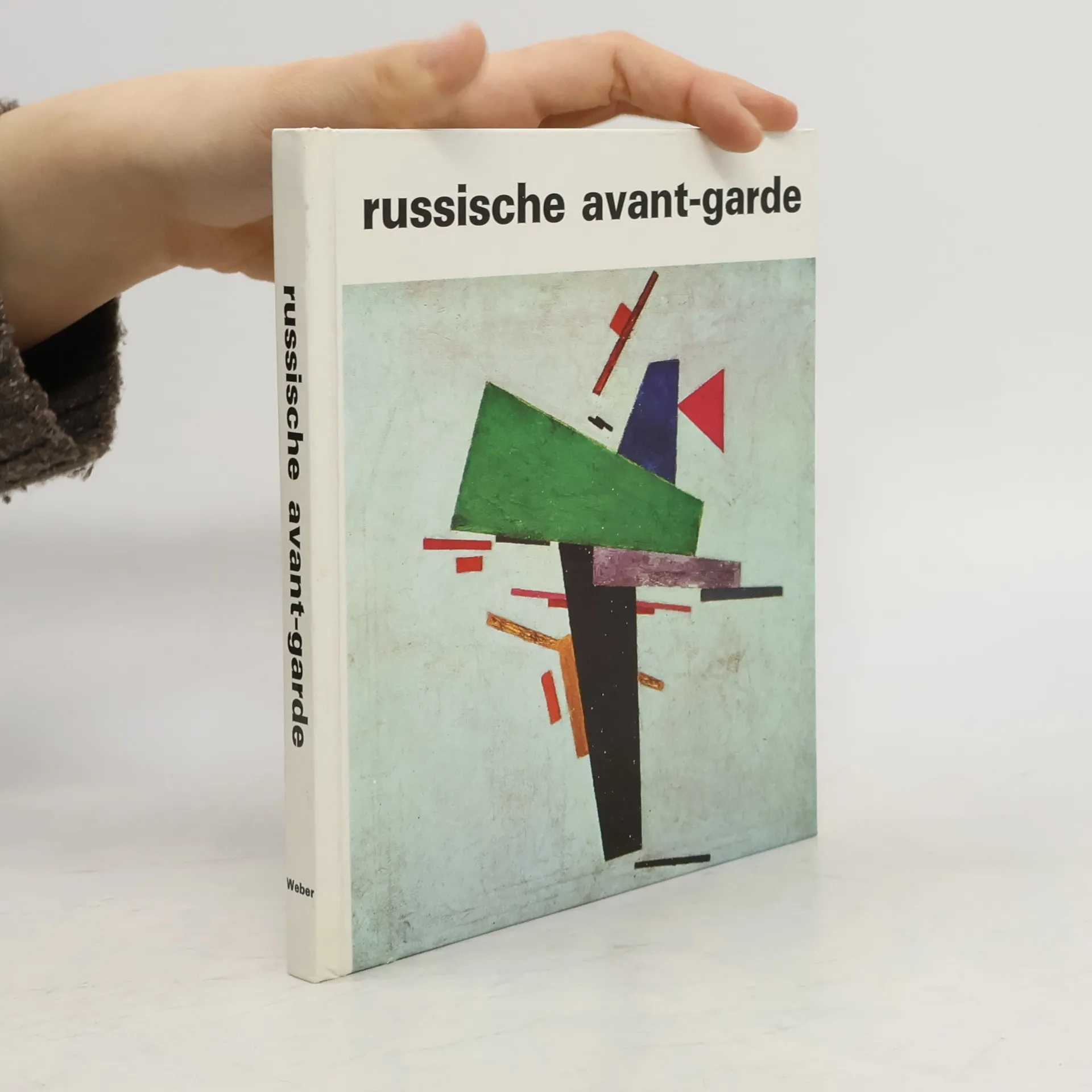
The extraordinary painting Black and White: Suprematist Composition (1915) by Kasimir Malevich (1879–1935) lies at the center of this compact volume. Recent conservation work has helped scholars to understand this single work better, and its story will help readers understand both the history of twentieth-century art and the process of keeping it in good health. Black and White was examined with optic and electron microscopes, spectroscopy and mass spectrometry, and, after having spent years rolled up, it was flattened on a vacuum table, after which loose paint around the edges was consolidated with tools as basic as a heated spatula and glue. But don't try this at home. Dr. Andrei Nakov, a pioneering Malevich expert and the author of Malevitch Écrits and Kazimir Malewicz: Catalogue raisonne writes about the history of the painting in an essay accompanied by 30 color plates.
A leading scholar of the Russian avant-garde reevaluates its most iconic artist Kazimir Malewicz (Malevich; 1879–1935) is undoubtedly one of the most significant artists of the 20th century, famed for his Suprematist works such as the so-called “Black Square” and White on White . Incredibly, his art only received its due in the West in the late 1950s; three more decades passed before it could be accessible to the Russian public. In this critical study, Andrei Nakov dissembles some foundational myths about the artist’s ethnic background, such as his Polish origins (hence the rendering of the artist’s name here as “Malewicz”), his affinity for the religious iconography of Russia and his place in modern European art. The artist’s concept of Suprematist forms is central to Nakov’s study, which interrogates certain anti-modernist visual and cultural prejudices.Andrei Nakov (born 1941) has published numerous theoretical studies, monographs and exhibition catalogs on the Russian avant-garde, Futurism, Dada, Constructivism, contemporary art and European abstract art.