

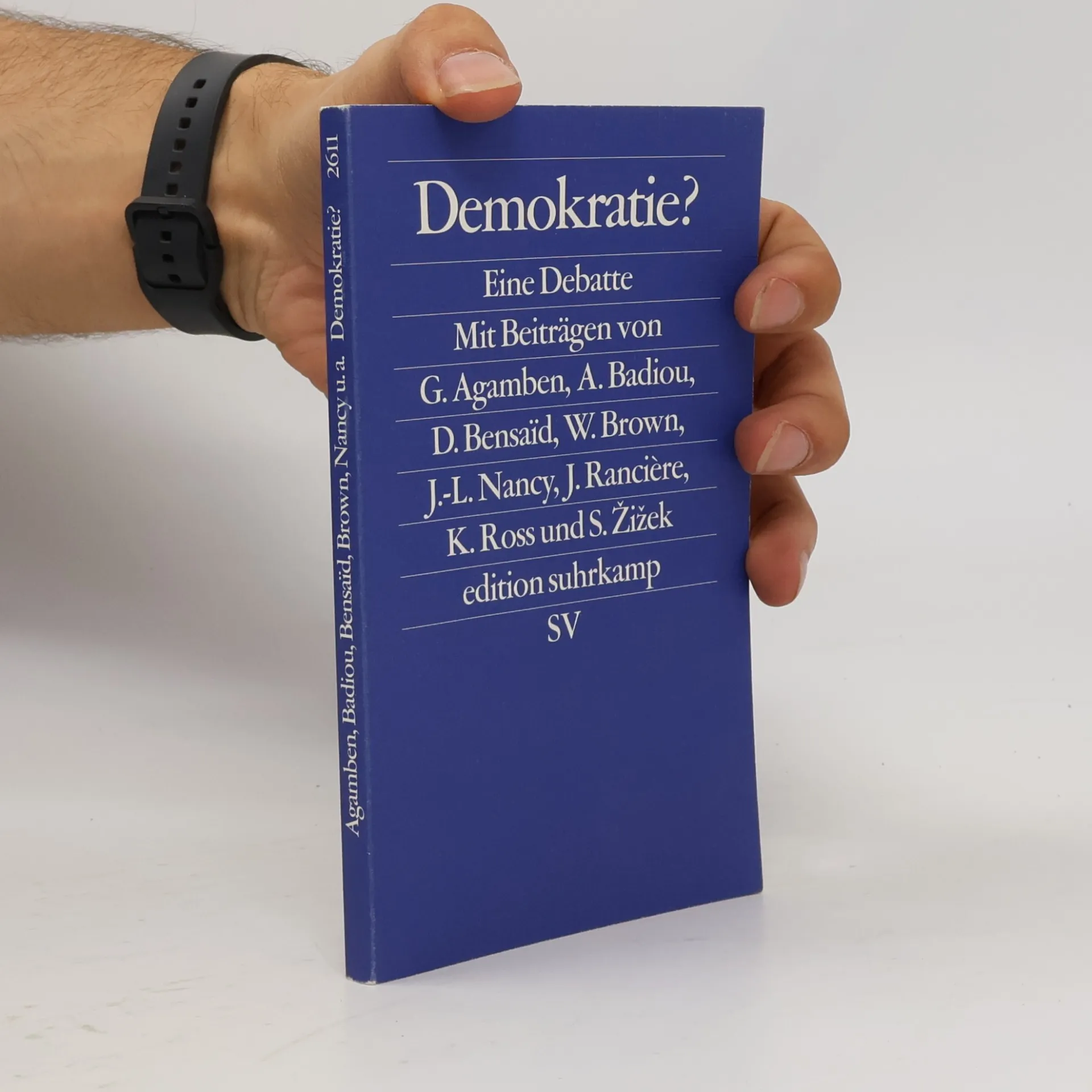
Zu Beginn des dritten Jahrtausends ist die Situation der Demokratie paradox: Einerseits sind mehr Staaten denn jemals zuvor demokratisch verfaßt, andererseits nehmen die Krisensymptome in den Staaten, die einstmals so etwas wie eine demokratische Avantgarde bildeten, zu: Die Wahlbeteiligung sinkt, schillernde Persönlichkeiten wie Silvio Berlusconi oder Nicolas Sarkozy gewinnen an Bedeutung, Wahlkämpfe geraten zu schalen Marketingkampagnen. Colin Crouch hat all diese Trends in dem Band „Postdemokratie“ präzise auf den Punkt gebracht. In diesem Band setzen sich nun acht herausragende politische Denkerinnen und Denker mit dem Zustand und den Perspektiven der am wenigsten schlechten aller Regierungsformen (Winston Churchill) auseinander, die tageszeitung sprach von einem »Who's who der internationalen linken Theorie«. Der Diskussionsband enthält Beiträge von Giorgio Agamben, Alain Badiou, Daniel Bensaïd, Wendy Brown, Jean-Luc Nancy, Jacques Rancière, Kristin Ross und Slavoj Žižek.
Daniel Bensaïd Bücher
25. März 1946 – 12. Januar 2010
Daniel Bensaïd war ein französischer Philosoph und eine führende Persönlichkeit der trotzkistischen Bewegung. Er war eine Schlüsselfigur im Studentenaufstand von 1968 während seines Studiums an der Universität Paris X: Nanterre. Seine Arbeiten befassten sich eingehend mit der Theorie und Praxis radikaler Politik. Bensaïds philosophisches Erbe liegt in seiner unermüdlichen Erforschung der Möglichkeiten gesellschaftlicher Transformation.

Bensaïd croit que Marx n'a pas élaboré un système doctrinaire mais plutôt une théorie critique de la lutte sociale et du changement du monde. Les trois parties du livre reprennent ses trois grandes critiques: celles de la raison historique, de la raison économique et de la positivité scientifique. [SDM].