
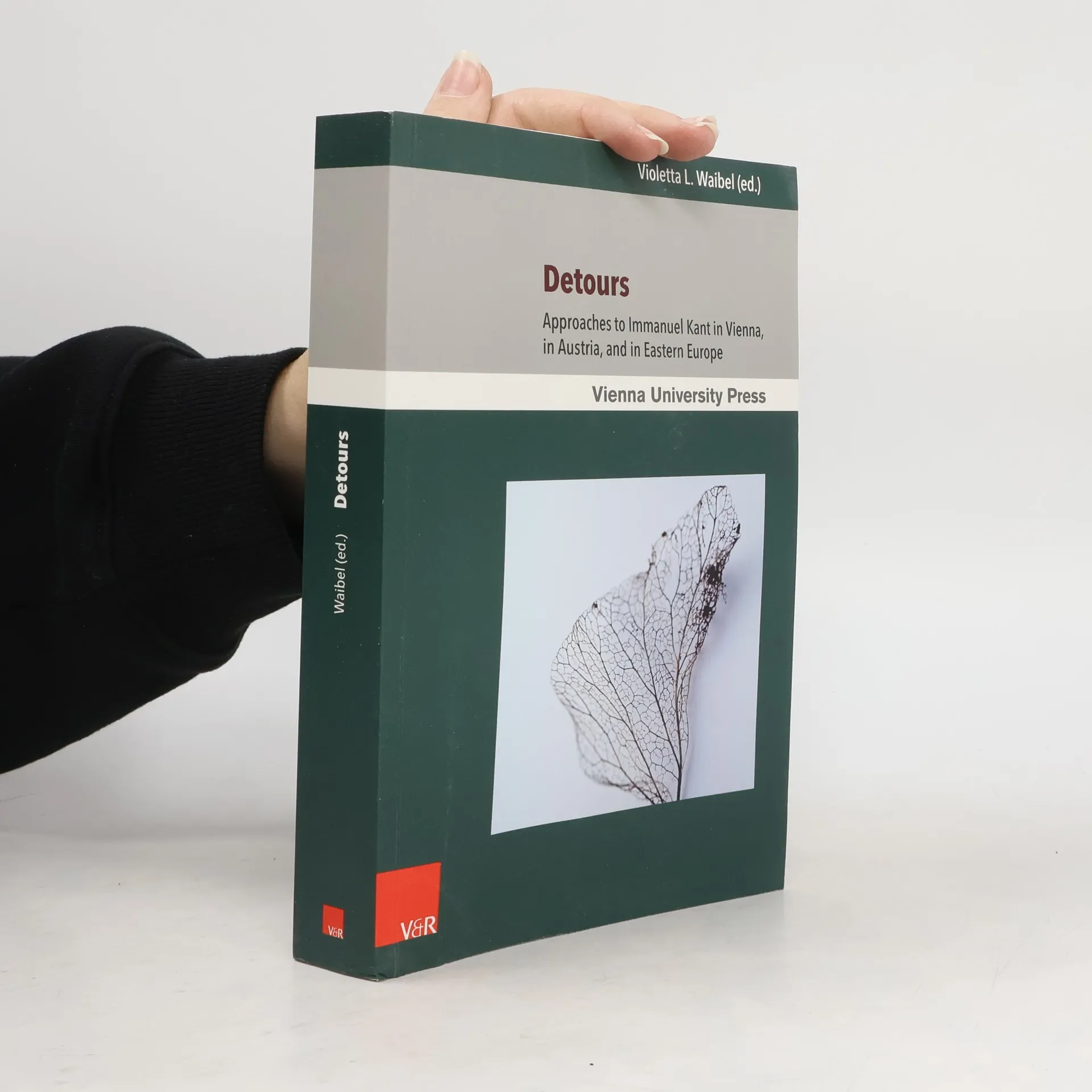
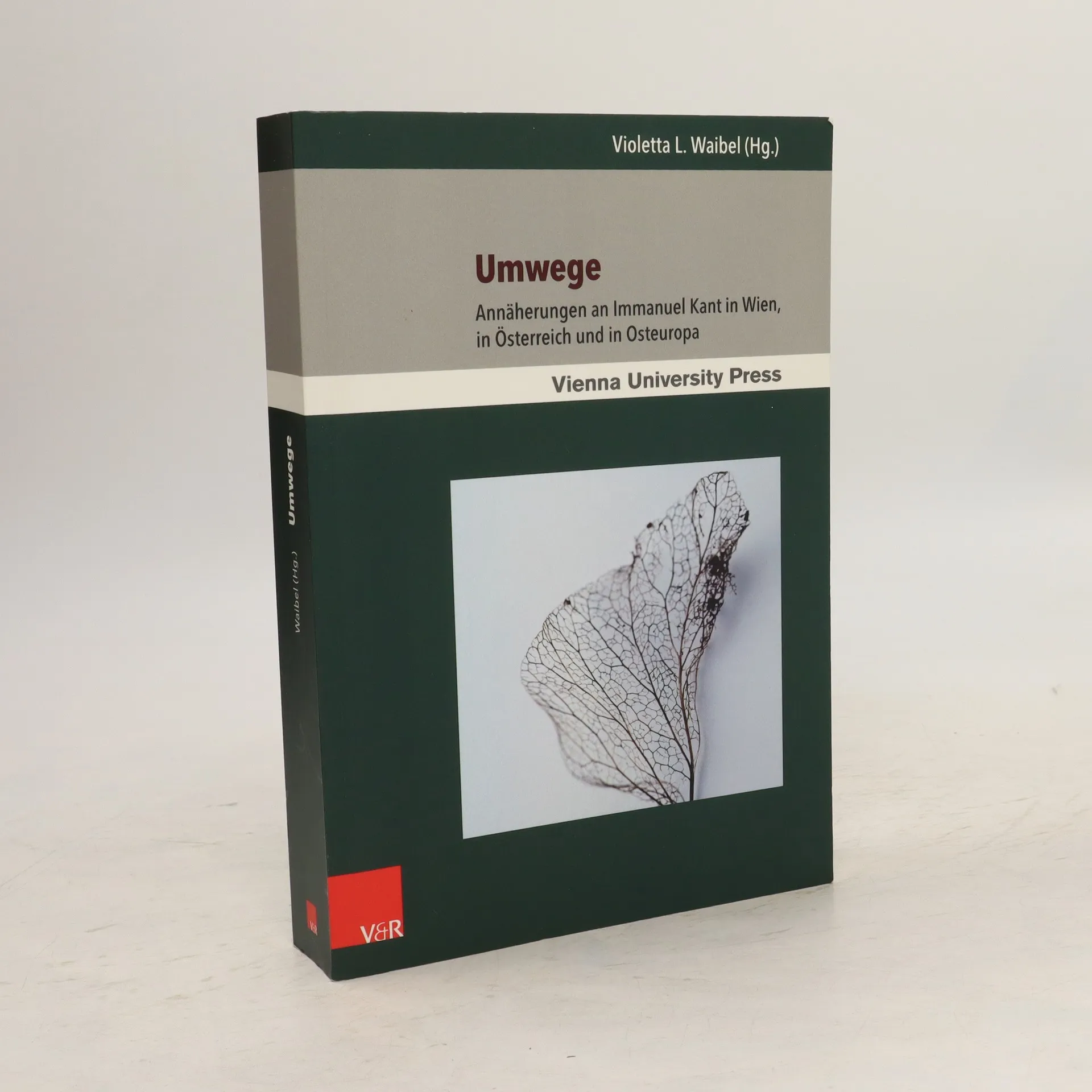
“Detours” explores the reception of Kant’s works in Vienna, Austria and Eastern Europe from a historical point of view and focuses on six topics: Kant and Censorship, Kant and Karl Leonhard Reinhold, who was the first Kantian born in Vienna and became a precursor for German and Austrian Kant reception in Jena, Kant and Eastern Europe, Kant and his Poets, Kant and Phenomenology and Kant and the Vienna Circle. In this way, the ambivalent perception of Kant in Austria becomes clearer: On the one hand Kant was censored and criticized harshly but on the other hand Kant's philosophy was studied actively in the “underground”.
Violetta L. Waibel Bücher


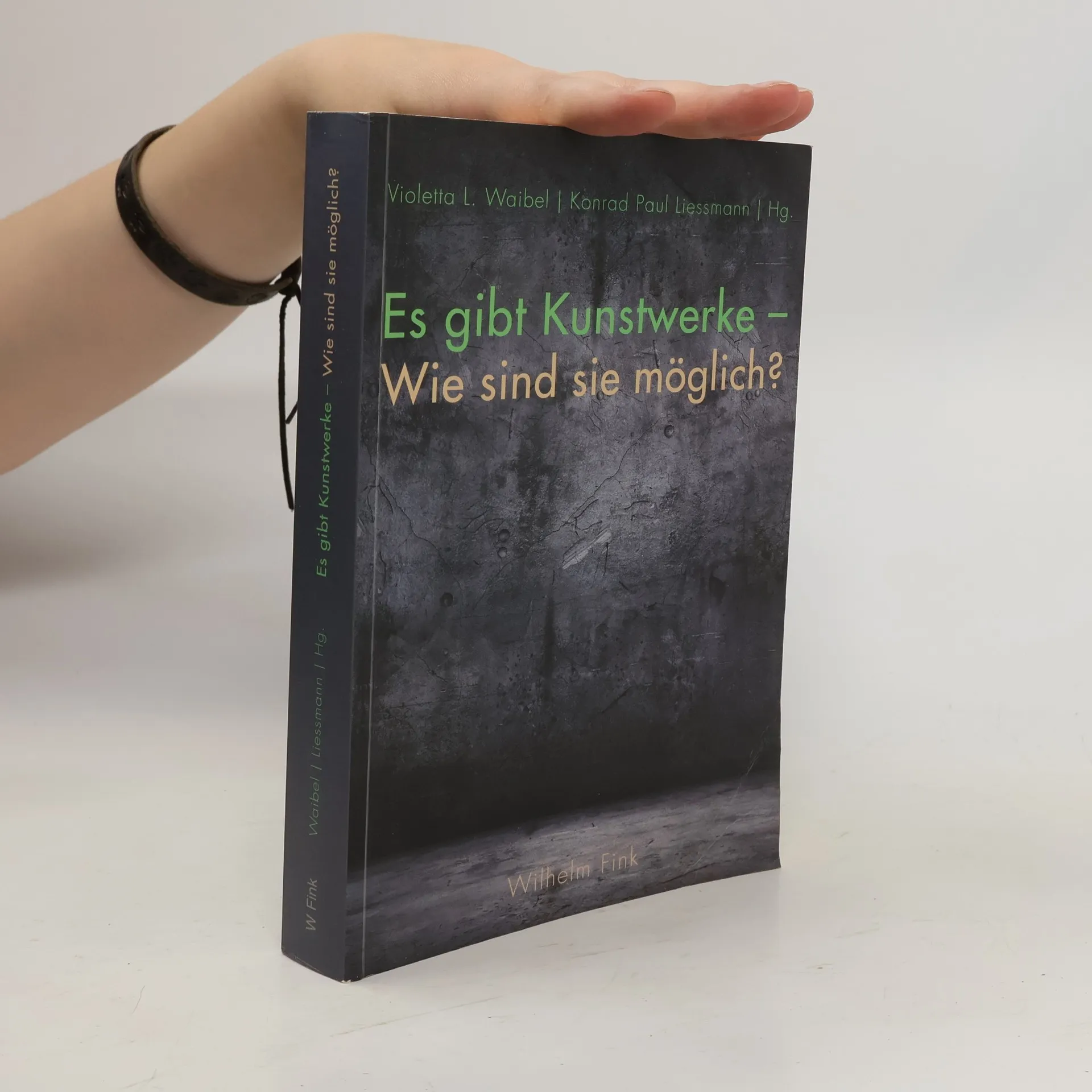
Spätestens mit der Wiener Moderne wurde Wien zu einem wichtigen Kulturzentrum des Aufbruchs. Diese und andere Strömungen des Umbruchs der Kunst seit dem 19. Jahrhundert werden in diesem Band gesichtet, dargestellt und bewertet. Die Reflexion auf die Verschränkung und Konkurrenz von Kunstpraxis, -theorie und -philosophie steht im Fokus der Aufmerksamkeit. Die theoretischen Perspektiven des Ästhetischen werden ebenso beleuchtet wie verschiedene Kunstgattungen. Schließlich werden Konzepte der Synästhesie und des Gesamtkunstwerks vorgestellt und Wittgenstein und die Kunst in verschiedenen Perspektiven untersucht. Der ungarische Philosoph Georg Lukács gibt das Stichwort: »Es gibt Kunstwerke – Wie sind sie möglich?« Eine Ästhetik, die, so Lukács, ohne illegitime Voraussetzungen arbeiten und das Faktum der Kunst in seiner Eigenart begreifen will, sollte das Kunstwerk als ein Gebilde betrachten, das rein durch sich und unabhängig vom Prozess seiner Entstehung begriffen werden muss. Die Gültigkeit dieses Ansatzes ist längst strittig, wie dieser Band zeigt. Kunstpraxis und -worte, künstlerisches Selbstverständnis und ästhetische Reflexion sind synergetisch verbunden.
Verwandlungen
Dichter als Leser Kants
Kant, the embodiment of Enlightenment, reason, and rationality, captivates writers, even as the dryness and rigor of his thought provoke resistance, whether justified or not. Schiller, Goethe, Hölderlin, Kleist, and Grillparzer have engaged with his ideas. Tolstoy and Dostoevsky have also creatively grappled with Kant's works, both directly and indirectly. Ironic figures like Falk, Bonaventura/Klingemann, Heine, and Bernhard were drawn to Kant's writings and persona, often using humor or spite to create distance. This volume explores the diverse literary appropriations of Kant, highlighting the various facets and transformations through which art interacts with him as a thinker.
Detours
- 629 Seiten
- 23 Lesestunden
“Detours” explores the reception of Kant’s works in Vienna, Austria and Eastern Europe from a historical point of view and focuses on six topics: Kant and Censorship, Kant and Karl Leonhard Reinhold, who was the first Kantian born in Vienna and became a precursor for German and Austrian Kant reception in Jena, Kant and Eastern Europe, Kant and his Poets, Kant and Phenomenology and Kant and the Vienna Circle. In this way, the ambivalent perception of Kant in Austria becomes clearer: On the one hand Kant was censored and criticized harshly but on the other hand Kant's philosophy was studied actively in the “underground”.