

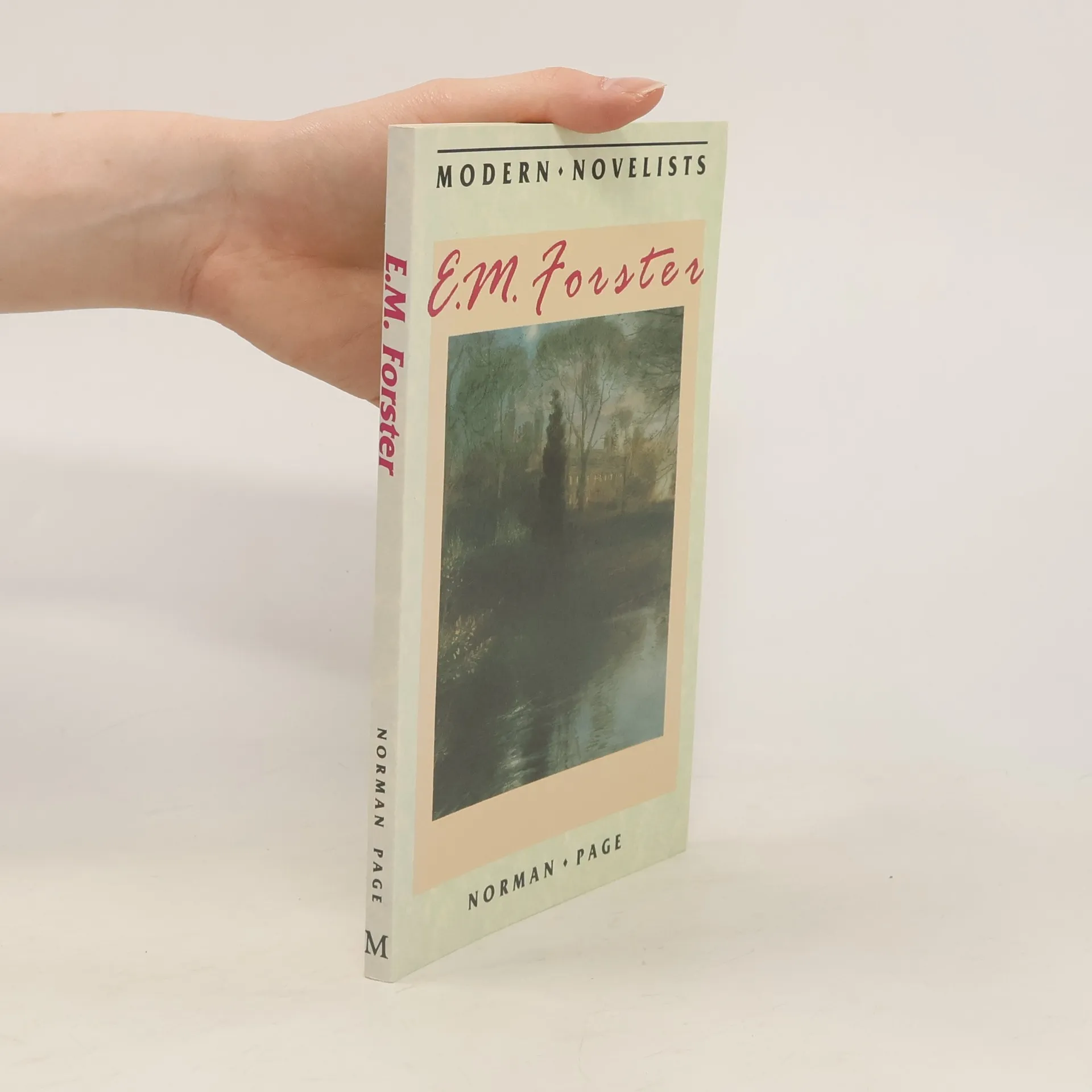
The five novels E.M.Forster published during his lifetime enjoyed a popularity and critical acclaim out of all proportion to this modest fictional output or the books' apparent pretensions: certainly since the publication of Howards End in 1910 he has been regarded almost without question as one of the foremost novelists of the century. Since his death in 1970 there has been no slackening of interest; the appearance of a comprehensive biography, an edition of his letters, a major critical edition of his works, and other scholarly and critical aids has given fresh impetus to the reassessment of his achievement. The present study provides a short account of Forster's life and career, followed by detailed discussion of his major writings. A final chapter considers his posthumous novel Maurice and the short stories. Although his most significant work belongs to the first quarter of the twentieth century, Forster's alliance of wit and seriousness, satiric comedy and moral insight, gives it a perennial freshness for new generations of students and readers.
Norman Page Bücher



The Language of Jane Austen (Routledge Revivals)
- 218 Seiten
- 8 Lesestunden
Focusing on the intricacies of language, this seminal study explores the exceptional and nuanced ways Jane Austen employs words in her writing. First published in 1972, it delves into the distinctive qualities of Austen's language, highlighting its subtlety and depth, thereby enhancing the understanding of her literary artistry.
The beautiful Lady Carlyle leaves her lawyer husband and children to elope with an aristocrat. When she has born him an illegitimate child and he deserts her, she disguises herself as a governess. Her former husband and his new wife then employ her. This in no way can be a good situation.
Man and Wife
- 652 Seiten
- 23 Lesestunden
Wilkie Collins was born in London in 1824, the elder son of a successful painter, William Collins. He left school at 17, and after an unhappy spell as a clerk in a tea broker's office, during which he wrote his first, unpublished novel, he entered Lincoln's Inn as a law student in 1846. He considered a career as a painter, but after the publication, in 1848, of his life of his father, and a novel, Antonina, in 1850, his future as a writer was assured. His meeting with Dickens in 1851 was perhaps the turning-point of his career. The two became collaborators and lifelong friends. Collins contributed to Dickens's magazines Household Words and All the Year Round, and his two best-known novels, The Woman in White and The Moonstone, were first published in All the Year Round. Collins's private life was as complex and turbulent as his novels. He never married, but lived with a widow, Mrs. Caroline Graves, from 1858 until his death. He also had three children by a younger woman, Martha Rudd, whom he kept in a separate establishment. Collins suffered from 'rheumatic gout', a form of arthritis which made him an invalid in his later years, and he became addicted to the laudanum he took to ease the pain of the illness. He died in 1889.
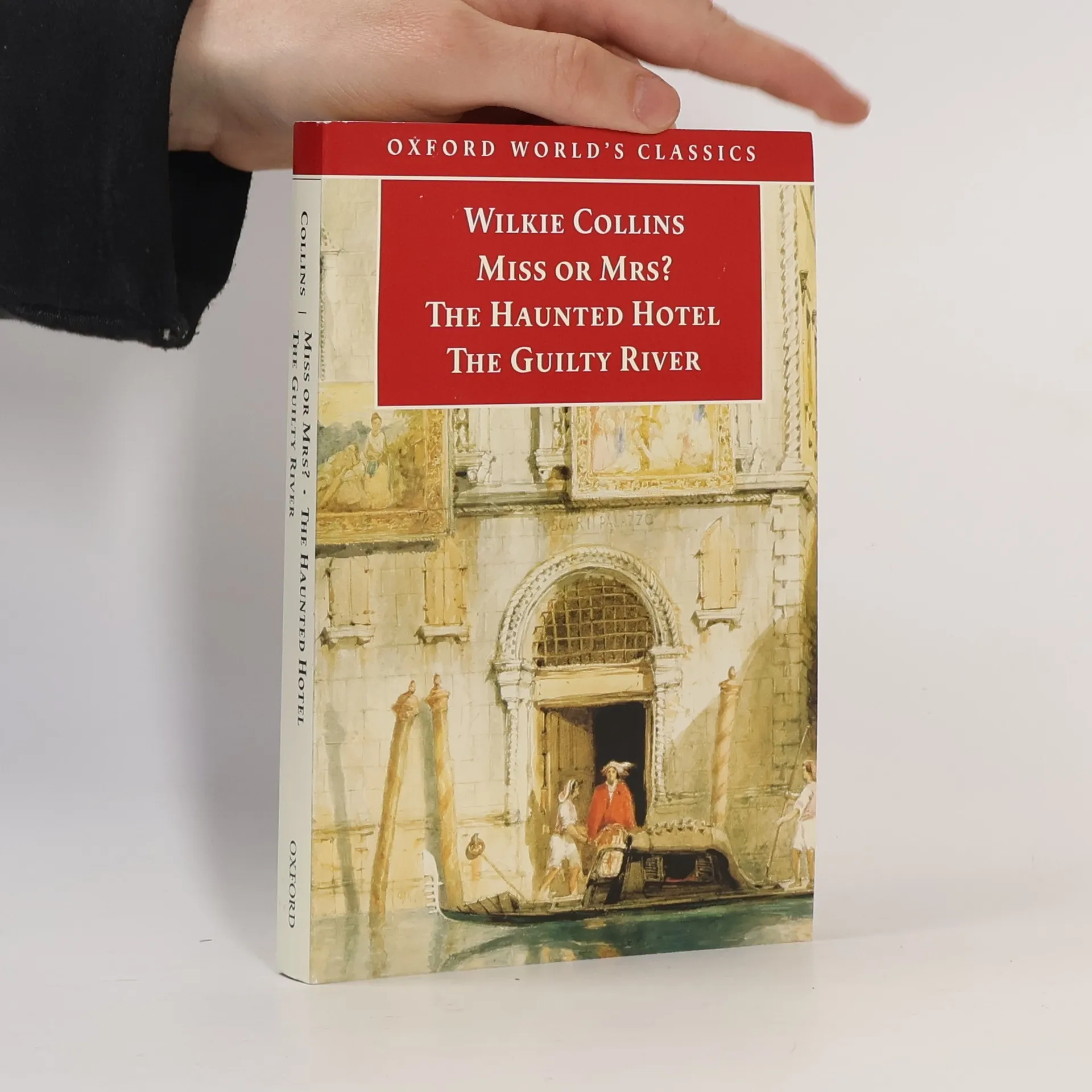
Oxford World's Classics: Miss Or Mrs? / The Haunted Hotel / The Guilty River
- 361 Seiten
- 13 Lesestunden
'…melodrama is perennial and […] the craving for it is perennial and must be satisfied.'T. S. Eliot ('Wilkie Collins and Dickens')Collins's ability to construct a gripping situation and to create an atmosphere of mystery and menace is fully evident in the three novellas reprinted here. All proceed through a series of dramatic scenes to a climax that in one case at least is literally explosive. The fast-paced 'Miss or Mrs?' (1871) opens on a yacht, features a remarkably unconventional heroine, and entails murder attempts, blackmail, clandestine marriage and commercial fraud. Dramatic and psychologically absorbing, the action of 'The Haunted Hotel' (1878) takes place in an ancient Venetian palazzo converted into a modern hotel that houses a grisly secret. Lastly, set in a beautiful water-mill, 'The Guilty River' (1886) depicts a group of alienated characters, whose relationships threaten to erupt in violence and murder. Varied in setting and tone, these stories demonstrate Collins's plot-making skill at its most succinct and intricate.Includes: Introduction, Textual Note, Bibliography, Chronology, Explanatory Notes, Appendix: Collins's prefaces