

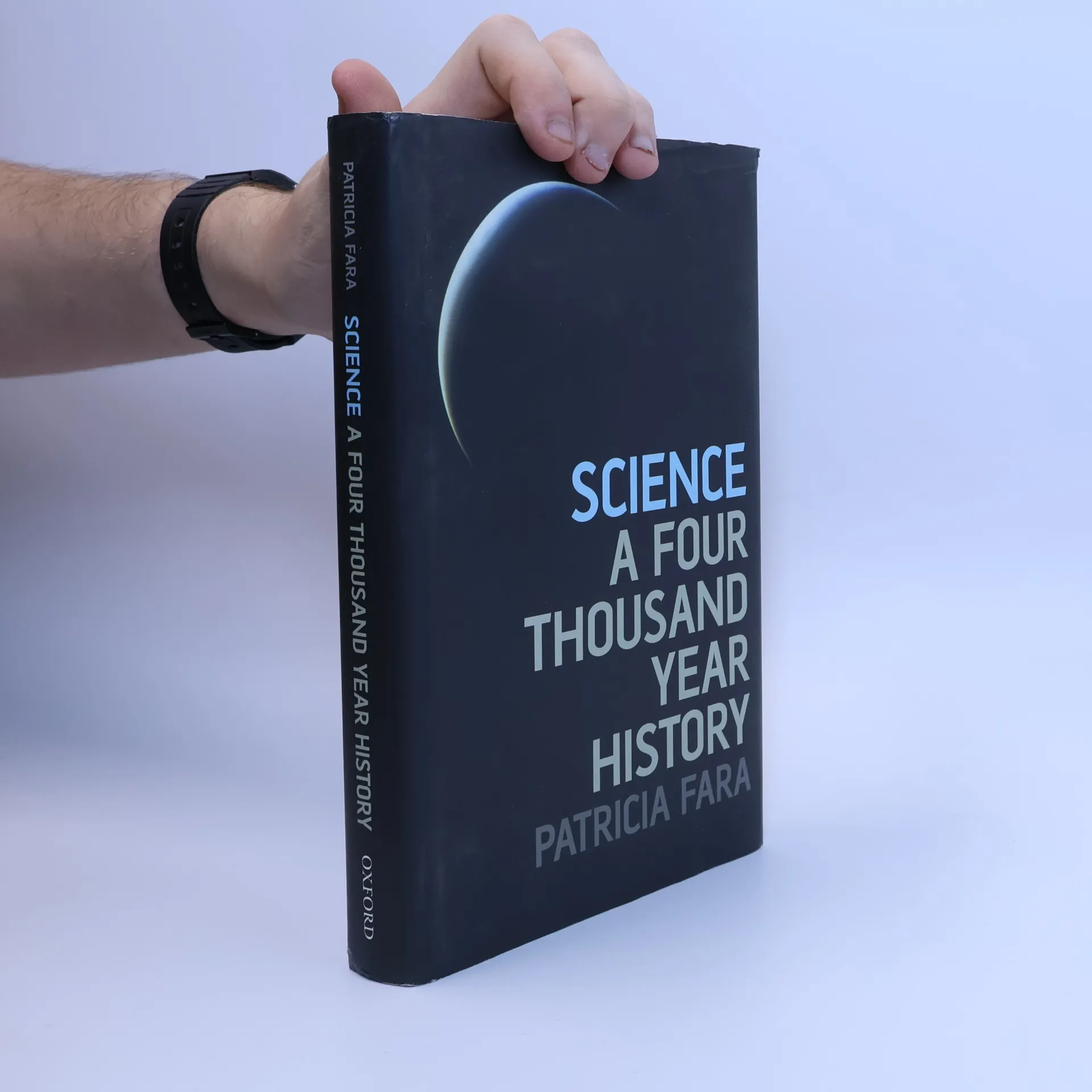

Science
A Four Thousand Year History
Autor*innen
Parameter
- 408 Seiten
- 15 Lesestunden
Mehr zum Buch
In Science , Patricia Fara rewrites science's past to provide new ways of understanding and questioning our modern technological society. Sweeping through the centuries from ancient Babylon right up to the latest hi-tech experiments in genetics and particle physics, Fara's book also rangesinternationally, challenging notions of European superiority by emphasizing the importance of scientific projects based around the world, including revealing discussions of China and the Islamic Empire alongside the more familiar stories about Copernicus's sun-centered astronomy, Newton's gravity,and Darwin's theory of evolution.We see for instance how Muslim leaders encouraged science by building massive libraries, hospitals, and astronomical observatories and we rediscover the significance of medieval Europe--long overlooked--where, surprisingly, religious institutions ensured science's survival, as the learningpreserved in monasteries was subsequently developed in new and unique universities. Instead of focussing on esoteric experiments and abstract theories, she explains how science belongs to the practical world of war, politics, and business. And rather than glorifying scientists asidealized heroes, she tells true stories about real people--men (and some women) who needed to earn their living, who made mistakes, and who trampled down their rivals.
Buchkauf
Science, Patricia Fara
- Sprache

- Erscheinungsdatum
- 2009
- Einband
- (Hardcover),
- Buchzustand
- Gebraucht - Gut
- Preis
- 10,49 €inkl. MwSt.
Keiner hat bisher bewertet.
- Titel
- Science
- Untertitel
- A Four Thousand Year History
- Sprache
- Englisch
- Autor*innen
- Patricia Fara
- Verlag
- Oxford University Press
- Erscheinungsdatum
- 2009
- Einband
- Hardcover
- Seitenzahl
- 408
- ISBN10
- 019922689X
- ISBN13
- 9780199226894
- Reihe
- Kategorien
- Schlagwörter
- Historisches Thema, Wissenschaft, Technologie, Geschichte der Wissenschaft, Soziale Aspekte
- Beschreibung
- In Science , Patricia Fara rewrites science's past to provide new ways of understanding and questioning our modern technological society. Sweeping through the centuries from ancient Babylon right up to the latest hi-tech experiments in genetics and particle physics, Fara's book also rangesinternationally, challenging notions of European superiority by emphasizing the importance of scientific projects based around the world, including revealing discussions of China and the Islamic Empire alongside the more familiar stories about Copernicus's sun-centered astronomy, Newton's gravity,and Darwin's theory of evolution.We see for instance how Muslim leaders encouraged science by building massive libraries, hospitals, and astronomical observatories and we rediscover the significance of medieval Europe--long overlooked--where, surprisingly, religious institutions ensured science's survival, as the learningpreserved in monasteries was subsequently developed in new and unique universities. Instead of focussing on esoteric experiments and abstract theories, she explains how science belongs to the practical world of war, politics, and business. And rather than glorifying scientists asidealized heroes, she tells true stories about real people--men (and some women) who needed to earn their living, who made mistakes, and who trampled down their rivals.