

Parameter
- 281 Seiten
- 10 Lesestunden
Mehr zum Buch
Madmen were once thought to be possessed by the devil: only very slowly has the clinical approach superseded that idea. Sanity, Madness and the Family may well come to be seen as a classic of psychiatry just because it invites an equally radical change in our view of madness. To prepare this human and readable report Drs Laing and Esterson conducted and recorded (on tape) a series of interviews, during a period of 5 years, with 11 patients who had been authoritatively diagnosed as 'schizophrenic': the novel aspect of their investigation was that parents and relatives of the patients, in all possible combinations, were drawn into these interviews. In this way the authors dramatically exposed the cross-currents of affection, hatred, and indifference within the family, frequently displaying the ugly sight of children being brainwashed by parents. Their study throws doubt on the traditional view of schizophrenia as an illness with specific symptoms and its own pathology: it suggests rather that some forms of madness may largely be social creations and many of their symptoms no more than the tortured ruses of people struggling to live in unlivable situations.


Buchkauf
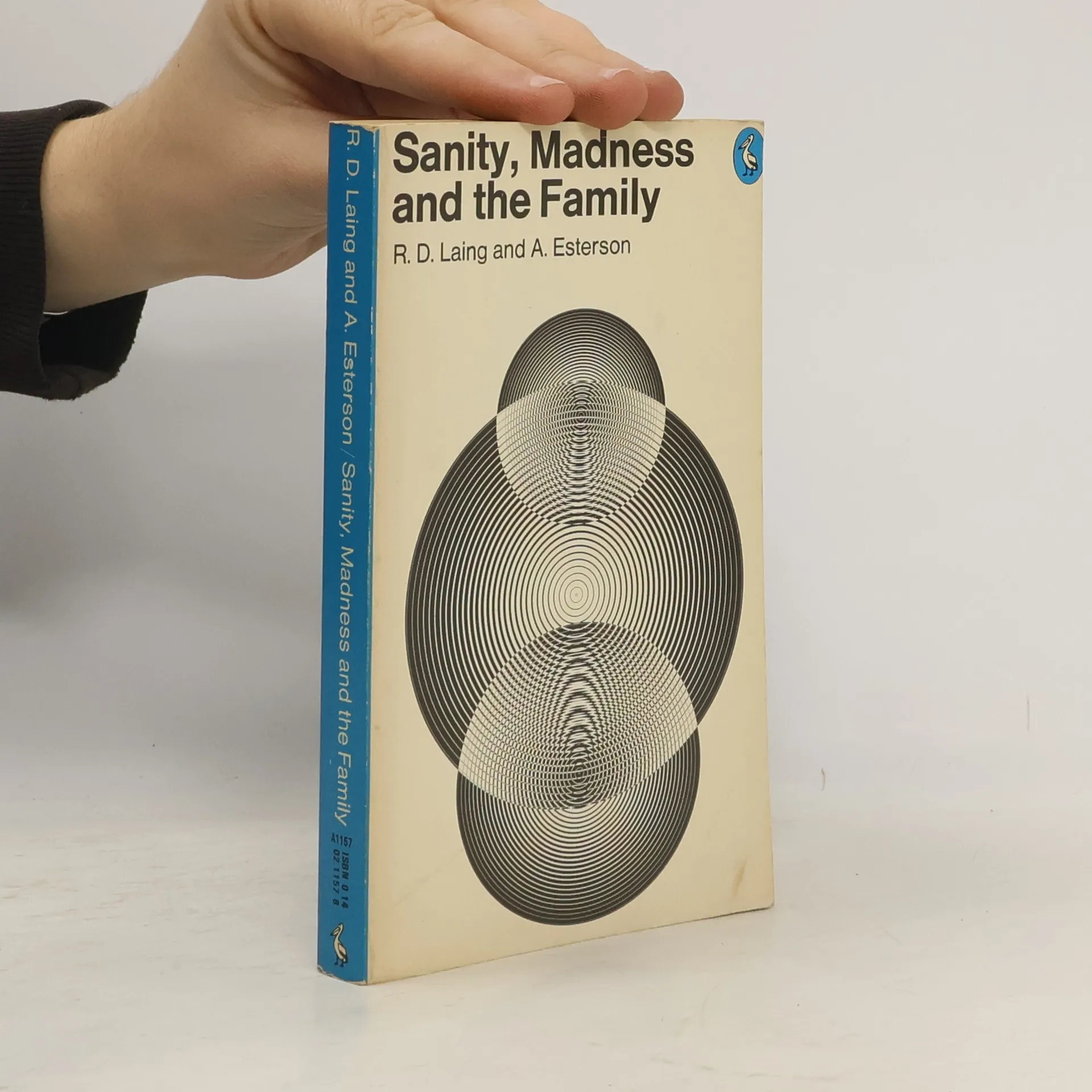
Sanity, Madness and the Family, A. Aaron Esterson, R. D. Laing
- Sprache

- Erscheinungsdatum
- 1970
- Einband
- (Paperback)
Hier könnte deine Bewertung stehen.
- Titel
- Sanity, Madness and the Family
- Sprache
- Englisch
- Autor*innen
- A. Aaron Esterson, R. D. Laing
- Verlag
- Pelican
- Erscheinungsdatum
- 1970
- Einband
- Paperback
- Seitenzahl
- 281
- ISBN10
- 0140211578
- ISBN13
- 9780140211573
- Reihe
- Schlagwörter
- Wissenschaft, Psychische Gesundheit, Psychoanalyse, Psychiatrie
- Bewertung
- 4,15 von 5 Sternen
- Beschreibung
- Madmen were once thought to be possessed by the devil: only very slowly has the clinical approach superseded that idea. Sanity, Madness and the Family may well come to be seen as a classic of psychiatry just because it invites an equally radical change in our view of madness. To prepare this human and readable report Drs Laing and Esterson conducted and recorded (on tape) a series of interviews, during a period of 5 years, with 11 patients who had been authoritatively diagnosed as 'schizophrenic': the novel aspect of their investigation was that parents and relatives of the patients, in all possible combinations, were drawn into these interviews. In this way the authors dramatically exposed the cross-currents of affection, hatred, and indifference within the family, frequently displaying the ugly sight of children being brainwashed by parents. Their study throws doubt on the traditional view of schizophrenia as an illness with specific symptoms and its own pathology: it suggests rather that some forms of madness may largely be social creations and many of their symptoms no more than the tortured ruses of people struggling to live in unlivable situations.