

Mehr zum Buch
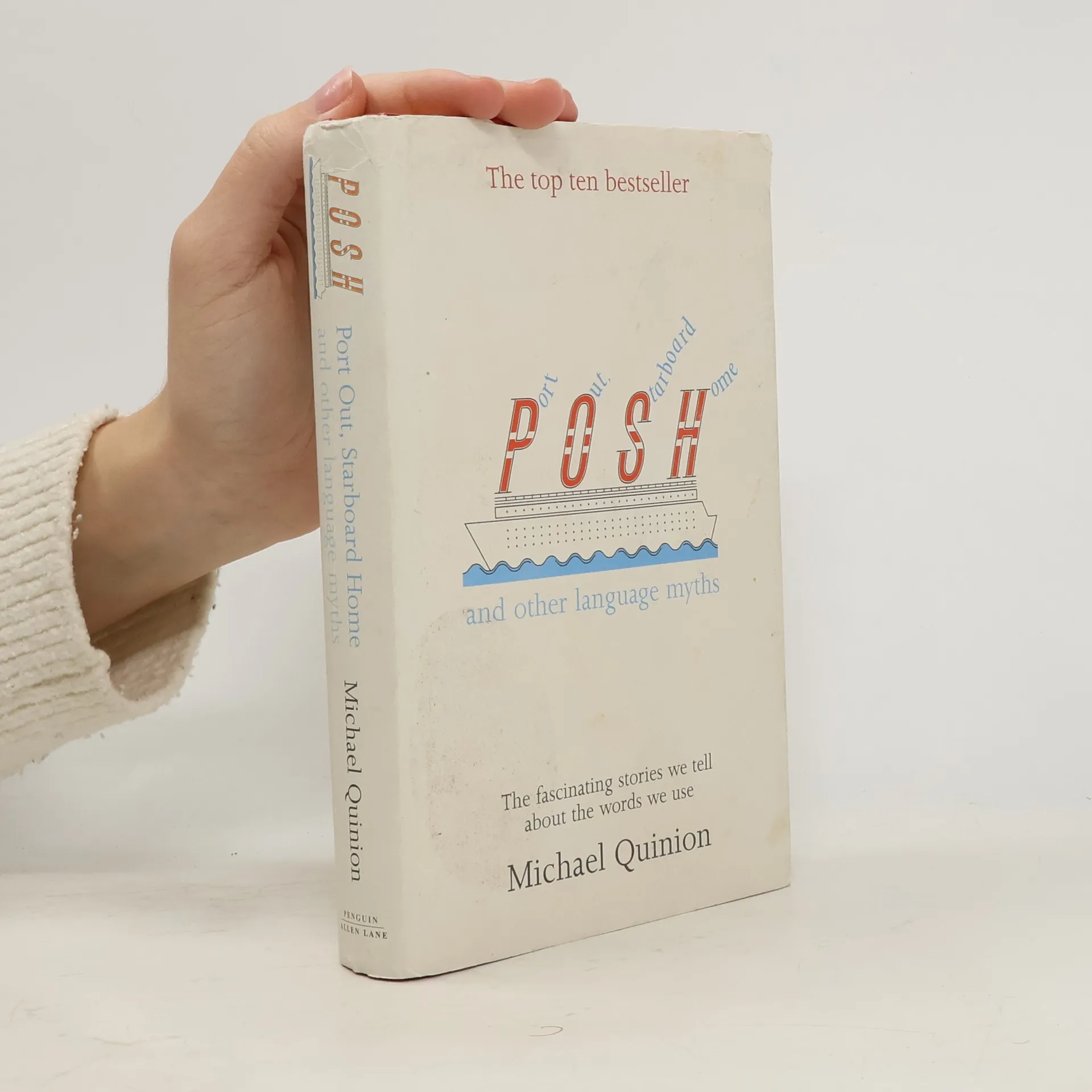
Can it really be true that 'golf' stands for 'Gentlemen Only Ladies Forbidden'? Or that 'rule of thumb' comes from an archaic legal principle that a man may chastise his wife, but only with a rod no thicker than his thumb? These and hundreds of other stories are commonly told and retold whenever people meet. They grow up in part because expressions are often genuinely mysterious. Why, for example, are satisfying meals 'square' rather than any other shape? And how did anyone ever come up with the idea that if you're competent at something you can 'cut the mustard'? Michael Quinion here retells many of the more bizarre tales, and explains their real origins where they're known. This is a fascinating treasure-trove of fiction and fact for anyone interested in language.
Publikation

Buchkauf
Port Out, Starboard Home, Michael Quinion
- Sprache

- Erscheinungsdatum
- 2004
- Einband
- (Hardcover)
Hier könnte deine Bewertung stehen.
- Titel
- Port Out, Starboard Home
- Untertitel
- And Other Language Myths
- Sprache
- Englisch
- Autor*innen
- Michael Quinion
- Verlag
- Penguin Books
- Erscheinungsdatum
- 2004
- Einband
- Hardcover
- Seitenzahl
- 282
- ISBN10
- 0140515348
- ISBN13
- 9780140515343
- Reihe
- Kategorien
- Schlagwörter
- Handbücher und Anleitungen, Humor, Linguistik
- Bewertung
- 3,25 von 5 Sternen
- Beschreibung
- Can it really be true that 'golf' stands for 'Gentlemen Only Ladies Forbidden'? Or that 'rule of thumb' comes from an archaic legal principle that a man may chastise his wife, but only with a rod no thicker than his thumb? These and hundreds of other stories are commonly told and retold whenever people meet. They grow up in part because expressions are often genuinely mysterious. Why, for example, are satisfying meals 'square' rather than any other shape? And how did anyone ever come up with the idea that if you're competent at something you can 'cut the mustard'? Michael Quinion here retells many of the more bizarre tales, and explains their real origins where they're known. This is a fascinating treasure-trove of fiction and fact for anyone interested in language.