

Mehr zum Buch
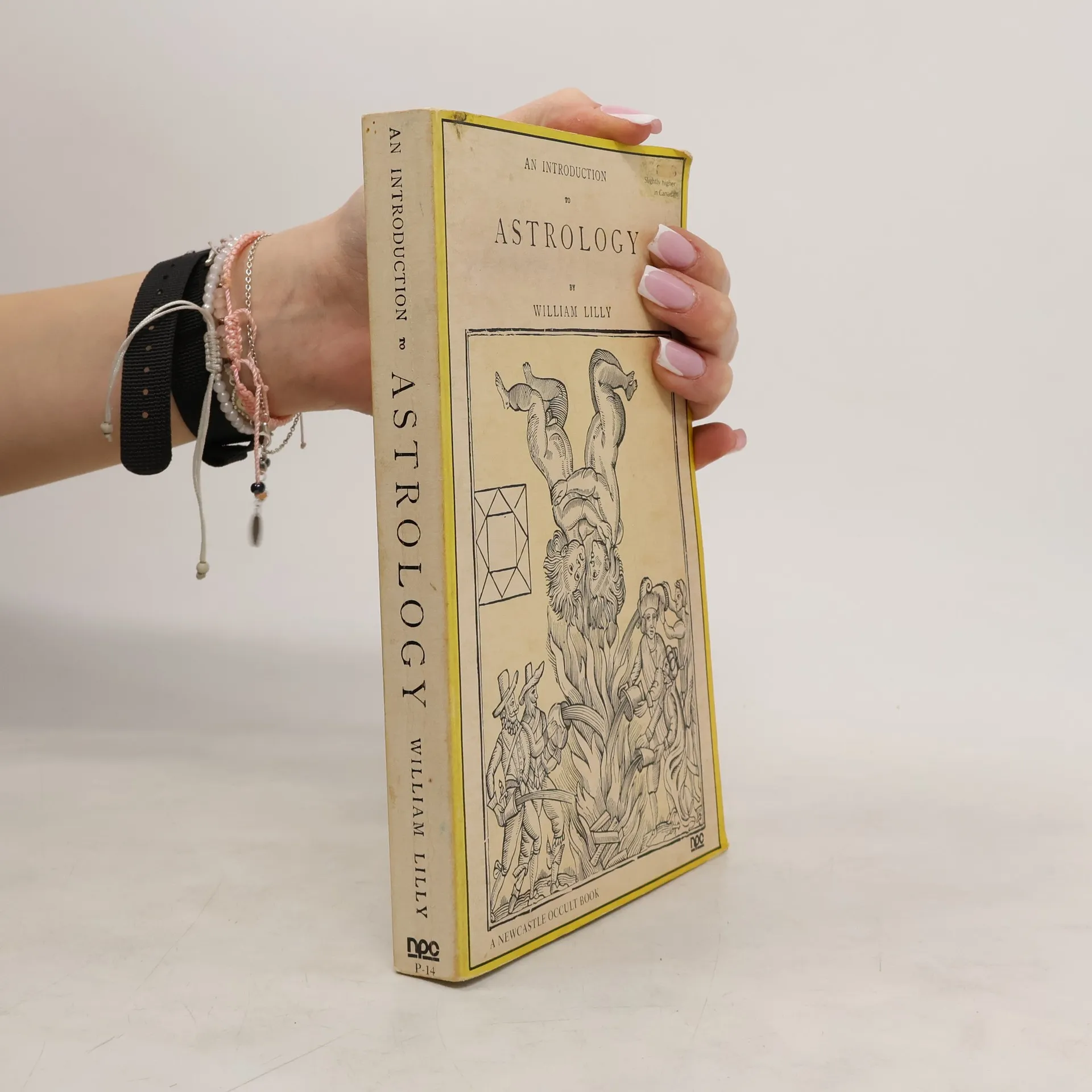
First published in 1647, as Christian Astrology, this is one of the best known post-classical works on Astrology. the present edition, heavily edited by 'Zadkiel, ' was released under the current title in 1852. As the planet Uranus ('Hershel'), discovered in 1781, is mentioned throughout, and Neptune, discovered in 1846, is not, we can bracket the date of composition of the revised edition to the mid-19th century. Horary Astrology, the subject of this book, interprets planetary positions to answer a wide range of questions, from lost dogs and stolen fish, to the death of kings. While there is a basic repertoire of interpretations, (e.g., Saturn bad, Venus good), the horoscope is used as a jumping off point for the astrologer's intuition.
Publikation

Buchkauf
An Introduction to Astrology, William Lilly
- Sprache

- Erscheinungsdatum
- 1972
- Einband
- (Paperback)
Hier könnte deine Bewertung stehen.
- Titel
- An Introduction to Astrology
- Sprache
- Englisch
- Autor*innen
- William Lilly
- Verlag
- Borgo Pr
- Erscheinungsdatum
- 1972
- Einband
- Paperback
- Seitenzahl
- 346
- ISBN10
- 0878770143
- ISBN13
- 9780878770144
- Reihe
- Kategorien
- Schlagwörter
- Bewertung
- 4,65 von 5 Sternen
- Beschreibung
- First published in 1647, as Christian Astrology, this is one of the best known post-classical works on Astrology. the present edition, heavily edited by 'Zadkiel, ' was released under the current title in 1852. As the planet Uranus ('Hershel'), discovered in 1781, is mentioned throughout, and Neptune, discovered in 1846, is not, we can bracket the date of composition of the revised edition to the mid-19th century. Horary Astrology, the subject of this book, interprets planetary positions to answer a wide range of questions, from lost dogs and stolen fish, to the death of kings. While there is a basic repertoire of interpretations, (e.g., Saturn bad, Venus good), the horoscope is used as a jumping off point for the astrologer's intuition.